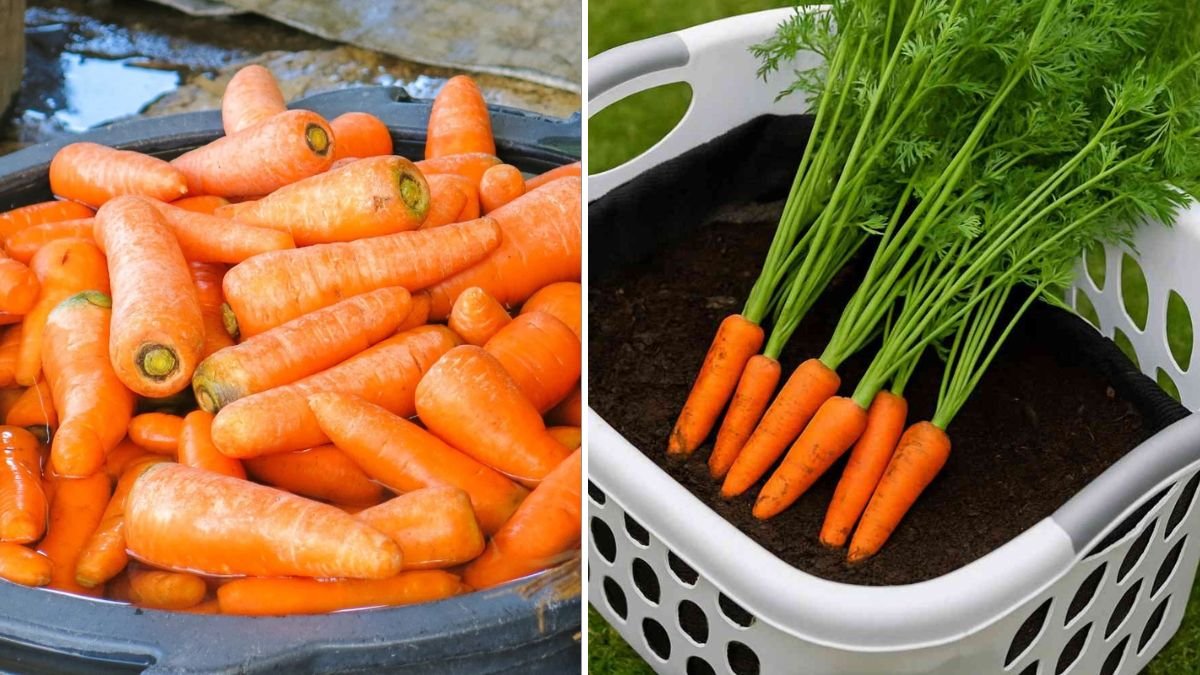
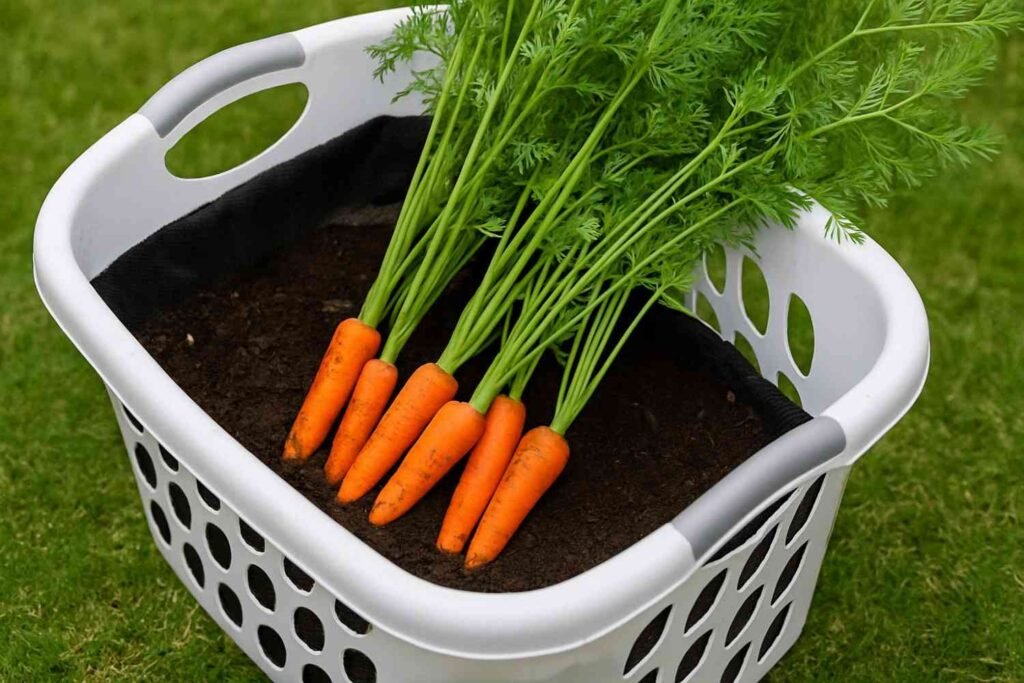
Most people think you need deep garden beds, rich soil, and lots of space to grow carrots. But what if I told you that your old plastic basket—the one sitting unused in the corner—can grow dozens of straight, crisp, sweet carrots with almost zero effort? Yes! With the right technique, plastic baskets become one of the best containers for carrot growing.
Whether you’re short on space, looking to upcycle household items, or wanting a fun gardening experiment that really works, this method is perfect for you. In this 1200-word guide, you’ll learn how to transform a simple plastic basket into a thriving carrot garden that produces beautiful results every time.
Why a Plastic Basket Works Better Than Most Pots
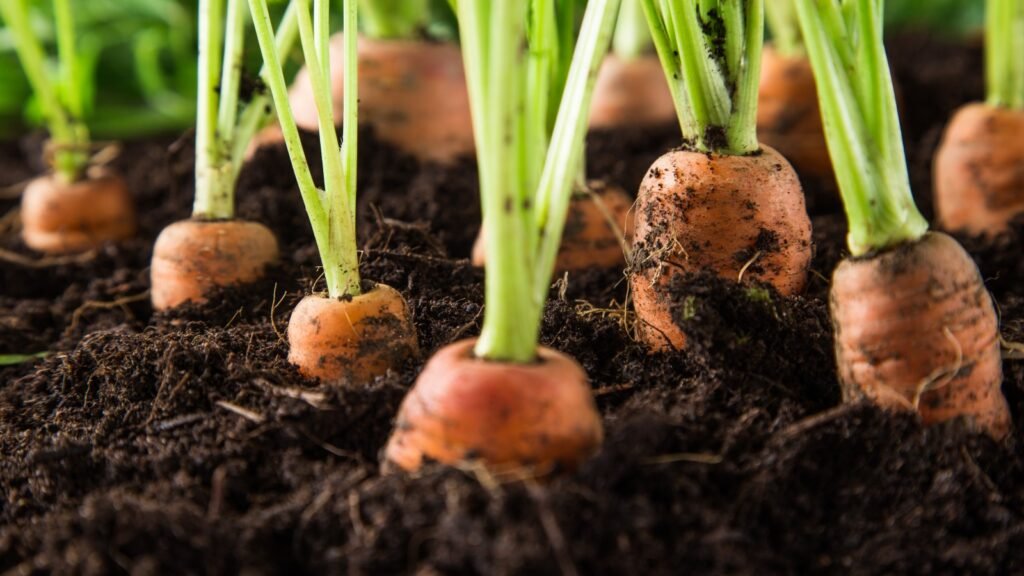
Carrots need deep, loose, airy soil so their roots can grow long and straight. Surprisingly, a plastic basket provides all the ideal conditions:
Excellent Drainage
The holes in the basket prevent waterlogging—one of the biggest killers of carrot crops.
Natural Air Pruning
Excess air exposure around the edges prevents roots from circling or deforming.
Lightweight & Portable
Move your carrot basket anywhere sunlight is best.
Eco-friendly Upcycling
Turn trash into treasure by giving old baskets a new life.
Perfect Soil Texture
Your soil mix stays fluffy, loose, and well-drained—exactly what carrots love.
This is one of the simplest and most effective ways to grow beautiful carrots at home.
What You Need to Get Started
You don’t need fancy tools. Here’s all you need:
- An old plastic basket (any size, preferably deep)
- A plastic bag or cloth liner
- Potting soil
- Compost or vermicompost
- Sand or coco peat
- Carrot seeds (any variety)
- Watering can or spray bottle
Optional:
- Slow-release organic fertilizer
- Mulch to reduce water evaporation
Step 1: Prepare the Plastic Basket
Most baskets have wide holes, so without lining, soil would fall out. You can use:
- A plastic grocery bag with small holes punched
- A piece of old cloth
- Mulch net
- Thin coconut fiber mat
How to line the basket:
- Place the liner inside the basket.
- Let it follow the shape of the walls.
- Punch or cut a few extra small holes for drainage (if using plastic).
Your goal is to keep soil in while allowing water to flow out freely.
Step 2: Mix the Perfect Carrot Soil
Carrots hate heavy, compact soil. They thrive in:
- 40% potting soil
- 30% sand or fine coco peat
- 30% compost
This mix gives:
- Soft texture
- Good drainage
- Balanced nutrients
- Easy root penetration
Avoid clayey soils, large chunks, or fresh manure (which causes forked and split carrots).
Fill the basket almost to the top, leaving about 2–3 cm space.
Step 3: Sow Your Carrot Seeds Correctly
Carrot seeds are tiny—you don’t bury them deep.
How to sow:
- Sprinkle seeds evenly over the soil surface.
- Cover with a light dusting of soil (no deeper than 0.5 cm).
- Mist gently with water.
Tip:
Mix carrot seeds with a teaspoon of sand for more even distribution.
Place the basket in a bright area but not in harsh midday sun.
Step 4: Keep the Soil Moist for Germination
Carrots take 10–20 days to germinate. During this time:
- Do not let the soil dry out.
- Use a spray bottle twice a day to keep moisture gentle but consistent.
- Avoid heavy watering, which displaces seeds.
Once seedlings emerge, shift the basket to a sunnier location.
Step 5: Provide Light and Temperature
Carrots love:
- 5–6 hours of sunlight
- Cool to moderate temperatures
- Good airflow
Place the basket in:
- A balcony
- A terrace
- A sunny windowsill
- Or outside under a shade cloth during extreme heat
This ensures strong leaves and long, crisp roots.
Step 6: Thin the Seedlings
This step is crucial for growing large, healthy carrots.
When seedlings reach 4–5 cm tall:
- Remove extra seedlings
- Leave 3–5 cm spacing between plants
Crowded carrots grow small and twisted. Thinning ensures proper size and shape.
Step 7: Watering and Maintenance
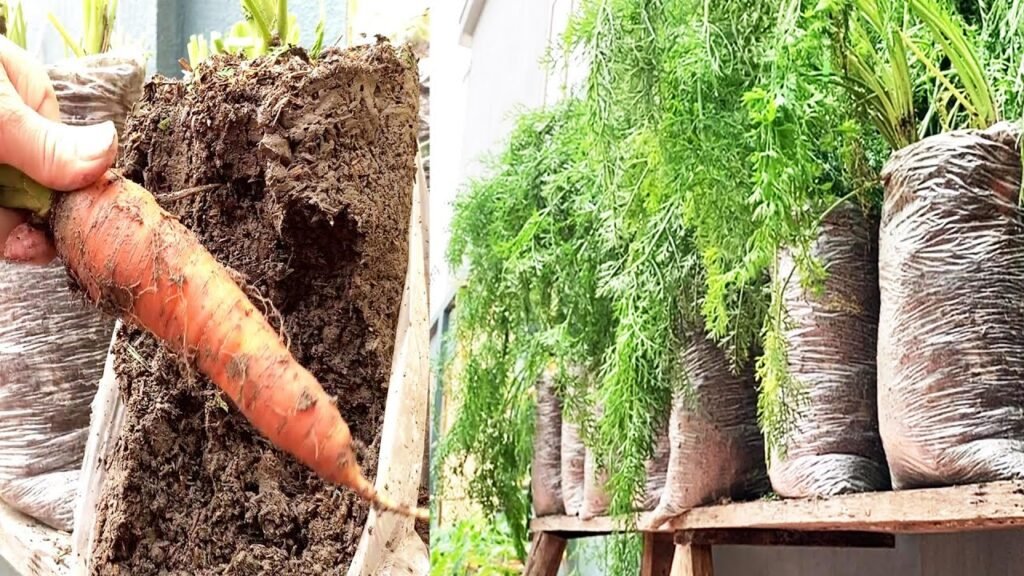
Carrots need:
Consistent Moisture
Never let the soil fully dry. But don’t flood it.
Deep Watering
Water deeply so roots grow strong and straight.
Mulching
Add a thin layer of dried leaves, straw, or coco fiber to:
- Retain moisture
- Keep soil cool
- Reduce watering frequency
Feeding
Carrots do not require heavy feeding.
Use diluted liquid fertilizer once every 2–3 weeks.
Step 8: Prevent Carrot Problems
Here’s how the plastic basket helps avoid common carrot issues:
Forked or Split Carrots
Cause: Hard soil or too much nitrogen
Basket Fix: Light, airy soil prevents deformation.
Root Rot
Cause: Poor drainage
Basket Fix: Holes ensure no waterlogging.
Pest Attacks
Cause: Soil-borne insects
Basket Fix: Soilless environment minimizes pests.
Step 9: Watch for Signs of a Ready Harvest
Most carrot varieties mature in 70–90 days.
You’ll know they’re ready when:
- The carrot “shoulders” peek out of the soil
- Leaves begin to yellow or slow down
- Roots feel firm when checked gently
Step 10: Harvesting Your Basket-Grown Carrots
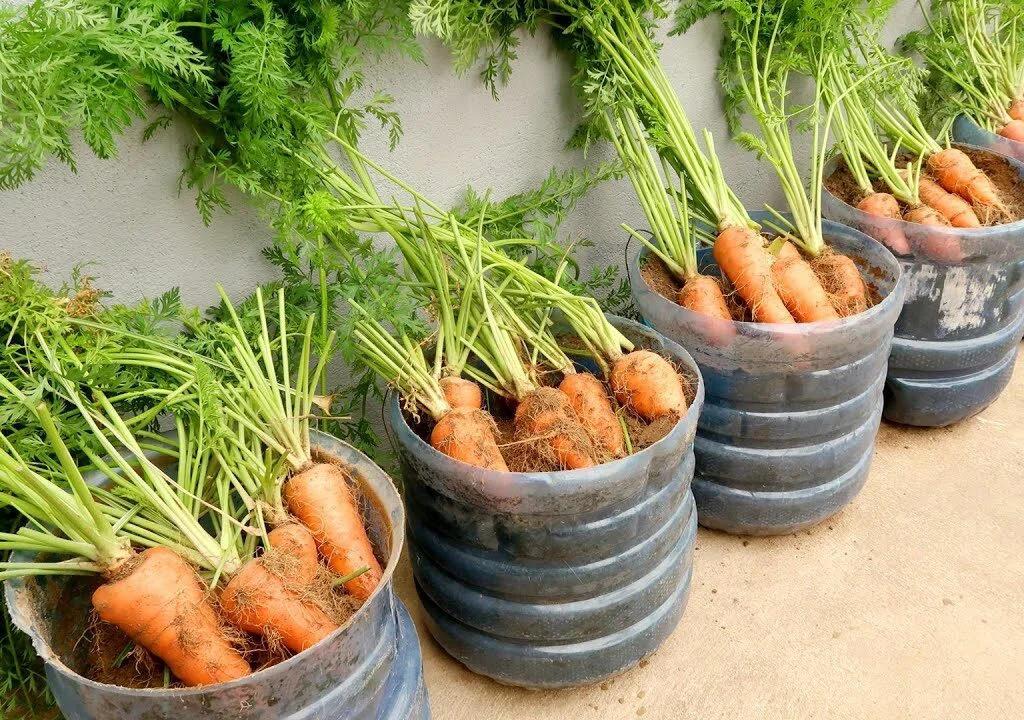
To harvest:
- Water lightly to soften soil.
- Grab the carrot leaves at the base.
- Pull gently but firmly upward.
- Shake off loose soil.
You’ll be amazed how straight and clean your carrots are!
Bonus: Why Basket-Grown Carrots Taste Better
Carrots grown in loose, well-drained medium tend to be:
- Sweeter
- Juicier
- Crunchier
- Brighter in color
- Full of natural aroma
The basket prevents stress on the root, helping the carrot grow beautifully.
How to Regrow Another Batch Easily
After harvesting:
- Remove leftover roots.
- Loosen the soil.
- Add a bit of compost.
- Sow seeds again.
Your basket can produce carrots throughout the year with simple replanting.
Sustainable Gardening at Its Best
Using an old plastic basket:
- Reduces waste
- Cuts gardening costs
- Saves space
- Makes gardening accessible to beginners
- Teaches children and families the joy of homegrown food
This small step creates big impact.
Final Thoughts: Your Old Basket Is a Carrot Goldmine
You don’t need land.
You don’t need fancy gardening tools.
You don’t even need deep pots.
With creativity and the right method, an old plastic basket becomes a high-yield carrot garden capable of producing delicious, healthy, and chemical-free carrots.
Try this unique method once, and you’ll be amazed at how simple and rewarding carrot growing can be. Happy gardening—and happy harvesting!