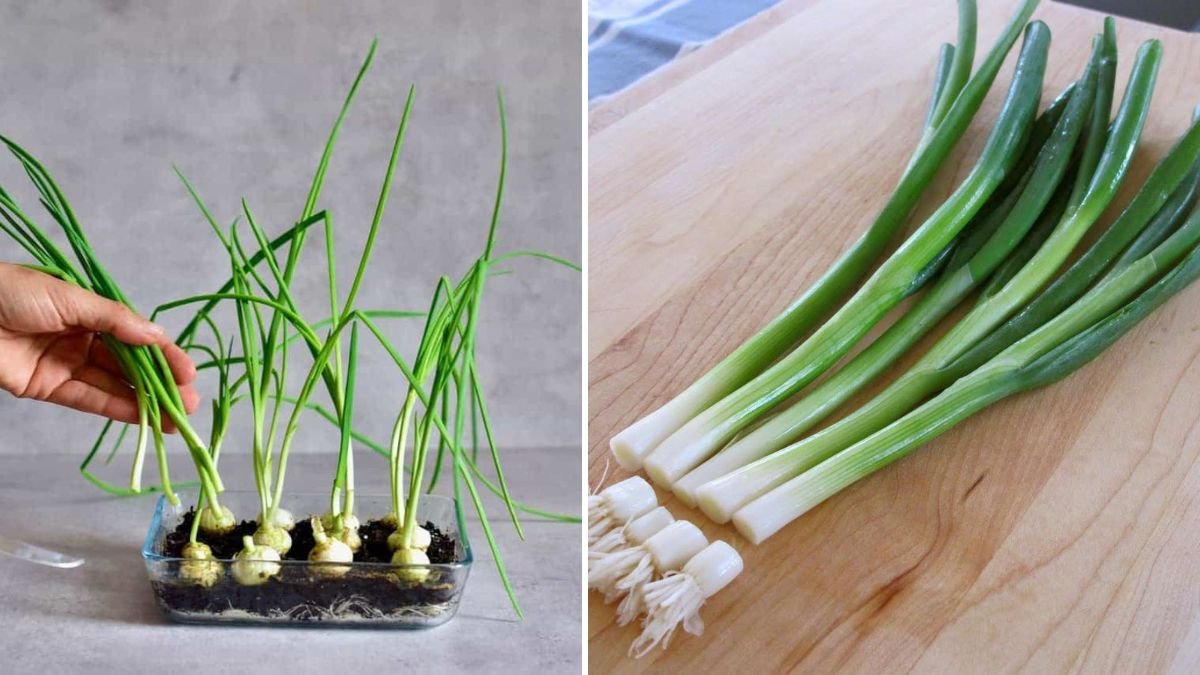
Growing your own vegetables doesn’t always require seeds, big garden beds, or expensive tools. In fact, some of the easiest and most rewarding plants to regrow come straight from your kitchen scraps—especially onions. Whether you’re working with spring onions, red onions, yellow onions, or shallots, regrowing them is surprisingly simple and incredibly productive.
Imagine turning leftover onion bottoms or scraps into a thriving source of fresh, crisp, flavorful onions year-round. With just a few steps, you can create a continuous onion garden indoors or outdoors. This guide will show you everything you need to regrow onions successfully from kitchen scraps, even if you’re a complete beginner.
Introduction: Why Regrow Onions From Scraps?
Regrowing onions is more than a gardening hack—it’s a smart way to reuse what you already have.
Here’s why it works so well:
- Onion bulbs naturally regenerate from their base
- They grow quickly in soil or water
- They require almost no care
- You can harvest leaves or bulbs multiple times
- It’s free—no seeds needed
This method is perfect for small homes, balconies, or anyone who wants to grow fresh onions without much effort.
Understanding How Onions Regrow
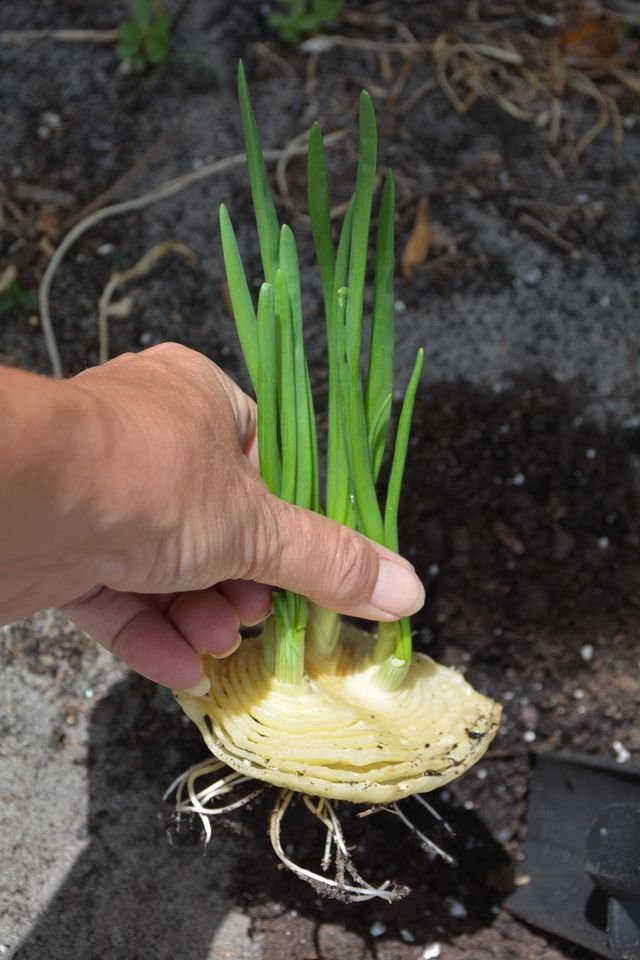
The secret lies in the root plate, the small white disk at the bottom of the onion. Even after slicing off the top portion, this base contains dormant root buds that spring back to life when placed in water or soil.
The onion scraps will:
- Sprout new green leaves
- Grow new roots
- Expand into a full bulb
- Potentially split into multiple new onions
So never throw away that onion bottom again—it’s a mini plant waiting to grow.
Step-by-Step Guide: How to Regrow Onions from Kitchen Scraps
Below is a simple, effective process to turn onion scraps into thriving plants.
Save the Right Onion Scrap
Choose:
- Healthy onion bottoms
- Firm, disease-free scraps
- Bases with visible root circles
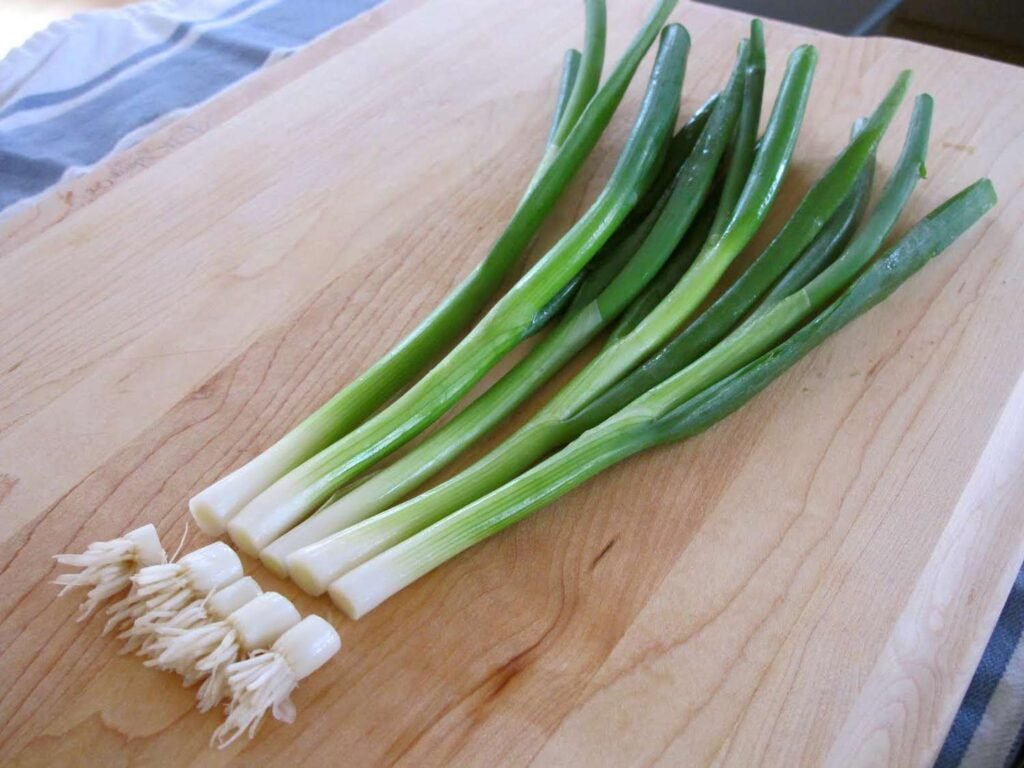
Cut off the bottom 1–2 cm of the onion, keeping the root plate intact.
Avoid:
- Moldy or mushy pieces
- Rotten root plates
- Dried-out leftovers
Option 1: Regrow Onions in Water (Fastest Method)
This method is great for small spaces and beginners.
Steps:
- Place the onion bottom in a shallow bowl.
- Add water until the bottom is just touching the surface (don’t drown it).
- Place near a sunny window.
- Change the water every 2 days to prevent mold.
What Happens Next?
- Day 2–3: New roots appear
- Day 4–7: New green shoots emerge
- Day 10–14: You can transplant it to soil
This method helps roots grow quickly and strongly before planting.
Option 2: Regrow Directly in Soil (Most Reliable Method)
If you want full bulbs or long-term growth, plant directly into soil.
Steps:
- Fill a pot or garden bed with loose, well-drained soil.
- Plant the onion bottom 1–2 inches deep.
- Keep the cut side facing up.
- Water lightly—don’t overwater.
- Place the container in sunlight or plant outdoors.
Benefits:
- Produces larger bulbs
- Promotes multiple shoots
- Ideal for long-term growth
Regrowing Spring Onions (Green Onions) from Scraps
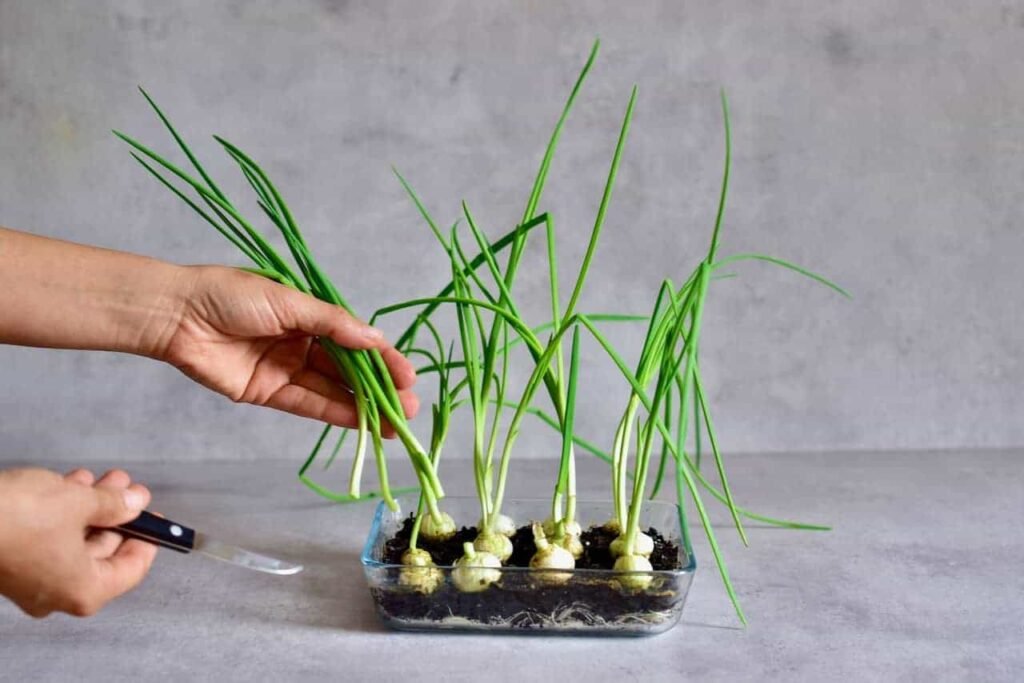
If you use spring onions often, this trick will save you money every week.
Steps:
- Keep the white base with roots.
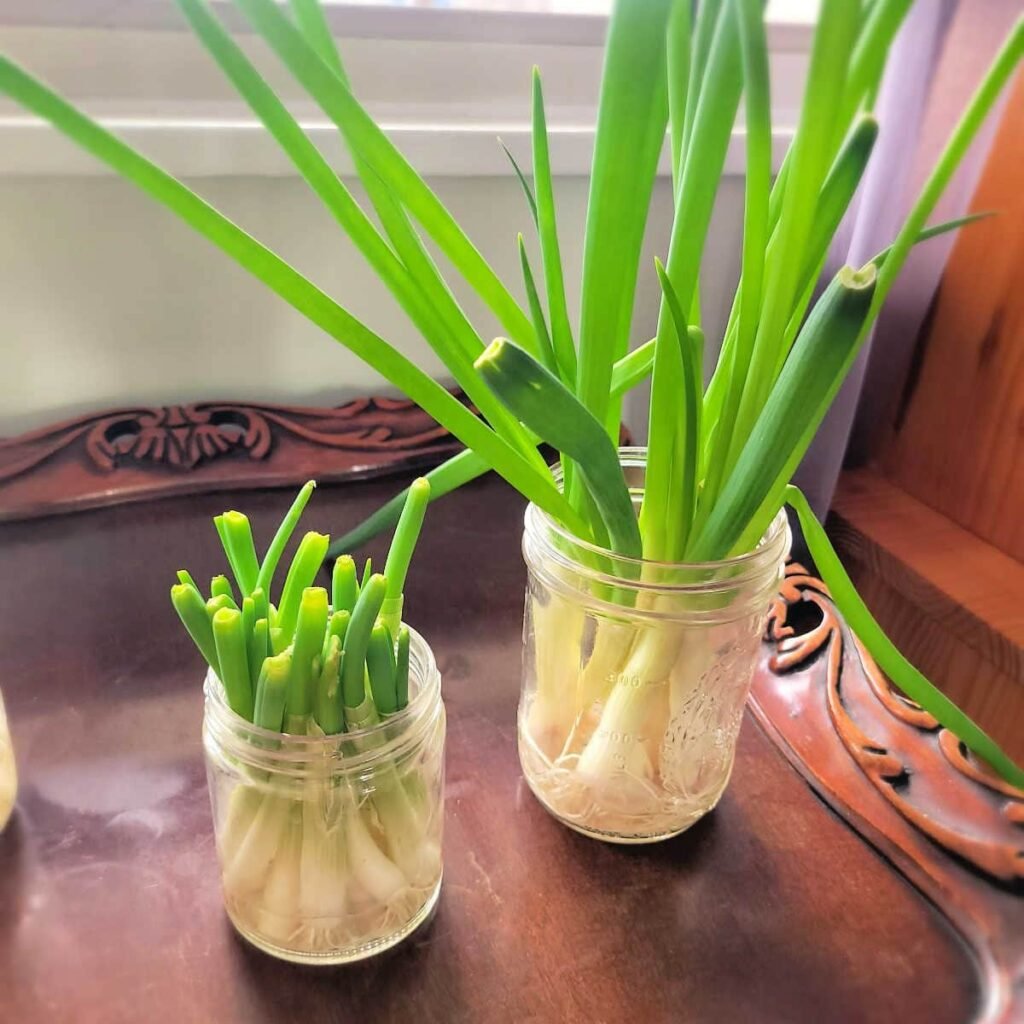
- Place in a glass with 1 inch of water.
- New green stalks appear in 2–3 days.
- Harvest greens continuously using scissors.
You can regrow spring onions 3–6 times from one scrap!
Soil Requirements for Strong Onion Growth
Onions love loose, airy, fertile soil.
Recommended Mix:
- 50% garden soil
- 30% compost
- 20% sand or cocopeat
Ideal Conditions:
- Sunny location (6+ hours daily)
- Good drainage
- Light watering every 2–3 days
Avoid heavy clay or waterlogged soil, which slows growth.
How Long Does It Take to Grow Onions from Scraps?
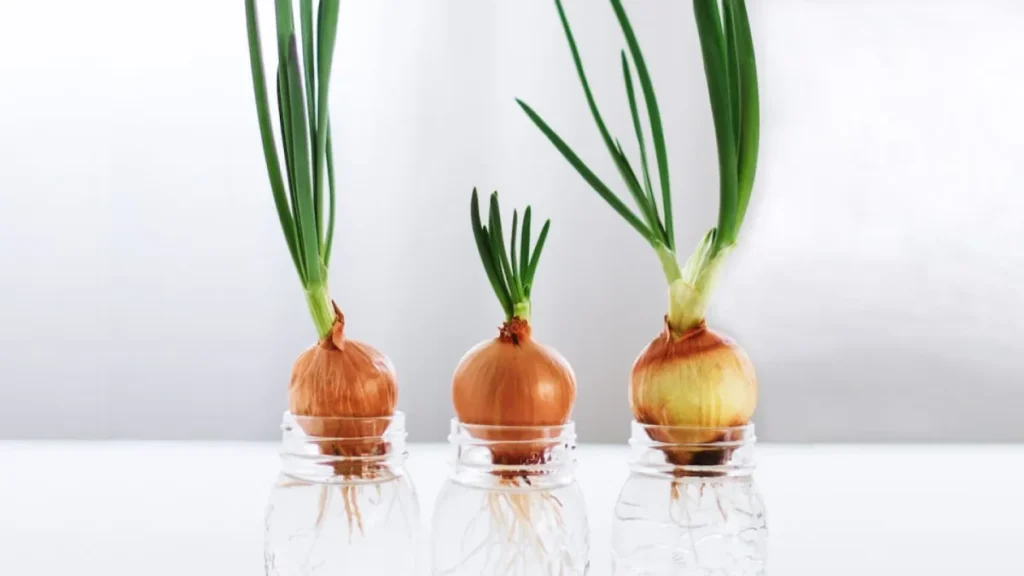
- Green onions: 5–7 days
- New bulbs: 60–90 days
- Multiple bulbs: 90–120 days
With proper care, the onion base often divides itself, giving you more onions than you started with.
Caring for Regrowing Onions
To grow large, healthy bulbs, follow these care tips:
Water Lightly
Overwatering causes rot. Keep soil moist, not soggy.
Sunlight
At least 6 hours of light daily for best results.
Fertilize Every 2 Weeks
Use:
- Organic compost
- Banana peel tea
- Diluted cow dung or vermicompost
- Onion-friendly NPK 5-10-10
Remove Weeds
Weeds steal nutrients from slow-growing onion bulbs.
Dividing Onion Shoots: Grow Many from One
One of the most interesting things about regrowing onions is that the base often splits into several new plants. When you see multiple green shoots, gently separate them:
How to Divide:
- Remove the onion from soil.
- Separate each cluster carefully.
- Plant each section individually.
This means 1 kitchen scrap can become 3–5 new onion plants.
Harvesting Your Regrown Onions
You can harvest in two ways:
Harvest for Green Leaves
Cut leaves when they reach 6–10 inches. This doesn’t harm the plant.
Harvest for Full Bulbs
When the leaves turn yellow and fall over:
- Pull the bulbs out
- Dry (cure) for a few days
- Store in a cool place
With good soil and sunlight, these bulbs can be just as large as store-bought ones.
Growing Onions Indoors vs Outdoors
Both options work beautifully.
Indoors
- Use small pots near windows
- Perfect for green onions
- Low maintenance
Outdoors
- Best for full onion bulbs
- Larger growth and more shoots
- Can plant in rows for bigger harvests
Common Mistakes & How to Avoid Them
Overwatering
Causes rot. Keep moisture moderate.
Dark Locations
Onions need sunlight to thrive.
Planting Too Deep
Deep planting slows growth.
Using Rotten Scraps
Will not root properly.
Why You Should Start Regrowing Onions Today
Regrowing onions from scraps is:
- Budget-friendly
- Eco-friendly
- Beginner-friendly
- Fast and rewarding
- A great way to grow food indoors
From one simple kitchen leftover, you can grow a fresh, organic supply of onions year-round.
Conclusion: Turn Scraps into Endless Harvests
Regrowing onions from kitchen scraps is one of the most satisfying ways to start your journey toward sustainable gardening. With minimal effort, a little sunlight, and a bit of patience, you’ll enjoy a continuous supply of onion greens—and even full bulbs—right from home.
Whether you’re growing them on a balcony, windowsill, or garden bed, this method gives you the joy of gardening without needing any seeds or special skills.