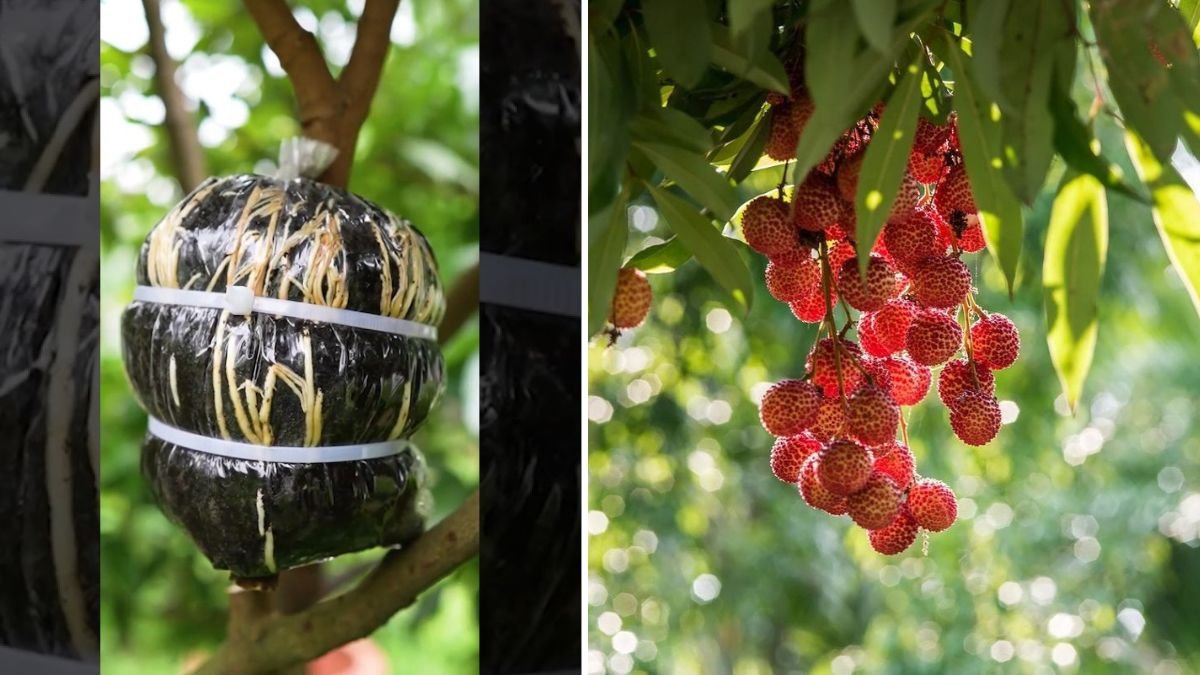
Lychee (Litchi chinensis) is one of the most delicious and exotic tropical fruits loved for its sweet, juicy, and aromatic flavor. While growing a lychee tree from seeds is slow and unpredictable, air layering is the most effective method to grow a lychee tree quickly at home. It produces a plant that is true to the parent tree, fruits much earlier, and has a higher survival rate than cuttings or seeds.
If you’ve ever wished to grow your own lychee tree but thought it was difficult, this detailed 1200-word step-by-step guide will make it incredibly easy for you—even if you are a beginner.
Why Air Layering Is the Best Method for Lychee Propagation
Lychee seeds lose their viability quickly and often produce weak, genetically different trees. Cuttings are hard to root, especially in dry climates. But air layering solves all these issues:
100% True-to-parent fruit
Faster fruiting (3–4 years compared to 8–10 years from seeds)
Higher success than cuttings
No need to remove the branch
Ideal for backyard or terrace gardeners
Air layering lets you clone the best branch from your favorite lychee tree and turn it into a new plant with almost guaranteed success.
Best Time for Lychee Air Layering
Lychee is a tropical fruit tree that responds best to warm, humid weather. The ideal time:
Late Spring
Early Monsoon
Early Summer
During these seasons, sap flow is high, and the tree actively produces new growth—perfect for root development.
Avoid winter or dry months.
What You Will Need
Before beginning the process, gather these materials:
- Mature lychee tree with thick, healthy branches
- Sharp pruning knife or blade
- Coconut coir / moss / garden soil
- Rooting hormone (optional, but boosts success rate)
- Plastic cling wrap or transparent polythene
- Cotton rope or zip ties
- Water
- Gloves
Step-by-Step Guide to Air Layering Lychee
Step 1: Choose the Right Branch
A successful air-layering begins with selecting the right branch. Choose a:
- Healthy, disease-free branch
- 1–2 years old
- Pencil-thick or slightly thicker (1–1.5 cm diameter)
- Located in good sunlight
Avoid very young or very old branches as they root poorly.
Step 2: Remove the Bark (The Girdling Step)
This is the most important part.
- Select the point where you want roots to appear (usually 1–2 feet from the branch tip).
- Use a sharp blade to remove a 1-inch ring of bark all around the branch.
- Scrape slightly to remove the green cambium layer.
This prevents the bark from reconnecting and forces the branch to send energy into producing roots.
Tip: Make a clean cut. Uneven cuts reduce success.
Step 3: Apply Rooting Hormone
While optional, rooting hormone increases the rooting speed drastically.
- Apply a light layer on the exposed area.
- You may also use organic alternatives like
- Aloe vera gel
- Honey
- Cinnamon powder
These protect against rot and boost root formation.
Step 4: Prepare the Moist Growing Medium
You can use any of the following:
Cocopeat (best choice)
Damp sphagnum moss
Mixture of garden soil + sand
Compost + cocopeat mixture
Moisture is key, but avoid dripping-wet material.
Step 5: Wrap the Treated Area
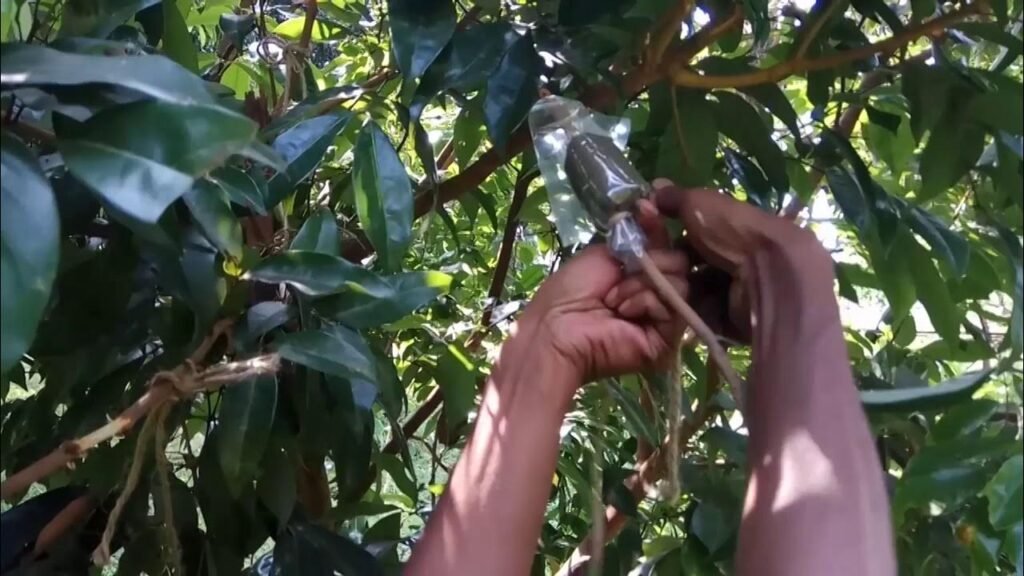
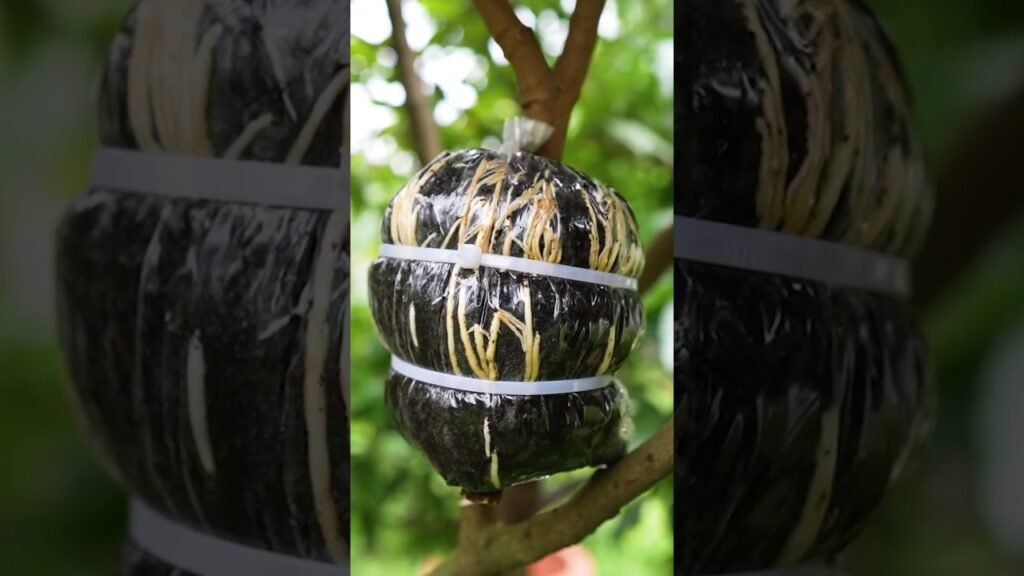
- Hold the moist medium around the girdled section.
- Cover it completely with polythene or cling wrap.
- Tie both ends securely with cotton rope, thread, or zip ties.
- Ensure it is airtight to maintain constant humidity.
Tip: Transparent wrapping helps you monitor root growth.
Step 6: Maintain the Air Layer
Lychee roots slowly compared to other tropical fruits. Be patient.
Over the next 30–70 days:
- Keep the air-layer moist (if it dries, roots won’t form).
- Do not allow water to accumulate—excess moisture can cause rot.
- Protect from heavy rain and harsh sunlight.
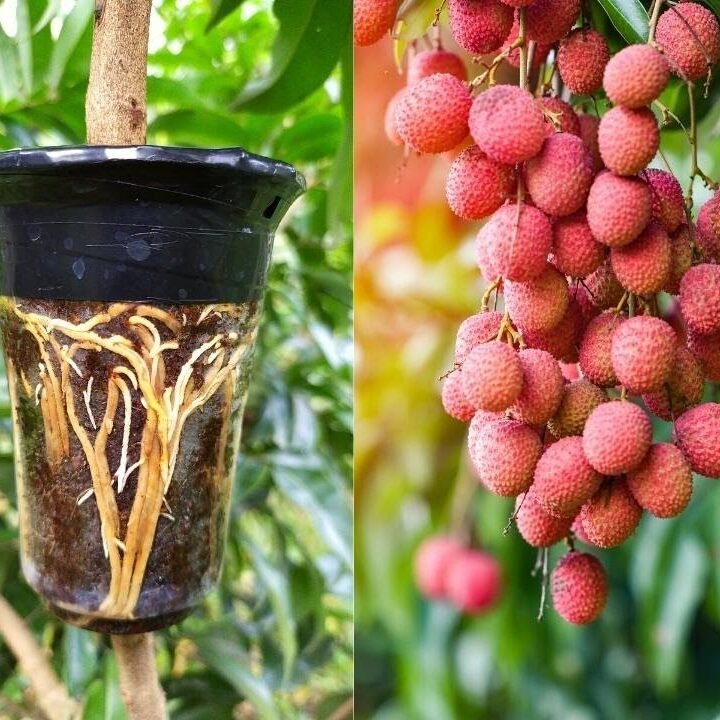
If using transparent wrap, you will see roots forming gradually in 4–8 weeks.
Root Development Timeline
Days 1–20:
Callus formation begins. The branch seals itself.
Days 20–40:
Tiny root initials appear. You may see light cream-colored spots.
Days 40–70:
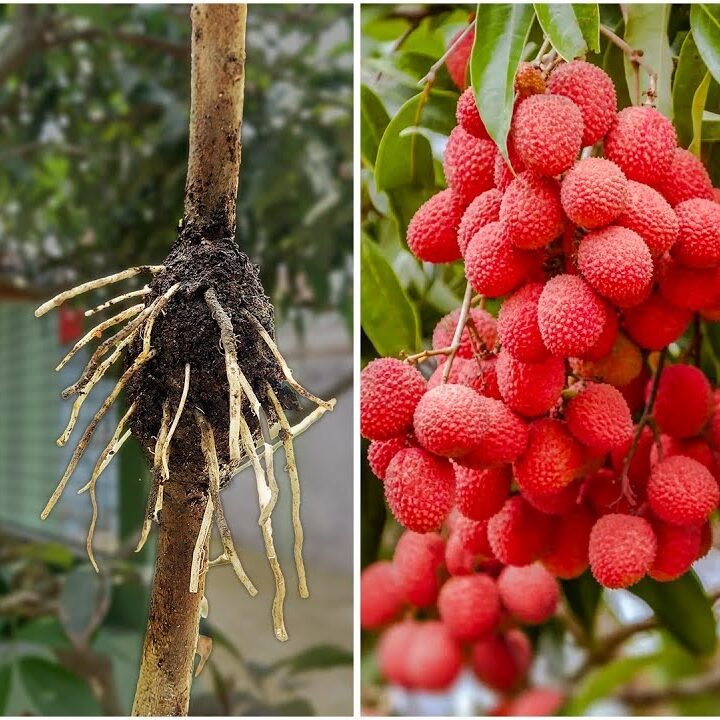
Healthy white or light brown roots fully develop and fill the moss packet.
When the roots are visible and strong enough, the air layer is ready for harvesting.
Step 7: Separate the Rooted Branch
Once enough roots appear:
- Use sharp pruners to cut the branch below the root ball.
- Handle gently to avoid breaking new roots.
This step converts the layered branch into a new independent plant.
Step 8: Transplanting the New Lychee Plant
Prepare a pot with the following:
40% garden soil
30% compost
20% sand
10% cocopeat
This mixture ensures:
✓ Good drainage
✓ Air circulation
✓ Moisture retention
Plant the rooted air-layer carefully, keeping the root ball undisturbed. Water lightly after planting.
Step 9: Aftercare for the Newly Planted Lychee
This is crucial for survival.
Avoid direct sunlight for 2–3 weeks
Place in partial shade so the plant can adjust.
Water regularly but do not overwater
Moist but not soggy soil ensures root expansion.
Mulch the top soil
Mulching keeps the soil cool and moist.
Add fertilizer after 40–50 days
Use organic fertilizer like:
- Vermicompost
- Cow dung compost
- Seaweed extract
Avoid chemical fertilizers during the first month.
When Will the Air-Layered Lychee Tree Bear Fruit?
Unlike seed-grown trees, air-layered lychee plants grow faster and fruit sooner.
Expected fruiting period: 3–4 years
This method ensures:
- Early flowering
- Better fruit taste
- Higher fruit production
You get a clone of the parent plant—perfect if you want large, sweet, juicy lychees just like the mother tree!
Common Mistakes to Avoid
Using dry or fiberless moss
Cutting too deeply into the wood
Poor quality branch selection
Letting the air layer dry out
Unclean cuts that invite disease
Transplanting under harsh sunlight immediately
Avoid these to achieve over 90–100% success.
Why You Should Grow Lychee at Home
Lychee trees are beautiful, evergreen, and rewarding. They offer:
- Delicious fruits
- Natural shade
- Fragrance during blooming
- Long lifespan
Air layering allows every gardener—beginner or expert—to grow lychee trees easily and quickly at home.
Final Thoughts
Growing lychee trees may seem challenging, but with the air-layering method, it becomes one of the simplest and most effective ways to propagate this tropical fruit. With the right branch, good moisture, and a little patience, you can grow a strong, productive lychee plant right at home.