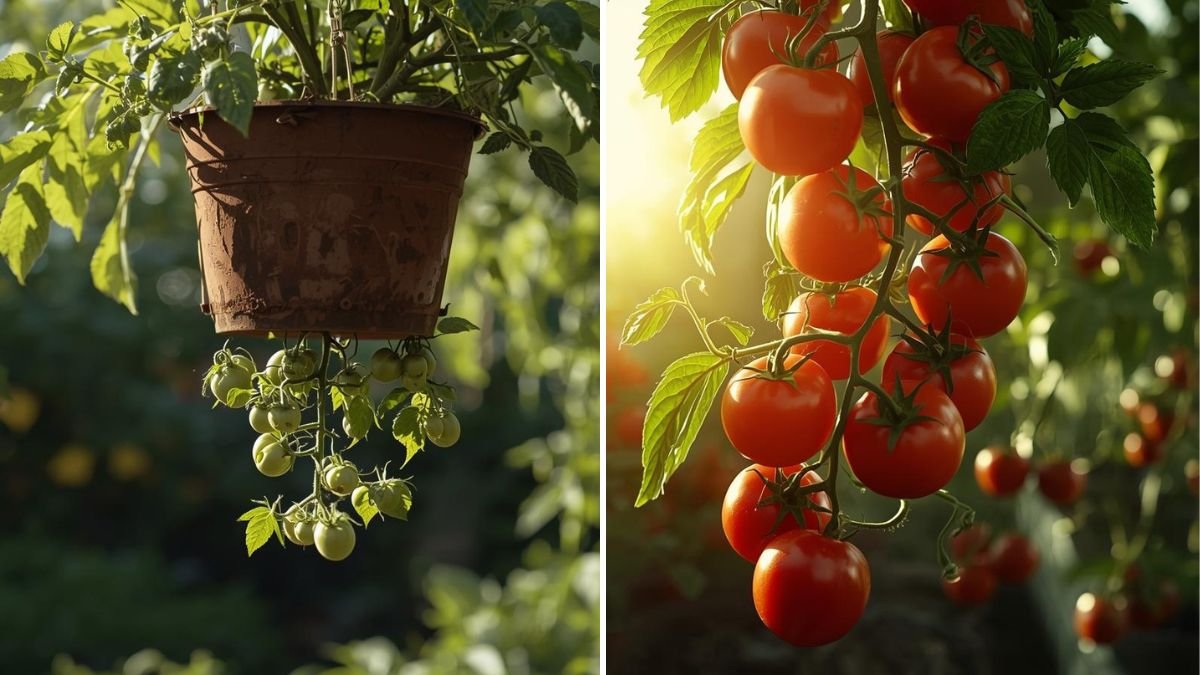
Growing tomatoes upside down is an innovative gardening technique gaining popularity among home gardeners. This method saves space, reduces pest problems, and improves air circulation around plants. Upside-down planting works well for balconies, patios, and small gardens. It minimizes soil-borne diseases that often affect tomato roots. Gravity helps strengthen stems naturally. This method also reduces bending and maintenance effort. Tomatoes grow healthier with fewer weeds competing for nutrients. Understanding the correct process ensures excellent results.
Why Grow Tomatoes Upside Down
Upside-down tomato gardening offers several practical advantages. Plants receive better airflow, reducing fungal diseases. Fruits stay cleaner and rot less because they do not touch soil. This method uses vertical space efficiently. Gardeners with limited ground area benefit greatly. Hanging containers warm faster, encouraging quicker growth. Pests like slugs and soil insects are minimized. The method is ideal for urban and indoor gardeners. It combines beauty with productivity.
Best Tomato Varieties for Upside-Down Growing
Not all tomatoes perform well upside down. Cherry, grape, and small plum varieties are best suited. These varieties produce lighter fruits that do not stress stems. Determinate tomatoes are easier to manage. Avoid heavy beefsteak types. Disease-resistant varieties increase success rates. Compact growth habits are preferable. Selecting the right variety improves yield and plant health. Variety choice determines long-term success.
Materials Needed for Upside-Down Tomato Planters
You need sturdy containers with drainage holes. Five-gallon buckets or hanging planters work well. Strong hooks, chains, or ropes are essential for support. Use high-quality potting mix for proper drainage. Coconut coir or moss helps hold plants securely. A sharp utility knife is needed for cutting holes. Organic fertilizer supports growth. Preparing materials beforehand ensures smooth planting.
Preparing the Container
Cut a hole at the bottom of the container large enough for the stem. Smooth edges to prevent damage. Insert a sponge or mesh to hold soil inside. Fill container partially with potting mix. Ensure drainage holes are clear. Strong containers prevent tipping. Secure hanging hardware tightly. Proper container preparation ensures plant stability and safety.
Planting Tomatoes Upside Down
Gently push the seedling through the bottom hole. Protect stems while pulling leaves through. Fill container with soil from the top. Press soil gently to eliminate air pockets. Water thoroughly after planting. Avoid burying leaves excessively. Ensure plant hangs freely. Proper planting technique prevents transplant shock.
Soil Requirements for Upside-Down Tomatoes
Use light, well-draining potting soil. Avoid heavy garden soil. Add compost for nutrients. Perlite improves aeration. Soil should retain moisture without becoming soggy. Balanced soil promotes root health. Organic matter boosts microbial activity. Quality soil supports strong growth and fruiting.
Watering Upside-Down Tomato Plants
Hanging plants dry out faster than ground plants. Water regularly, especially in warm weather. Check moisture daily. Water slowly to ensure deep penetration. Avoid overwatering to prevent root rot. Morning watering is ideal. Mulching the top helps retain moisture. Consistent watering improves fruit quality.
Fertilizing for Maximum Yield
Upside-down tomatoes need frequent feeding. Use balanced liquid fertilizer every two weeks. Organic options include compost tea or fish emulsion. Avoid excessive nitrogen. Potassium supports fruit development. Feed during active growth stages. Nutrient balance prevents blossom end rot. Proper feeding ensures continuous harvests.
Sunlight Requirements
Tomatoes need 6–8 hours of direct sunlight daily. Hang containers in bright, sunny locations. Rotate containers weekly if possible. Avoid shaded areas. Proper light enhances flowering and fruiting. Sun exposure affects sweetness and size. Adequate light ensures strong plant growth. Sun placement is critical.
Pruning and Maintenance
Remove excess suckers regularly. Prune yellow or diseased leaves. This improves airflow and energy use. Avoid excessive pruning. Maintenance reduces pest problems. Monitor stems for stress. Regular care improves fruit size. Balanced pruning ensures healthy plants.
Pest and Disease Control
Upside-down planting reduces many pests. Watch for aphids and mites. Use neem oil if needed. Inspect plants weekly. Remove infected parts immediately. Good airflow prevents fungal disease. Clean containers annually. Prevention is better than treatment.
Supporting Heavy Fruit
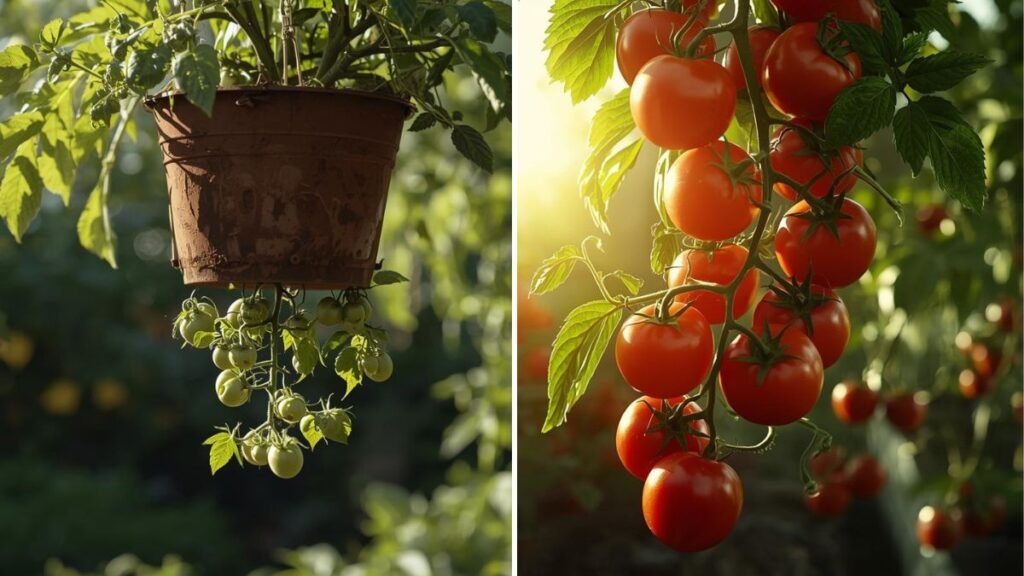
Even upside-down plants need support. Use soft ties if stems bend. Harvest fruits early if weight increases. Strong varieties resist breakage. Support reduces stress. Regular harvesting reduces load. Proper balance keeps plants healthy. Monitoring prevents damage.
Harvesting Tomatoes
Harvest when fruits are fully colored. Pick gently to avoid stem damage. Regular harvesting encourages more fruiting. Morning harvest improves freshness. Avoid leaving overripe fruits. Clean fruits after picking. Enjoy fresh, homegrown tomatoes. Timely harvest maximizes yield.
Common Mistakes to Avoid
Using heavy soil causes drainage issues. Choosing large tomato varieties increases failure. Inadequate watering leads to stress. Weak hooks cause accidents. Poor sunlight reduces yield. Overfertilizing causes leaf growth only. Ignoring pruning reduces airflow. Avoiding mistakes ensures success.
Upside-Down vs Traditional Tomato Growing
Upside-down saves space and reduces pests. Traditional methods allow larger plants. Both methods have benefits. Upside-down suits small gardens. Traditional beds suit large harvests. Choose based on space and goals. Combining both maximizes production. Flexibility improves gardening success.
Indoor Upside-Down Tomato Growing
Indoor growing requires grow lights. Temperature control is essential. Choose compact varieties. Water carefully to avoid mess. Indoor plants produce year-round. Air circulation is important. Indoor gardening suits apartments. Proper setup ensures success.
Upside-Down Tomato Growing Table
| Aspect | Requirement | Benefit |
|---|---|---|
| Container | Strong hanging planter | Plant safety |
| Soil | Light, well-draining mix | Healthy roots |
| Sunlight | 6–8 hours | Better yield |
| Water | Regular, deep | Juicy fruits |
| Variety | Cherry or grape | Less stress |
Conclusion
Growing tomatoes upside down is efficient and rewarding. It saves space and reduces disease. With proper care, yields can be excellent. This method suits beginners and experienced gardeners. Consistent watering and feeding are key. Choosing the right variety ensures success. Upside-down gardening adds beauty and productivity. Start today for fresh tomatoes anywhere.