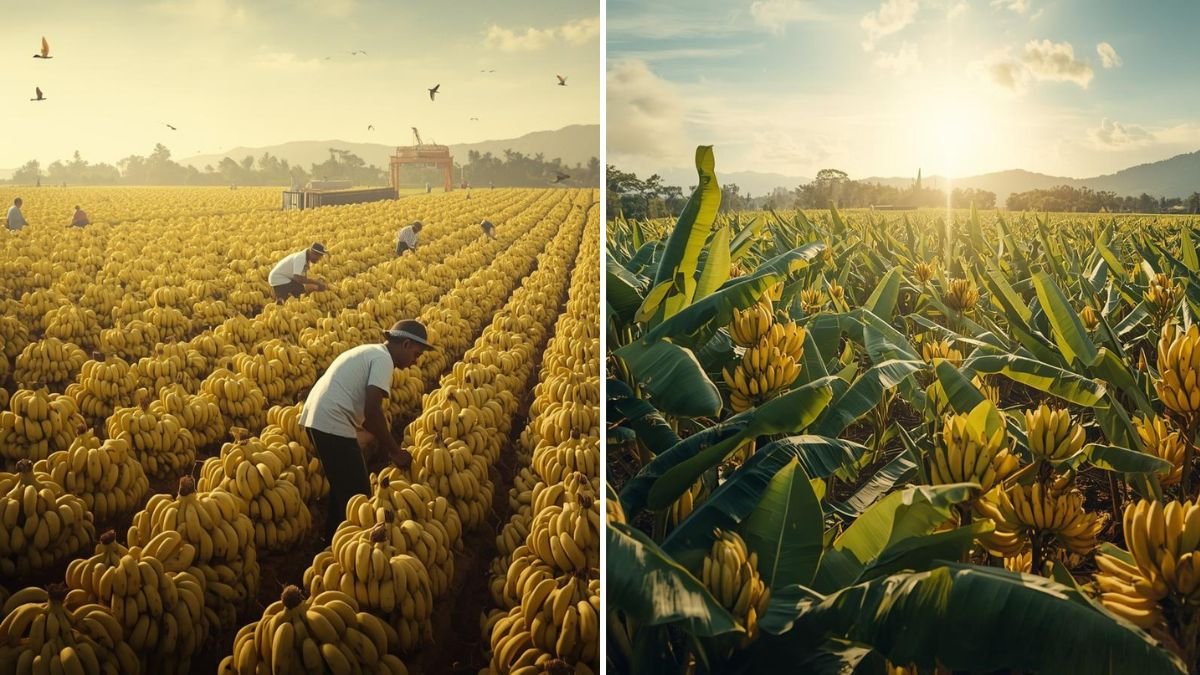
Bananas are among the most traded fruits in the world, consumed daily by millions. Their affordability, nutritional value, and year-round availability make them a staple. Global banana trade supports entire economies, especially in tropical regions. Export success depends on climate, logistics, disease management, and international trade agreements. Understanding the top banana exporter reveals how agricultural efficiency meets global demand. This article identifies the world’s leading banana exporting country and explores its export destinations. The banana trade is both economically and socially significant worldwide.
Paragraph 1: Understanding Banana Cultivation for Export
Export bananas are grown under controlled agricultural systems. Uniform size, color, and ripeness are essential. Cavendish bananas dominate global trade. Warm temperatures and high humidity support growth. Irrigation ensures consistent yield. Disease management is critical. Post-harvest handling determines quality. Export bananas follow strict standards.
Paragraph 2: Global Demand for Export Bananas
Bananas are consumed across all income groups. High demand exists in Europe, North America, and Asia. They are used fresh, processed, and in baby food. Nutritional benefits drive consumption. Low cost supports mass demand. Retail chains depend on steady supply. Export markets require reliability. Demand remains strong year-round.
Paragraph 3: Ecuador Is the World’s Largest Banana Exporter
Ecuador is the top banana exporter globally, shipping more bananas internationally than any other country. Although India produces more bananas overall, Ecuador dominates exports. Favorable climate and large plantations support high export volumes. Efficient port infrastructure ensures fast shipping. Ecuadorian bananas meet strict international standards. Long-term trade relationships strengthen exports. Ecuador supplies nearly one-third of global banana exports.
Paragraph 4: Why Ecuador Leads Global Banana Exports
Ecuador’s coastal climate is ideal for bananas. Large-scale plantations ensure consistent quality. Skilled labor improves harvesting efficiency. Export-focused farming reduces domestic consumption pressure. Strong government support enhances trade. Disease-resistant practices maintain supply. Competitive pricing attracts buyers. Ecuador’s specialization ensures dominance.
Paragraph 5: Major Banana Growing Regions in Ecuador
El Oro, Guayas, and Los Ríos are major production regions. These areas offer fertile soil and stable rainfall. Proximity to ports reduces transport costs. Regional expertise improves yields. Harvesting occurs year-round. Infrastructure supports rapid export. Regional specialization ensures consistency.
Paragraph 6: Other Major Banana Exporting Countries
Philippines, Costa Rica, Guatemala, and Colombia are major exporters. The Philippines dominates Asian markets. Central American countries supply North America. Colombia focuses on quality exports. Each exporter has regional strengths. However, Ecuador leads in total export volume.
Paragraph 7: Role of Climate in Banana Export Success
Bananas require constant warmth and humidity. Frost-free environments are essential. Excess rainfall causes disease. Balanced climate supports year-round harvesting. Ecuador’s climate stability offers advantage. Climate consistency ensures export reliability.
Paragraph 8: Post-Harvest Handling and Logistics
Bananas are harvested green. Washed and graded for quality. Packed in ventilated boxes. Shipped in temperature-controlled containers. Ripening occurs at destination. Efficient logistics preserve freshness. Speed is critical for export success.
Paragraph 9: Table – Top Banana Exporting Countries
Country Name
Ecuador – Global export leader
Philippines – Asia’s top exporter
Costa Rica – Major supplier to USA
Guatemala – Large-scale exporter
Colombia – Premium quality exporter
Paragraph 10: Table – Major Banana Importing Regions
Region
European Union
United States
Russia
Middle East
East Asia
Paragraph 11: Export Destinations of Ecuadorian Bananas
Ecuador ships bananas to Europe, Russia, the United States, and Asia. Europe is the largest market. Russia imports heavily. Middle Eastern demand is growing. Asian markets are expanding. Diverse destinations reduce risk. Trade agreements facilitate exports.
Paragraph 12: Economic Impact of Banana Exports in Ecuador
Bananas are Ecuador’s top agricultural export. Millions depend on the banana industry. Export revenue supports national economy. Infrastructure development follows export growth. Rural employment improves livelihoods. Bananas strengthen economic stability.
Paragraph 13: Quality Standards in Banana Export Trade
Export bananas meet strict phytosanitary standards. Uniform size and appearance required. Chemical residue limits enforced. Certification ensures compliance. Quality control prevents shipment rejection. Standards maintain global trust.
Paragraph 14: Sustainability Challenges in Banana Farming
Disease threats like Panama disease persist. Chemical use raises concerns. Water usage impacts environment. Sustainable farming practices are expanding. Eco-certifications gain importance. Sustainability ensures long-term exports.
Paragraph 15: Technological Advances in Banana Exports
Disease-resistant varieties are developed. Precision agriculture improves yield. Cold-chain logistics extend shelf life. Digital tracking improves traceability. Innovation supports competitiveness.
Paragraph 16: Global Competition in Banana Exports
Export competition is intense. Price fluctuations affect profitability. Trade policies influence markets. Climate risks threaten supply. Ecuador maintains leadership through efficiency.
Paragraph 17: Consumption Trends Affecting Export Volumes
Health awareness boosts banana consumption. Organic bananas gain popularity. Ready-to-eat demand increases. Emerging markets expand consumption. Trends influence export strategies.
Paragraph 18: Future Outlook of Global Banana Trade
Global demand will remain strong. Ecuador is expected to retain leadership. Sustainability will drive future investments. Technological innovation will improve resilience. Trade networks will expand.
Paragraph 19: Comparison Between Production and Export Leaders
India produces the most bananas but exports less. Ecuador focuses on exports. Production volume does not equal export dominance. Logistics and quality determine export success.
Paragraph 20: Final Thoughts
Ecuador is the world’s top banana exporter due to climate, infrastructure, and export-focused farming. Its bananas reach markets worldwide. Other countries compete regionally. Banana trade supports global food security. Export leadership requires efficiency and sustainability. Ecuador continues to shape global banana trade.