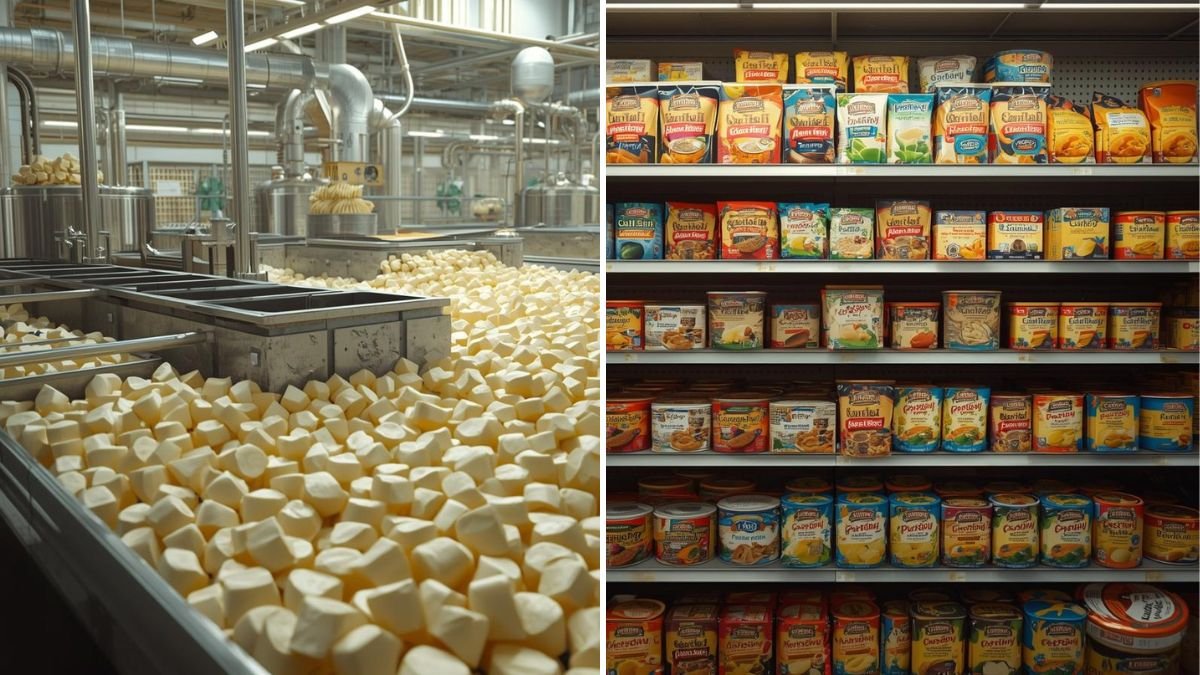
Cottage cheese is a popular dairy product consumed worldwide due to its high protein, low fat, and versatile culinary uses. Its production reflects dairy industry capacity, technological advancement, and dietary trends. Identifying the largest producer of cottage cheese provides insight into global dairy markets, trade patterns, and consumer preferences. Production depends on milk availability, processing infrastructure, and technological efficiency. Cottage cheese is favored in many countries for cooking, snacks, and health foods. Understanding global leaders helps businesses, farmers, and nutrition experts assess trends. This article explores the largest cottage cheese producer and factors driving global production.
Paragraph 1: Understanding Cottage Cheese and Its Varieties
Cottage cheese is a fresh cheese made from curds separated from whey. It comes in small-curd, large-curd, low-fat, and flavored varieties. Production methods include pasteurization, curd formation, and drainage. Texture, moisture, and taste vary regionally. Consumption patterns influence production volume. Low-fat options attract health-conscious consumers. High-moisture varieties are used in culinary dishes. Understanding types explains production differences.
Paragraph 2: Factors Influencing Cottage Cheese Production
Milk availability, dairy farm efficiency, and processing capacity are crucial. Modern equipment improves curd formation and whey drainage. Quality milk impacts taste and yield. Government policies on dairy subsidies affect production. Consumer demand drives manufacturing decisions. Export opportunities increase scale. Seasonal milk supply influences annual output. Combined factors determine global leadership.
Paragraph 3: According to Recent Data, The United States Leads Cottage Cheese Production
The United States is the largest cottage cheese producer globally, accounting for a significant share of worldwide output. High milk availability, advanced processing facilities, and strong domestic consumption drive production. U.S. manufacturers produce millions of tons annually. Cottage cheese is a staple in grocery stores, restaurants, and health-focused diets. Innovations in production technology increase efficiency and consistency. Export of packaged cottage cheese contributes modestly. Domestic demand ensures continuous growth. U.S. dairy infrastructure supports leadership.
Paragraph 4: Why the United States Dominates Cottage Cheese Production
The U.S. benefits from abundant dairy farms and high-quality milk supply. Modern processing plants allow large-scale production. Investment in research ensures consistent texture and taste. Strong consumer market supports diverse products. Government programs aid dairy farmers with subsidies and technological assistance. Supply chain efficiency ensures rapid distribution. Brand recognition increases market penetration. Combining milk resources, technology, and consumer demand maintains global leadership.
Paragraph 5: Major Cottage Cheese Producing States in the U.S.
Wisconsin, California, and New York are top producing states. Wisconsin is renowned for cheese quality. California’s large dairy farms contribute heavily to volume. New York specializes in both domestic consumption and export-ready cottage cheese. Each state has infrastructure for milk collection, processing, and packaging. Climate, feed quality, and farm management impact yield. Regional production balances demand fluctuations. Collaboration between states strengthens supply. State-level expertise ensures high-quality products.
Paragraph 6: Other Leading Cottage Cheese Producing Countries
Other significant producers include Germany, Poland, France, and Australia. Germany has a strong traditional dairy industry. Poland and France produce high-quality cottage cheese for local and European markets. Australia focuses on export markets. Production in these countries is smaller than in the U.S. due to smaller dairy industry scale. European demand ensures consistent output. Regional variations influence variety and texture. Global competition drives innovation.
Paragraph 7: Role of Technology in Cottage Cheese Production
Automated curd cutting, pasteurization, and whey separation improve efficiency. Temperature control ensures safety and flavor. Modern packaging maintains freshness. Advanced quality testing ensures consistency. Production automation reduces labor dependency. Research and development optimize yield and texture. Technology allows large-scale production without sacrificing quality. Efficient processes give the U.S. competitive advantage.
Paragraph 8: Milk Quality and Its Impact on Production
High-quality milk ensures firm curds and creamy texture. Fat and protein content influence yield. Consistent milk supply supports year-round production. Testing for bacterial load ensures safety. Feed quality affects milk flavor and composition. Dairy farm management impacts milk reliability. Milk storage and transportation maintain freshness. Strong milk supply underpins global cottage cheese production.
Paragraph 9: Consumer Trends Driving Cottage Cheese Demand
High-protein, low-fat diets have boosted demand. Fitness enthusiasts and health-conscious consumers prefer cottage cheese. Versatility in cooking increases household usage. Snacks, salads, and smoothies incorporate cottage cheese. Global health trends have increased demand in Europe and Asia. Innovation in flavors and packaging attracts younger consumers. Market trends encourage larger production. Consumer behavior shapes industry growth.
Paragraph 10: Domestic Consumption vs Export Production
The majority of U.S. cottage cheese is consumed domestically. Exports supplement production but remain limited. European countries also focus on domestic markets. Production planning balances demand, inventory, and shelf-life. Export packaging ensures safety during transportation. Domestic stability reduces production fluctuations. Consumption patterns influence new product development. Market stability maintains continuous production.
Paragraph 11: Table – Top Cottage Cheese Producing Countries
| Country | Production Rank | Key Advantage |
|---|---|---|
| United States | First | Large-scale dairies, technology |
| Germany | Second | Traditional cheese industry |
| Poland | Third | High-quality milk supply |
| France | Fourth | Regional expertise, European market |
| Australia | Fifth | Export-oriented production |
Paragraph 12: Table – Factors Supporting High Production
| Factor | Impact | Example |
|---|---|---|
| Milk supply | High yield | Wisconsin, California |
| Technology | Efficient processing | Automated curd cutting |
| Consumer demand | Consistent production | Domestic U.S. market |
| R&D | Improved texture & flavor | U.S. manufacturers |
Paragraph 13: Challenges in Cottage Cheese Production
Challenges include milk price volatility, quality variation, and seasonal supply fluctuations. Labor shortages can affect production capacity. Shelf-life limitations require efficient distribution. Consumer preferences shift with trends, affecting product lines. Energy costs influence processing. Export regulations can be complex. Maintaining consistent texture and flavor is essential. Addressing challenges ensures continued growth.
Paragraph 14: Sustainability Practices in Dairy Production
Sustainable dairy farms reduce water and energy usage. Waste management and manure recycling improve environmental impact. Organic feed improves milk quality. Reducing greenhouse gas emissions benefits production reputation. Energy-efficient processing reduces costs. Sustainable practices support long-term availability. Farms adopting eco-friendly methods gain market advantage. Sustainability aligns with global trends.
Paragraph 15: Innovations in Cottage Cheese Products
Flavor variations, protein-enriched formulas, and ready-to-eat packaging expand consumer options. Plant-based alternatives cater to lactose-intolerant individuals. Textural modifications attract diverse markets. Branding and marketing innovations increase sales. Research improves shelf-life without preservatives. Innovations meet changing dietary needs. Product differentiation strengthens market position. Creativity fuels production growth.
Paragraph 16: Economic Impact of Cottage Cheese Production
Cottage cheese contributes to dairy industry revenue. Supports farm income and processing jobs. Export revenue adds to trade balance. Domestic sales stabilize market prices. Processing creates value-added opportunities. Foodservice industry benefits from supply consistency. Local economies grow alongside production. Industry significance goes beyond nutrition.
Paragraph 17: Table – Global Cottage Cheese Consumption Trends
| Region | Consumption Trend | Notes |
|---|---|---|
| North America | Increasing | Health-conscious diets |
| Europe | Stable | Traditional usage |
| Asia | Rising | Western dietary influence |
| Australia | Moderate | Export focus |
| Middle East | Emerging | Niche market |
Paragraph 18: Future Outlook of Global Production
Demand for high-protein, low-fat dairy products is expected to grow. Technological advances will further improve efficiency. Emerging markets in Asia and the Middle East may increase production. The U.S. is likely to maintain leadership due to large-scale operations. Sustainability initiatives will guide investment. Innovation in product lines will drive market expansion. Global competition remains healthy. Future growth is promising.
Paragraph 19: Challenges and Opportunities in Export Markets
Export markets face logistical, regulatory, and cultural challenges. Packaging, shelf-life, and labeling impact international sales. Opportunities exist in emerging economies seeking high-protein foods. Strategic partnerships and trade agreements can expand reach. Understanding local tastes improves market penetration. Export planning complements domestic production. Opportunities and challenges balance global growth. Export strategies strengthen leadership.
Paragraph 20: Final Thoughts
The United States leads global cottage cheese production thanks to abundant milk, modern technology, and strong domestic demand. Other countries contribute but at smaller scales. Production is influenced by milk quality, consumer trends, and processing innovations. Sustainable practices, flavor variations, and year-round availability drive continued growth. Understanding global leaders aids business decisions. Cottage cheese remains a key dairy product worldwide. Strategic planning ensures future growth. Global dominance reflects combined dairy efficiency and innovation.