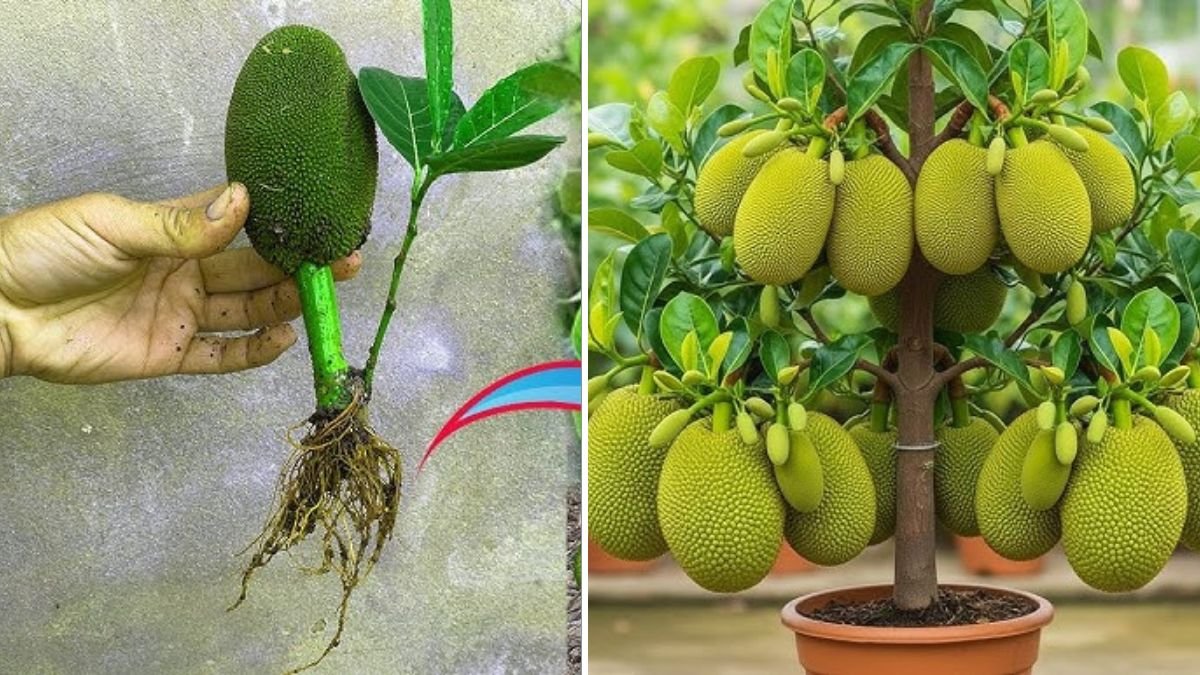
Jackfruit is a tropical marvel—renowned for its massive fruits, unique aroma, and exceptional nutritional value. Beyond being a delicious fruit, jackfruit is a powerhouse of vitamins, minerals, and fiber. For growers, propagating jackfruit through seeds is possible, but grafting is the preferred method to produce high-quality trees that are disease-resistant, uniform, and faster to fruit.
In this guide, we will explore a new technique for grafting jackfruit, highlighting step-by-step instructions, materials, care methods, and tips for maximizing tree growth and fruit production. This method is suitable for both home gardeners and commercial farmers who want to achieve high-yield, consistent, and healthy jackfruit trees.
Why Grafting Jackfruit Is Essential
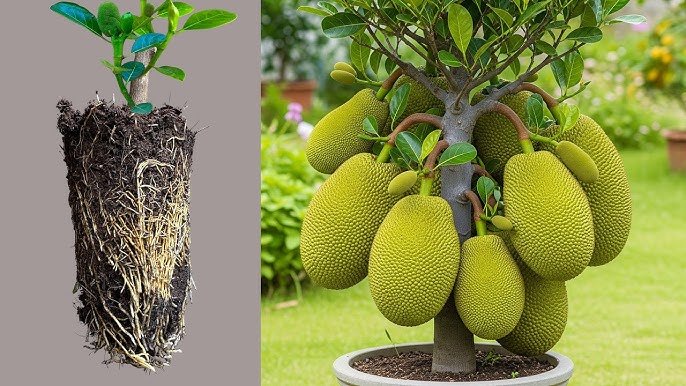
While jackfruit trees can be grown from seeds, there are limitations:
- Genetic variation: Seed-grown trees may produce fruits that differ in size, taste, or aroma.
- Longer time to fruiting: Seedlings may take 6–8 years to produce fruits.
- Weaker disease resistance: Some seedlings are less robust and more susceptible to pests.
Grafting overcomes these challenges by:
- Producing true-to-type trees identical to the parent variety
- Ensuring earlier fruiting (often within 3–4 years)
- Strengthening trees with resistant rootstock
- Maintaining high-quality fruit characteristics
This makes grafting an essential technique for serious jackfruit cultivation.
Introducing the New Grafting Technique for Jackfruit
Traditional grafting methods, such as cleft or veneer grafting, sometimes fail due to poor cambium alignment or scion dehydration.
The “Tongue-In-Groove Jackfruit Grafting Method” is an innovative approach designed to improve success rates. It focuses on:
- Maximizing cambium contact between rootstock and scion
- Reducing stress during grafting
- Ensuring rapid callus formation and strong union
- Simplifying the grafting process for beginners and experts alike
This method works well with high-yield jackfruit varieties like Black Gold, NS-1, and Cheena.
Best Time for Jackfruit Grafting
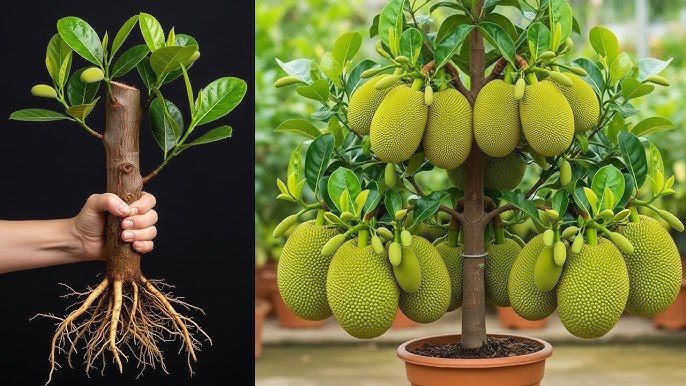
Timing is crucial for successful grafting:
- Pre-monsoon (March–May): Optimal for most tropical regions
- Early monsoon (June–July): High humidity favors graft union healing
Avoid extreme temperatures and dry periods. Ideal conditions involve moderate warmth, high humidity, and active sap flow.
Materials Required
To perform the new grafting technique, gather:
- Healthy jackfruit rootstock (1–2 years old)
- Scion from a high-yielding, disease-free jackfruit tree
- Sharp grafting knife
- Sterile pruning shears
- Grafting tape or cling film
- Small polythene bag or shade cloth
- Rubber bands or jute thread
Sterilization is key to prevent infection and ensure graft success.
Choosing the Right Rootstock
The rootstock is the foundation of a grafted tree. Ideal traits include:
- Strong, disease-resistant roots
- Vigorous growth
- Compatible stem thickness with the scion
Healthy seedlings of selected jackfruit varieties are commonly used. A robust rootstock ensures faster growth and better fruiting.
Selecting the Perfect Scion
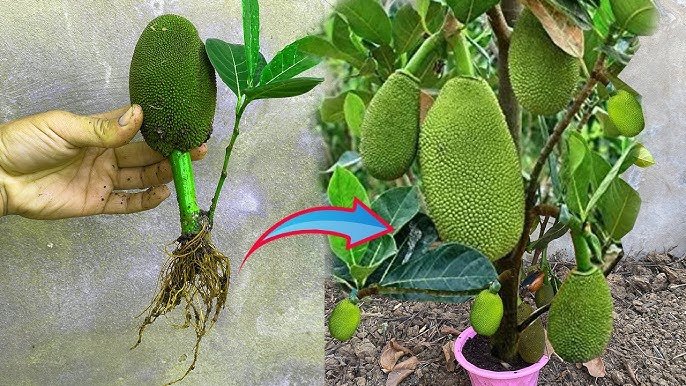
Scion selection ensures fruit quality and early production:
- Take a scion from a healthy, high-yielding jackfruit tree
- Choose semi-hardwood shoots with 2–3 buds
- Length: 6–8 inches
- Harvest in the morning when sap levels are optimal
Using high-quality scions ensures your grafted tree produces true-to-type fruits.
Step-by-Step Guide: Tongue-In-Groove Grafting Method
Step 1: Prepare the Rootstock
- Cut the rootstock horizontally 10–15 cm above the soil.
- Make a vertical groove (3–4 cm deep) in the center of the cut.
This groove will hold the scion securely and maximize cambium contact.
Step 2: Prepare the Scion
- Shape the base of the scion into a tongue shape with a small wedge.
- Ensure the cuts are smooth for proper cambium alignment.
The tongue-in-groove fit allows maximum contact and stability, increasing graft success.
Step 3: Insert the Scion
- Slide the scion carefully into the rootstock groove.
- Align cambium layers along one side to ensure strong growth.
- Make sure buds are facing upward.
Proper alignment ensures a healthy union and faster healing.
Step 4: Secure the Graft
- Wrap the graft union with grafting tape or cling film, starting at the base and moving upward.
- Ensure the wrap is tight enough to hold the scion without crushing it.
- Optionally, cover with a plastic bag or shade cloth to retain humidity.
Step 5: Post-Grafting Care
- Keep the grafted plant in partial shade for 2–3 weeks.
- Water moderately to maintain soil moisture.
- Remove the graft tape after 4–6 weeks when new shoots emerge and the union is strong.
Signs of Successful Grafting
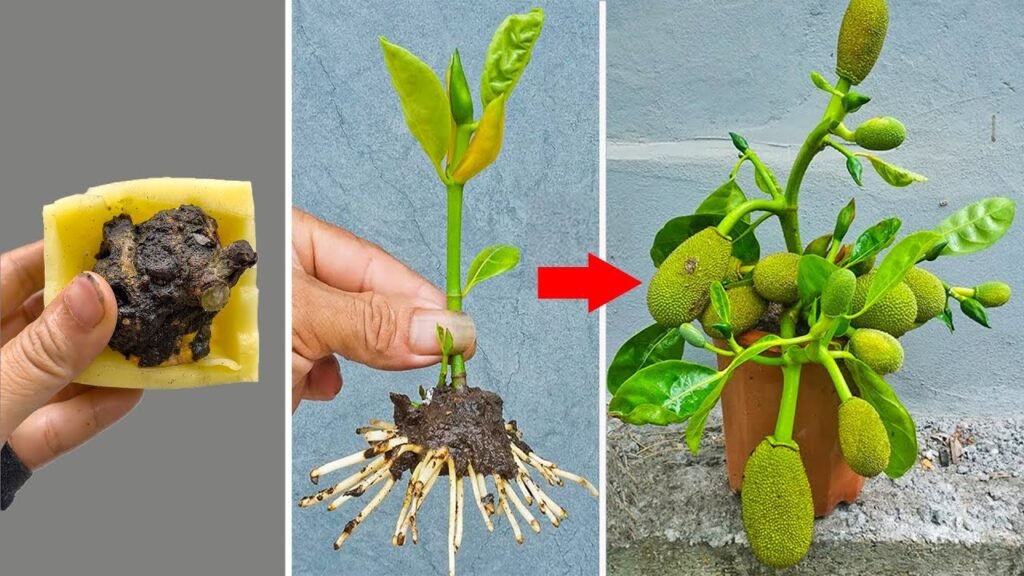
After 2–4 weeks, look for:
- Swelling at the scion buds
- Emergence of tiny leaves
- Firm, green scion (not shriveled or dry)
These are strong indicators that the graft has taken successfully.
Aftercare for Healthy Growth
- Remove shoots emerging from the rootstock to prevent competition with the scion.
- Apply organic compost monthly to enhance growth.
- Provide support to prevent bending or breakage of young grafts.
- Ensure proper sunlight, water, and pest management.
With proper care, the grafted jackfruit tree will grow strong and bear fruits faster than seed-grown trees.
Advantages of the Tongue-In-Groove Technique
- Higher success rate: Precise alignment improves graft survival.
- Stronger union: Healthy cambium contact strengthens growth.
- Faster fruiting: Grafted trees may bear fruit in 3–4 years.
- True-to-type fruit: Maintains parent tree qualities.
- Simplified process: Easier to perform for beginners and experts alike.
Compared to traditional methods, this technique is faster, more reliable, and efficient.
Expected Results from a Successfully Grafted Jackfruit Tree
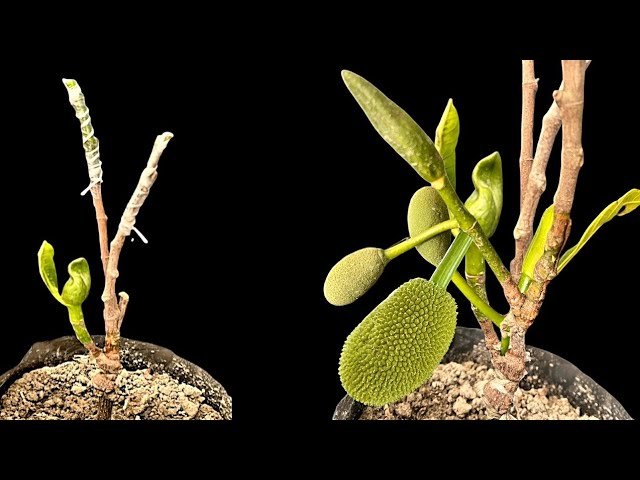
- Early fruiting: 3–4 years instead of 6–8 years for seedlings
- Consistent high-quality fruits with uniform taste, size, and aroma
- Vigorous growth and strong root system
- Better resistance to diseases and pests
This technique is suitable for both home gardens and commercial orchards.
Tips for Maximum Success
- Use healthy, disease-free scions and rootstocks
- Sterilize all tools to prevent infections
- Avoid grafting in extreme weather conditions
- Maintain proper moisture and humidity around the graft
- Graft multiple scions to improve success chances
Attention to detail ensures high survival rates and productive trees.
Conclusion
The Tongue-In-Groove grafting technique represents a new era in jackfruit propagation. By combining precise cuts, proper cambium alignment, and careful aftercare, gardeners and farmers can enjoy:
- Faster fruiting
- Stronger, disease-resistant trees
- High-quality fruits identical to the parent tree
- Simplified grafting suitable for both small and large-scale cultivation
Whether you’re a home gardener seeking a fruitful backyard or a commercial grower aiming for consistent high-yield trees, this innovative grafting technique makes jackfruit cultivation more efficient, productive, and rewarding.
With proper selection of rootstock and scion, careful grafting, and attentive care, you can enjoy delicious, aromatic jackfruits in less time, transforming your garden or orchard into a source of fresh, tropical bounty.