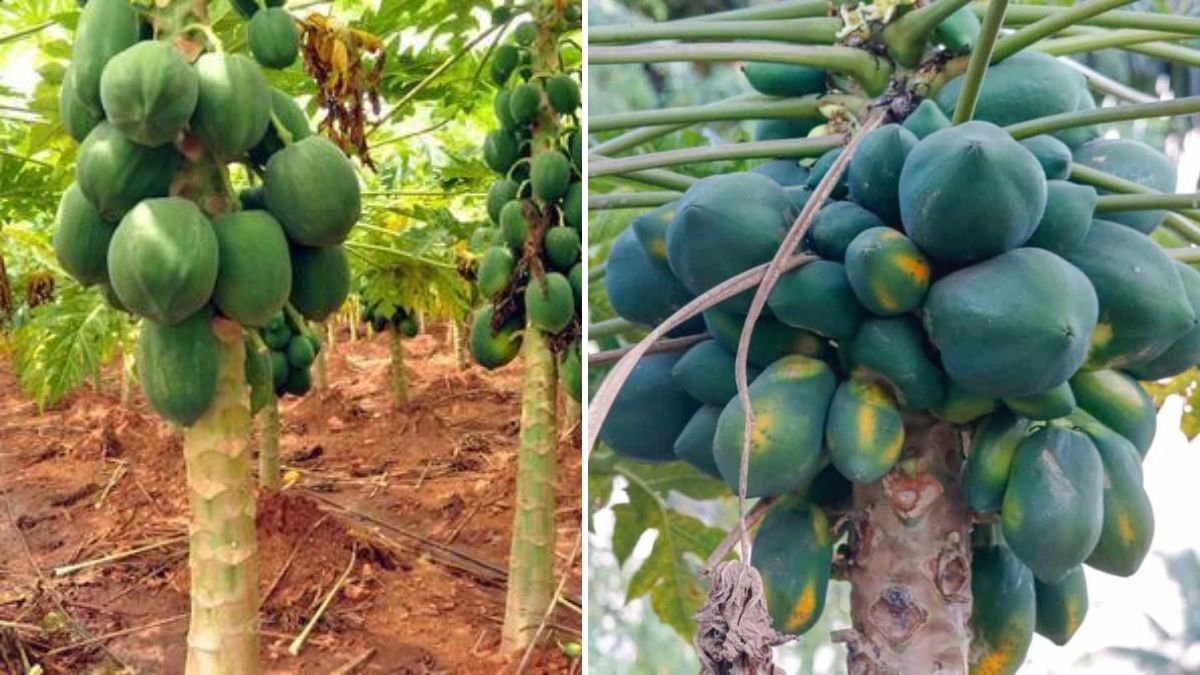
Papaya is one of the fastest-growing and most rewarding fruit trees you can grow. Known for its sweet, nutrient-rich fruit and its medicinal leaves, papaya is cherished in households, farms, and home gardens across the world. With its tropical flavor, easy cultivation, and year-round fruiting potential, papaya is a perfect choice for beginners and experienced growers alike.
Despite its simplicity, many people face common issues like fruit rot, poor germination, and slow growth. The secret to thriving papaya plants lies in understanding their needs—soil, climate, water, nutrition, and variety selection. This detailed guide will walk you through how to grow papaya from seed to harvest, with easy, practical techniques to ensure healthy plants and abundant fruits.
Let’s begin your journey to growing juicy, delicious papayas right in your own backyard!
1. Understanding Papaya: A Fast-Growing Tropical Wonder
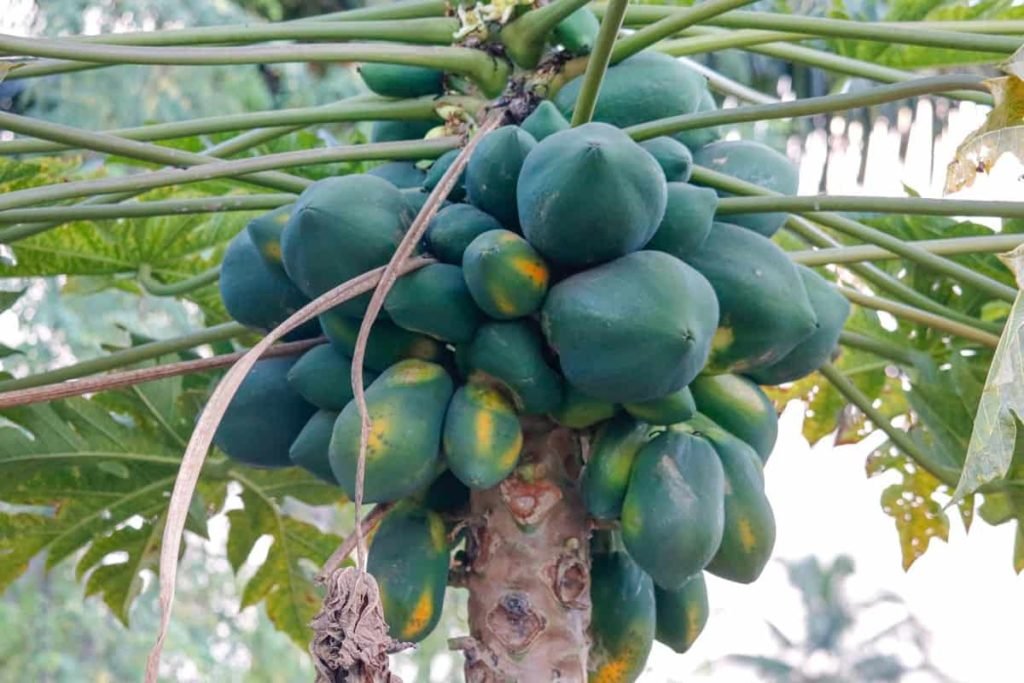
Papaya (Carica papaya) is a warm-loving fruit tree that grows quickly and starts producing fruit within 7–12 months after planting. It can reach a height of 10–12 feet and yields continuously for several years.
✔️ Ideal Conditions for Papaya:
- Temperature: 22°C to 35°C
- Sunlight: 6–8 hours of direct sunlight daily
- Rainfall: Moderate, but soil must be well-drained
- Climate: Tropical and subtropical regions
Papaya hates waterlogging. Even a few hours of standing water can damage its roots and cause stem rot. Proper drainage is the foundation of successful papaya cultivation.
2. Choosing the Right Papaya Variety
Choosing the right variety makes a huge difference in yield, taste, and plant health.
✔️ Popular Papaya Varieties:
- Red Lady: Fast-growing, high-yield, dwarf type
- Taiwan 786: Sweet fruits, good productivity
- Pusa Delicious: Known for rich taste
- Pusa Nanha: Perfect for containers
- CO-2, CO-8: Suitable for tropical climates
For beginners, Red Lady and Taiwan 786 are the best choices.
3. How to Grow Papaya from Seeds
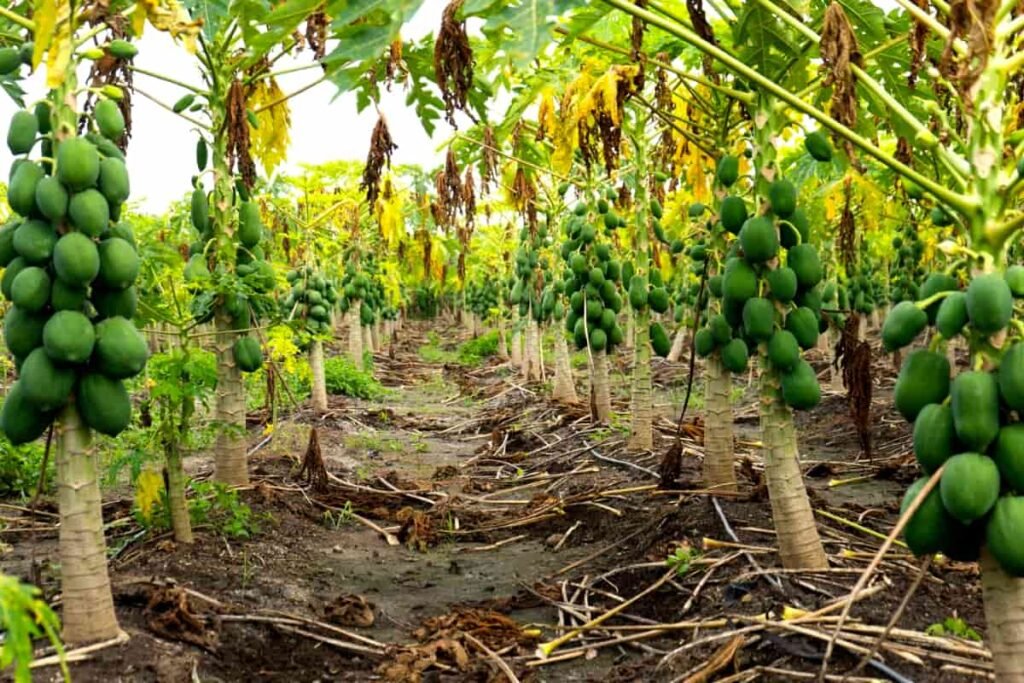
Growing papaya from seed is simple, fast, and cost-effective.
✔️ Step 1: Collect Fresh Seeds
Cut a ripe papaya and scoop out the seeds. Wash them thoroughly to remove the gel-like coating and dry them in shade for 1–2 days.
✔️ Step 2: Prepare Seed Trays or Polybags
Fill them with a seed-starting mix:
- 50% coco peat
- 30% garden soil
- 20% compost
This ensures good drainage and fast germination.
✔️ Step 3: Sow the Seeds
- Sow 2–3 seeds in each hole.
- Cover lightly with soil.
- Water gently.
✔️ Step 4: Germination
Papaya seeds germinate in 10–20 days. Keep the soil moist but never soggy.
Select the healthiest seedling and remove the weaker ones.
4. Preparing the Soil and Planting Site
Papaya loves soft, fertile, well-draining soil.
✔️ Best Soil Mix:
- 60% garden soil
- 20% river sand
- 20% compost
The soil should never become compact; loose soil encourages deeper roots and stronger growth.
✔️ Planting Pit Preparation:
- Dig a pit of 2 × 2 × 2 feet.
- Mix compost, neem cake, and sand with topsoil.
- Ensure a raised bed or mound to prevent waterlogging.
Place the seedlings in the center and cover gently with soil.
5. Spacing and Plantation Tips
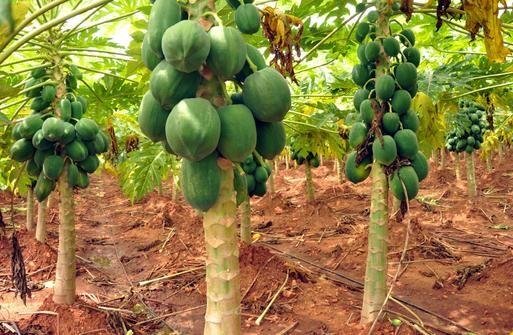
Proper spacing ensures healthy airflow and maximum sunlight.
✔️ Recommended Spacing:
- For fields: 6×6 or 7×7 feet
- For home gardens: 1–2 plants in a corner
- For containers: Use 18–22 inch deep pots
Papaya grows best when planted in clusters of three. One of the plants will be male, which improves pollination and fruit set.
6. Watering the Papaya Plant Correctly
Papaya needs regular moisture but cannot tolerate standing water.
✔️ Watering Tips:
- Water every 2–3 days in summer.
- Reduce watering during winter.
- Always water early in the morning.
- Mulch the base of the plant to retain moisture.
Never water on the trunk—this can cause fungal infection and stem rot.
7. Fertilizing Papaya for Maximum Growth and Fruiting
Papaya is a heavy feeder and appreciates regular fertilization.
✔️ Organic Fertilizers:
- Cow dung compost
- Vermicompost
- Neem cake
- Seaweed extract
- Mustard cake water
✔️ Fertilization Schedule:
- Every month: 2–3 kg compost
- Every 15 days: Liquid fertilizer (banana peel water, seaweed, or vermicompost tea)
- Once in 2 months: Neem cake to prevent pests
A well-fed papaya plant gives bigger fruits and higher yields.
8. Supporting the Young Papaya Plant
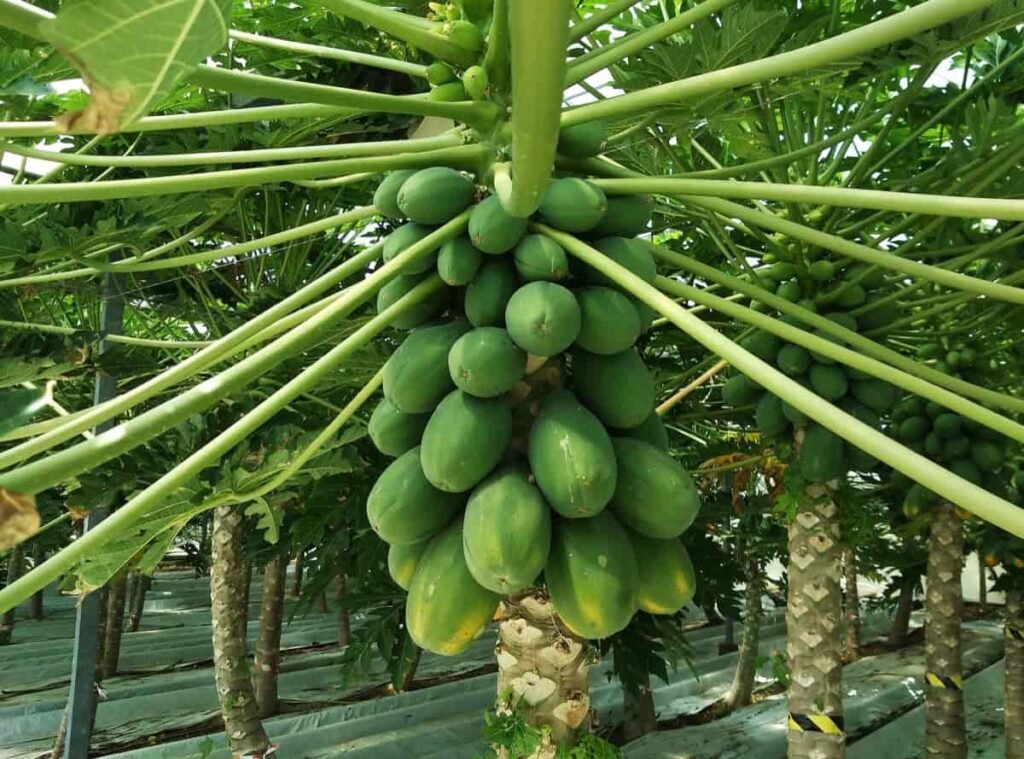
Papaya trunks are soft and can break in strong winds. Use a bamboo stick or wooden pole to support the plant until it becomes strong.
9. Identifying Male, Female & Hermaphrodite Papaya Plants
Papaya plants can produce three types of flowers:
✔️ Male Plants:
- Produce only pollen
- Do not bear fruits
✔️ Female Plants:
- Produce fruits but need pollen
✔️ Hermaphrodite Plants:
- Best for cultivation
- Produce both pollen and fruits
- Give uniform and high-quality harvest
This is why hybrid seeds like Red Lady are extremely popular—they produce mostly hermaphrodite plants.
10. Preventing Common Papaya Problems
Papaya plants are sensitive, and early care prevents major losses.
✔️ Common Issues and Solutions:
Yellowing Leaves
Cause: Nutrient deficiency
Solution: Add compost and magnesium (Epsom salt)
Fruit Rot
Cause: Excess water
Solution: Improve drainage and reduce watering
Fruit Drop
Cause: Poor pollination
Solution: Keep one male plant nearby
Whiteflies or Aphids
Solution: Use neem oil spray every 10 days
Stem Rot
Cause: Watering on the trunk
Solution: Irrigate only the soil around the plant
11. When Will Papaya Start Fruiting?
Papaya is one of the fastest fruit trees to bear fruit.
✔️ Fruiting Timeline:
- Starts flowering in 5–7 months
- Starts fruiting in 7–12 months
With good care, each plant can produce 40–120 fruits annually.
12. Harvesting Papayas the Right Way
Harvest papayas when:
- The skin turns light yellow
- The fruit feels slightly soft
- The aroma becomes sweet
Pick carefully to avoid bruising, as papayas are delicate.
13. Growing Papaya in Pots
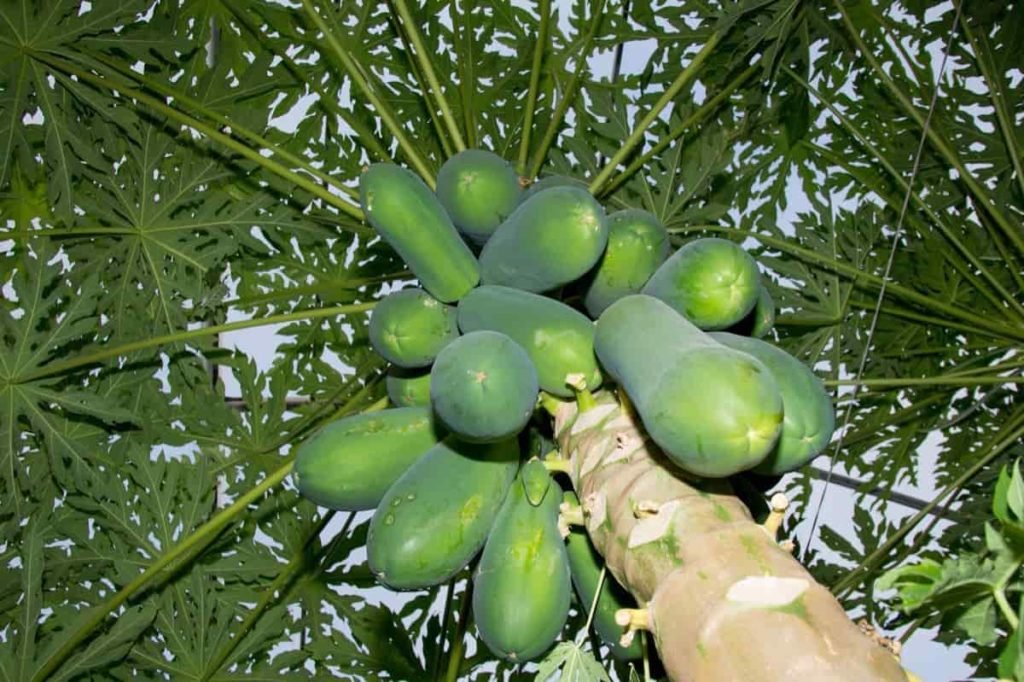
Yes, papaya can be grown successfully in pots!
✔️ Requirements:
- 18–22 inch deep pot
- Loose, rich soil
- Red Lady or Pusa Nanha variety
Place the pot in full sun and follow regular watering and feeding schedules.
You can expect fruits within 10 months.
14. Special Tips for Bigger, Sweeter Papayas
- Add banana peel fertilizer once a month
- Mulch around the plant
- Ensure 6–8 hours of sunlight
- Apply seaweed extract or Epsom salt monthly
- Do not overcrowd the plant
- Keep one male plant for better pollination
These simple tips significantly improve both size and sweetness.
Final Thoughts
Growing papaya is one of the most fulfilling gardening experiences. With the right soil preparation, consistent watering, sunlight, and nutrition, papaya plants reward you with fast growth and heavy fruit yields. This tropical fruit tree is perfect for home gardeners, terrace gardeners, and farmers wanting a reliable, quick-to-harvest crop.
By following the steps in this complete guide, you can enjoy fresh, sweet, home-grown papayas in less than a year. Whether you grow them in pots or in the ground, papayas thrive with simple, consistent care and give delicious returns for years.