
Lemon trees are among the most rewarding plants you can grow at home. With their fragrant flowers, glossy green leaves, and tangy fruits, they bring beauty and freshness to any garden. But what makes lemon trees even more exciting is that they are easy to propagate, meaning you can create new plants from cuttings, seeds, or grafting techniques without spending much money.
Whether you are a gardening beginner or an experienced horticulturist, learning how to propagate a lemon tree gives you control over plant quality, fruit production, and growth speed. In this 1200-word guide, we will explore every method, highlight the best techniques, and teach you how to grow healthy lemon trees successfully.
Introduction: Why Propagate Lemon Trees?

Propagation is the process of creating new plants from existing ones. Lemon trees are perfect candidates for propagation because:
- They root easily from cuttings
- They adapt well to pot or soil
- They grow fast when propagated correctly
- They produce fruits earlier than seed-grown plants
- You can clone a plant with desirable traits (like sweeter fruits or higher yield)
Most gardeners prefer propagation because it guarantees the new plant will inherit the exact qualities of the parent tree.
Method 1: Propagating Lemon Trees Using Cuttings (Most Popular Method)
Propagation through cuttings is the easiest and most reliable technique. Cuttings develop roots quickly and grow into sturdy plants.
What You Need
- Healthy lemon branch (6–8 inches long)
- Sharp pruning shears
- Rooting hormone (optional but recommended)
- Pot with well-draining soil
- Plastic bag or humidity cover
Step 1: Choose the Right Cutting
Select a branch that is:
- Semi-hardwood (not too soft, not too woody)
- Greenish-brown
- Free from diseases
- With 3–4 nodes
Remove all leaves from the bottom half.
Step 2: Trim the Cutting Properly
Cut at a 45-degree angle.
This increases surface area and promotes root development.
Step 3: Apply Rooting Hormone (Optional)
Rooting hormones speed up root formation, especially for woody plants like lemon.
Step 4: Plant the Cutting
Insert the cutting into moist soil or a mix of:
- Sand
- Cocopeat
- Perlite
Depth: about 2 inches.
Step 5: Maintain Humidity
Cover the plant with a plastic bag to create a mini greenhouse.
Keep it:
- Warm
- Moist
- Out of direct sunlight
Step 6: Wait for Roots
Roots usually appear in:
- 2–4 weeks
You’ll know roots have formed when the cutting starts:
- Producing new leaves
- Standing firm
- Growing taller
Method 2: Propagating Lemon Trees Through Air Layering
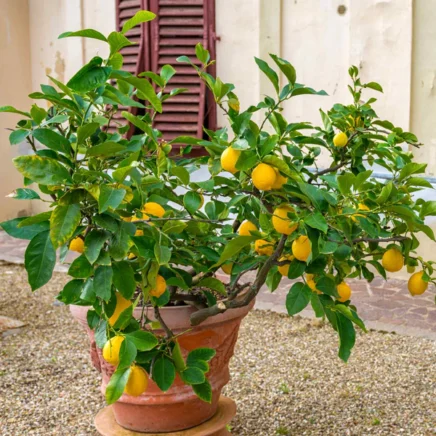
Air layering is ideal when you want to propagate mature branches.
Advantages:
- Higher success rate
- No transplant shock
- Works on older trees
- Strong root system
Steps for Air Layering
- Choose a healthy branch
- Remove a ring of bark (about 1 inch)
- Apply rooting hormone
- Wrap with moist sphagnum moss
- Cover with plastic
- Secure tightly
Roots form in:
- 4–8 weeks
Once roots appear, cut below the rooted section and plant it.
Method 3: Propagation via Grafting (Professional Technique)
Grafting is widely used in nurseries to produce high-quality lemon plants.
Why grafting is preferred:
- Faster fruiting
- Disease-resistant
- Stronger plant
- Same fruit quality as parent
Common Grafting Methods
1. Tongue Grafting
- Used for young plants
- Clean cuts
- Strong union
2. Cleft Grafting
- Used for thicker branches
- Suitable for beginners
3. Bud Grafting (Budding)
- Popular for citrus
- Uses a single bud
- Very high success rate
Grafting Steps (Simplified)
- Select rootstock
- Cut rootstock
- Prepare scion
- Join pieces
- Wrap with grafting tape
- Keep shaded
Growth begins in:
- 1–2 weeks
Method 4: Propagating Lemon Trees From Seeds (Least Preferred)

Seed propagation is simple, but the plant may:
- Take longer to fruit
- Produce different-quality fruits
- Grow irregularly
Still, it is a fun experiment for hobby gardeners.
Steps
- Clean seeds
- Dry them
- Plant in soil
- Keep moist
- Provide sunlight
Seedlings appear in:
- 7–14 days
Fruit may take:
- 3–5 years
Best Soil for Lemon Propagation
Lemon trees love soil that is:
- Well-draining
- Slightly acidic
- Rich in organic matter
Ideal mix:
- Garden soil
- Sand
- Compost
- Cocopeat
Sunlight Requirements
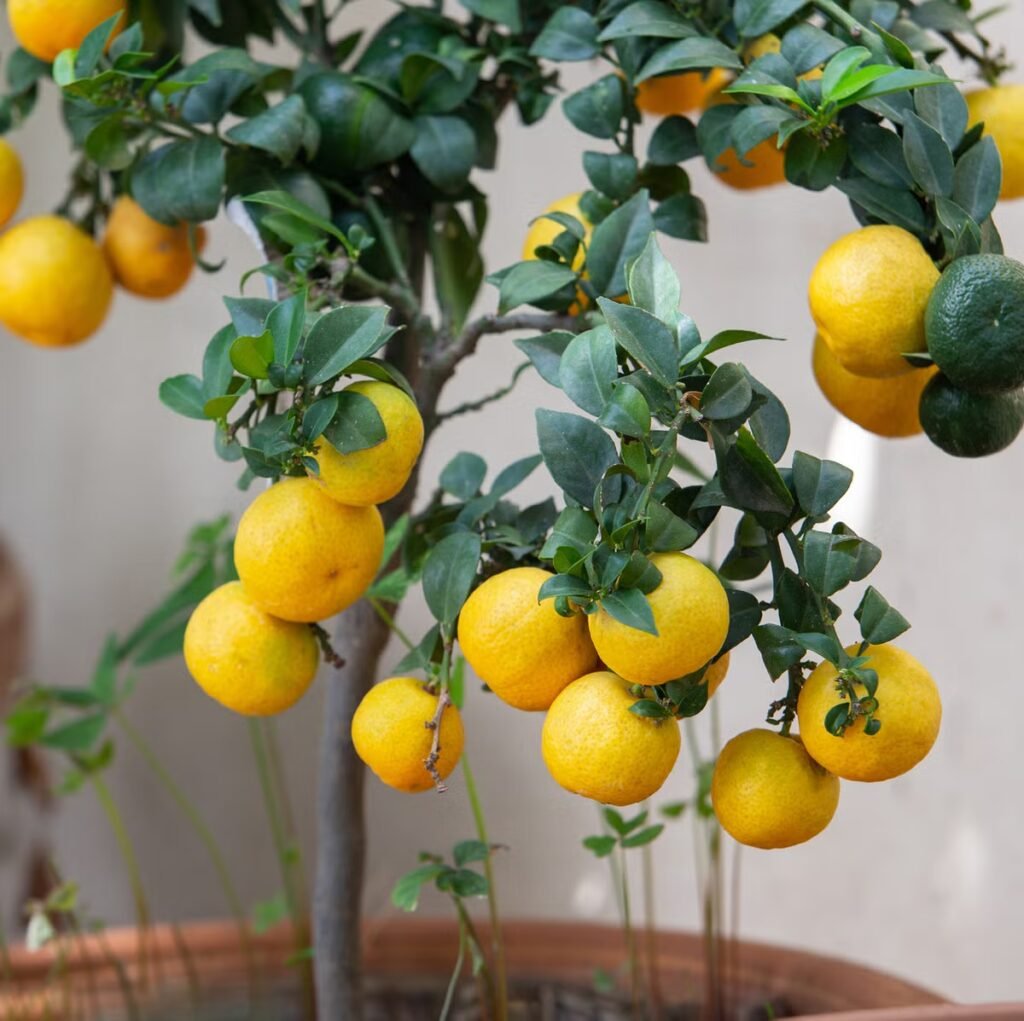
Lemons need:
- 6–8 hours sunlight per day
Place pots in:
- Balcony
- Rooftop
- Garden
- South-facing window
Watering Guide
Watering should be:
- Regular
- Light
- Avoid waterlogging
Overwatering causes:
- Root rot
- Yellow leaves
- Weak growth
Fertilizing Young Lemon Plants
Use:
- Organic compost
- Fish manure
- Banana peel fertilizer
- NPK fertilizer (low nitrogen)
Feed:
- Every 4–6 weeks
Common Problems During Propagation
1. Cuttings Dry Out
Cause: Low humidity
Solution: Mist regularly or cover with plastic
2. Fungal Growth
Cause: Excess moisture
Solution: Reduce watering
3. No Root Formation
Cause: Wrong cutting
Solution: Choose semi-hardwood
4. Yellow Leaves
Cause: Overwatering or nutrient deficiency
Care After Transplanting
Once the plant establishes roots:
- Move it to a bigger pot
- Provide sunlight
- Water moderately
- Feed monthly
- Prune to shape
When Does a Propagated Lemon Tree Bear Fruit?
Propagation by:
- Cuttings → 1–2 years
- Air layering → 1 year
- Grafting → 6–12 months
- Seeds → 3–5 years
Grafting produces the fastest results.
Tips for Faster Growth
Prune regularly
Provide full sunlight
Keep soil slightly moist
Use organic fertilizers
Protect from pests
Keep humidity high for cuttings
Conclusion: Propagating Lemon Trees Is Easy and Rewarding
Whether you choose cuttings, air layering, grafting, or seeds, propagating lemon trees allows you to grow healthy plants with minimal cost. Cuttings and grafting are the best for fast fruiting and high success rates.