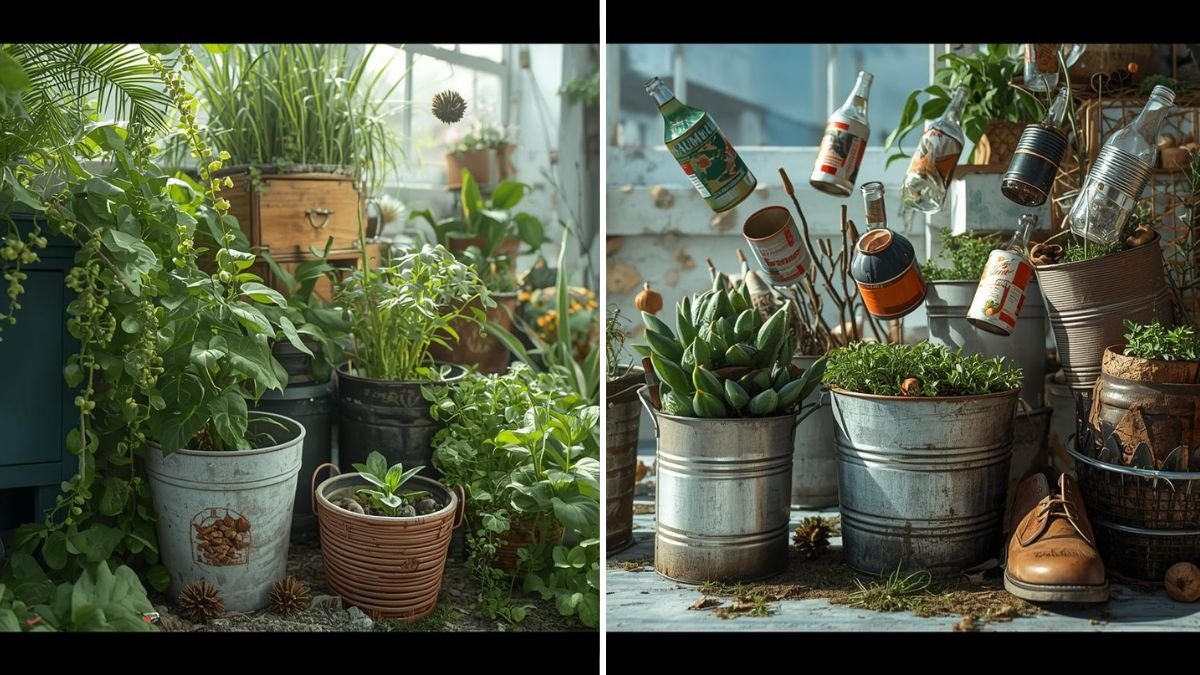
Upcycled planters combine creativity with sustainability. They reduce household waste effectively. Gardeners save money by reusing items. Upcycling adds unique style to gardens. Household items gain new purpose. This approach supports eco-friendly living. Creative planters personalize spaces. Upcycling gardening trends are growing rapidly.
Benefits of Using Upcycled Planters
Upcycled planters are cost-effective. They reduce landfill waste. Creativity is encouraged. Each planter becomes unique. Materials are easily available. Gardening becomes accessible to everyone. Eco-conscious choices protect the environment. Upcycling supports sustainable gardening.
Important Considerations Before Upcycling
Drainage is essential for plant health. Containers must be safe for plants. Proper cleaning is required. Sharp edges should be smoothed. Size must match plant needs. Weight should be manageable. Weather resistance matters outdoors. Preparation ensures success.
Upcycled Item 1: Old Buckets as Rustic Planters
Old buckets make excellent planters. They are sturdy and durable. Metal or plastic buckets work well. Drill drainage holes at the bottom. Buckets suit vegetables and flowers. Handles add decorative appeal. Buckets fit patios and balconies. Rustic charm enhances garden design.
Why Buckets Are Ideal for Upcycling
Buckets are widely available. They hold ample soil. Their depth supports roots. Easy to move when needed. Buckets withstand outdoor conditions. Painting adds personality. They suit modern and rustic styles. Buckets are versatile planters.
Upcycled Item 2: Tin Cans for Small Plants
Tin cans are perfect for herbs. They are lightweight and compact. Clean thoroughly before use. Add drainage holes carefully. Paint for visual appeal. Ideal for windowsills and shelves. Tin cans save space efficiently. They make charming planters.
Creative Uses for Tin Can Planters
Hang them vertically for space-saving. Group them for visual impact. Use labels for herb identification. Mix sizes creatively. Suitable for indoor gardening. Easy to replace or rearrange. Tin cans offer flexibility. Creativity is endless.
Upcycled Item 3: Old Wooden Drawers as Garden Boxes
Wooden drawers make stylish planters. They provide shallow planting depth. Ideal for leafy greens. Line with plastic for protection. Add drainage holes carefully. Drawers fit rustic gardens. They add vintage charm. Functional and decorative.
Why Wooden Drawers Work Well
Wood breathes naturally. Drawers are sturdy. Easy to customize. Suitable for outdoor use. Wood blends with nature. Drawers offer wide planting space. They are visually appealing. Sustainability meets style.
Upcycled Item 4: Plastic Bottles for Vertical Gardens
Plastic bottles are perfect for vertical gardening. Cut openings carefully. Add drainage holes. Hang bottles on walls. Ideal for herbs and greens. Save floor space effectively. Reduce plastic waste. Vertical gardens maximize small areas.
Benefits of Bottle Planters
They are lightweight and cheap. Easy to replace. Perfect for renters. Support creative layouts. Encourage recycling habits. Bottles suit indoor and outdoor use. Space-efficient solutions matter. Bottles offer innovation.
Upcycled Item 5: Old Shoes for Artistic Planters
Old shoes make quirky planters. Boots work especially well. Add drainage holes if needed. Ideal for small plants. Shoes add personality. Suitable for decorative gardens. Creative expression shines. Uniqueness attracts attention.
Choosing Plants for Shoe Planters
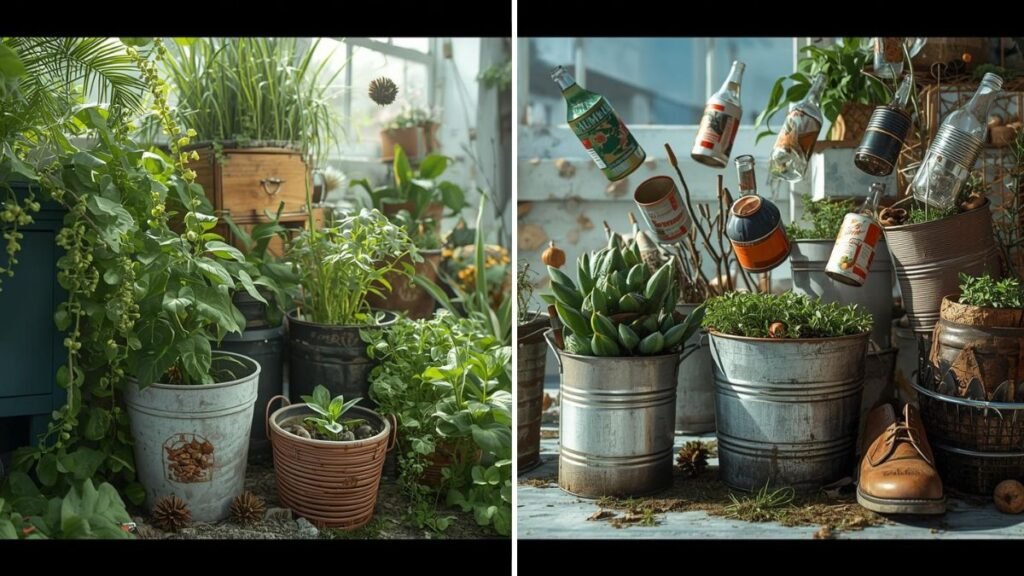
Select shallow-rooted plants. Succulents work well. Herbs grow successfully. Avoid heavy watering. Lightweight soil is best. Choose hardy varieties. Balance aesthetics and care. Proper choice ensures success.
Drainage Solutions for Upcycled Planters
Drainage prevents root rot. Drill holes where possible. Use gravel layers. Elevate containers slightly. Avoid water accumulation. Monitor moisture levels. Drainage ensures plant health. Never skip this step.
Painting and Decorating Upcycled Planters
Use weather-resistant paint. Choose bright or neutral colors. Patterns add personality. Seal paint properly. Labels add charm. Decoration personalizes gardens. Artistic touches enhance appeal. Creativity improves aesthetics.
Upcycled Planter Comparison Table
| Item | Best For | Unique Benefit |
|---|---|---|
| Buckets | Vegetables | Large capacity |
| Tin cans | Herbs | Compact size |
| Drawers | Greens | Vintage look |
| Bottles | Vertical gardens | Space-saving |
| Shoes | Decor plants | Artistic appeal |
Common Mistakes to Avoid
Skipping drainage damages plants. Using toxic containers harms growth. Overcrowding roots reduces health. Ignoring weight limits causes accidents. Poor cleaning introduces disease. Avoid these mistakes. Preparation ensures success. Thoughtful planning matters.
Where to Place Upcycled Planters
Consider sunlight needs. Balance aesthetics and function. Secure hanging planters properly. Avoid strong winds. Rotate plants if needed. Placement affects growth. Good positioning enhances beauty. Location matters.
Environmental Impact of Upcycled Gardening
Upcycling reduces waste significantly. It lowers demand for new products. Promotes reuse culture. Saves natural resources. Encourages creative sustainability. Small actions create big impact. Gardening becomes eco-friendly. Environmental responsibility grows.
Conclusion: Turn Everyday Items into Garden Art
Upcycled planters combine creativity and sustainability. Household items gain new life. Gardening becomes affordable and artistic. Each planter tells a story. Plants thrive in creative containers. Environmental impact is reduced. Gardens become unique expressions. Upcycling transforms gardening joyfully.