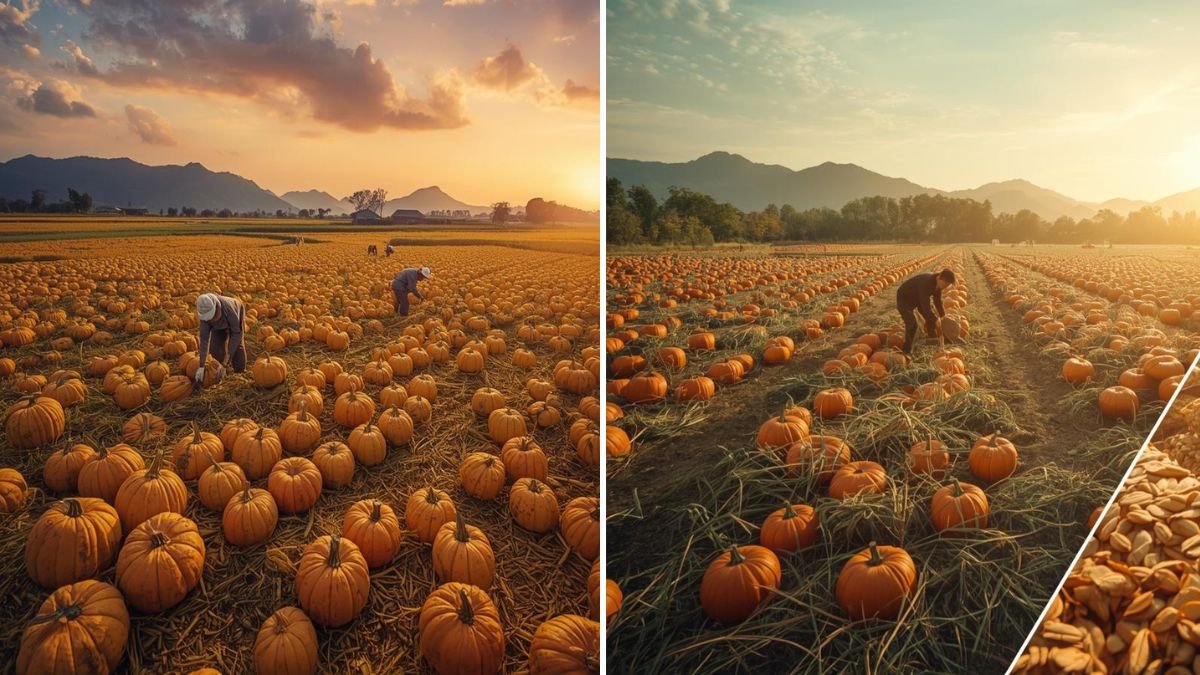
Pumpkin seeds have evolved from a seasonal snack into a globally traded agricultural commodity. They are valued for their high protein, healthy fats, magnesium, zinc, and antioxidant content. Increasing demand from health food markets, oil extraction industries, and pharmaceutical sectors has pushed large-scale production worldwide. Pumpkin seeds are used in snacks, baking, salads, supplements, and cosmetic products. As global consumption rises, identifying the world’s largest producer helps understand agricultural leadership and trade dynamics. Climate, farming methods, processing capacity, and export infrastructure all influence production dominance. This article explores which country leads pumpkin seed production today and why.
Paragraph 1: Understanding Pumpkin Seed Cultivation
Pumpkin seeds are harvested from specially bred pumpkins grown primarily for seed yield rather than flesh. These pumpkins require warm temperatures, long growing seasons, and fertile, well-drained soil. Farmers focus on maximizing seed size, oil content, and uniformity. After harvest, seeds are separated, washed, dried, and processed for consumption or oil extraction. Mechanization plays a major role in commercial-scale farming. Proper crop rotation prevents soil exhaustion and disease buildup. High yields depend on climate stability and pest control. Pumpkin seed farming blends traditional agriculture with modern technology.
Paragraph 2: Global Demand for Pumpkin Seeds
Demand for pumpkin seeds has surged due to health-conscious diets worldwide. Consumers value them as plant-based protein sources and natural supplements. Food manufacturers use them in granola, protein bars, and bakery products. Oil extracted from pumpkin seeds is prized for culinary and medicinal uses. Cosmetic industries use pumpkin seed oil in skincare products. Growing vegan and vegetarian populations fuel demand further. Export markets continue to expand across Europe, Asia, and North America. This demand directly influences which countries invest heavily in production.
Paragraph 3: According to Recent Agricultural Data, China Leads Global Production
Based on recent global agricultural production data, China is the largest pumpkin seed producer in the world today. China produces millions of tons annually, far exceeding other countries. Large-scale farms, favorable climates, and advanced seed-processing facilities contribute to this dominance. Chinese pumpkin seed production supports both domestic consumption and massive exports. The country supplies raw seeds, roasted seeds, and pumpkin seed oil globally. Strong government support for oilseed crops further boosts output. China’s integrated supply chain ensures consistent year-round availability. This leadership positions China at the center of the global pumpkin seed market.
Paragraph 4: Why China Dominates Pumpkin Seed Production
China’s dominance stems from its vast agricultural land and diverse climate zones. Northern and central regions offer ideal growing conditions for seed pumpkins. Labor availability and mechanized harvesting increase efficiency. Chinese farmers specialize in high-yield pumpkin seed varieties. Large processing hubs allow rapid cleaning, drying, and packaging. Export-focused farming ensures standardized quality. Government incentives encourage oilseed and export crops. These combined advantages give China unmatched production capacity.
Paragraph 5: Key Pumpkin Seed Producing Regions in China
Major production regions include Inner Mongolia, Hebei, Anhui, and Heilongjiang. Inner Mongolia is famous for large, high-quality seeds. Hebei specializes in export-grade pumpkin seeds. Heilongjiang’s fertile soil and cool nights enhance seed oil content. Regional specialization allows staggered harvesting seasons. Infrastructure supports rapid transport to ports. Local expertise ensures consistent yields. These regions form the backbone of China’s pumpkin seed industry.
Paragraph 6: Other Major Pumpkin Seed Producing Countries
After China, countries such as Ukraine, Russia, the United States, and Austria are significant producers. Ukraine produces large quantities for European markets. Austria is known for premium pumpkin seed oil rather than volume. The United States grows pumpkin seeds mainly in Illinois and Texas. Russia benefits from vast agricultural land. However, none match China’s scale or export reach. Each country focuses on niche markets or quality-driven production. Global production remains concentrated in a few regions.
Paragraph 7: Role of Climate in Pumpkin Seed Yield
Pumpkin plants thrive in warm temperatures and moderate rainfall. Excess humidity increases fungal diseases. Dry harvest conditions are essential for seed quality. Long daylight hours improve seed development. Climate consistency ensures uniform size and oil content. Regions with unpredictable weather face yield fluctuations. China’s diverse climate allows production across multiple zones. Climate stability is a major competitive advantage.
Paragraph 8: Harvesting and Processing Techniques
Pumpkin seeds are harvested after full fruit maturity. Mechanical harvesters extract seeds efficiently. Seeds are washed to remove pulp residues. Drying is done under controlled temperatures to preserve nutrients. Sorting ensures uniformity for export. Advanced processing facilities maintain food safety standards. Efficient processing reduces waste. Technology ensures high-quality final products.
Paragraph 9: Table – Top Pumpkin Seed Producing Countries
Country Name
China – Largest producer with export dominance
Ukraine – Major supplier to European markets
Russia – Large-scale agricultural capacity
United States – Specialized regional production
Austria – Premium pumpkin seed oil producer
Paragraph 10: Table – Factors Supporting High Pumpkin Seed Production
Factor
Favorable climate
Large agricultural land
Advanced processing facilities
Strong export infrastructure
Government agricultural support
Paragraph 11: Economic Importance of Pumpkin Seeds in China
Pumpkin seed farming provides income to thousands of rural farmers. Export revenue contributes significantly to agricultural trade. Processing plants create employment opportunities. Value-added products increase profitability. Domestic consumption supports stable pricing. International demand ensures continuous production. Pumpkin seeds strengthen China’s oilseed sector. The crop contributes to rural economic stability.
Paragraph 12: Export Markets for Chinese Pumpkin Seeds
China exports pumpkin seeds to Europe, the United States, the Middle East, and Southeast Asia. Germany and the Netherlands are major European importers. The United States imports both raw and roasted seeds. Middle Eastern markets use seeds in traditional dishes. Asian markets focus on snacks and oil. Efficient logistics support large-scale exports. China dominates global supply chains.
Paragraph 13: Quality Standards and Certification
Export markets require strict quality control. Seeds are tested for moisture, oil content, and contaminants. Organic certification increases market value. Traceability systems ensure food safety compliance. Packaging standards protect freshness. China has invested heavily in certification processes. Quality assurance strengthens buyer confidence. Compliance boosts export competitiveness.
Paragraph 14: Sustainability in Pumpkin Seed Farming
Sustainable farming practices reduce environmental impact. Crop rotation improves soil health. Efficient irrigation conserves water. Organic fertilizers reduce chemical use. Waste pulp is recycled as animal feed. Sustainable production aligns with global demand trends. China increasingly adopts eco-friendly practices. Sustainability ensures long-term productivity.
Paragraph 15: Technological Innovations in Production
Genetically improved pumpkin varieties increase yield. Automated harvesting reduces labor costs. Precision irrigation improves water efficiency. Advanced drying systems preserve nutrients. Data-driven farming enhances decision-making. Technology boosts consistency and profitability. Innovation keeps China competitive. Modern agriculture defines future growth.
Paragraph 16: Challenges Faced by Pumpkin Seed Producers
Climate change introduces weather unpredictability. Pest resistance requires constant monitoring. Global price fluctuations affect profits. Trade regulations impact exports. Labor costs continue to rise. Maintaining quality standards is demanding. Producers must adapt continuously. Challenges require strategic planning.
Paragraph 17: Global Consumption Trends
Health trends drive increased pumpkin seed consumption. Vegan diets boost plant protein demand. Snack industries innovate new products. Nutritional awareness fuels oil demand. Emerging markets expand consumption. Global growth supports production expansion. Consumption patterns shape future investments.
Paragraph 18: Future Outlook of Pumpkin Seed Production
Global demand is expected to grow steadily. China will likely maintain leadership. Technological innovation will improve efficiency. Sustainable practices will gain importance. Emerging producers may increase output. Global trade will expand further. Pumpkin seeds will remain a valuable crop.
Paragraph 19: Comparison With Other Oilseeds
Pumpkin seeds compete with sunflower and sesame seeds. Higher oil content increases value. Niche markets favor pumpkin seed oil. Nutritional profile gives competitive advantage. Production costs remain manageable. Market positioning strengthens growth potential.
Paragraph 20: Final Thoughts
China is currently the largest pumpkin seed producer globally due to scale, climate, technology, and export infrastructure. Other countries contribute but at smaller volumes. Pumpkin seeds are a fast-growing global commodity. Understanding production leadership helps traders and farmers alike. Sustainable practices and innovation will shape the future. Global demand continues to rise. Pumpkin seed production remains a profitable agricultural sector.