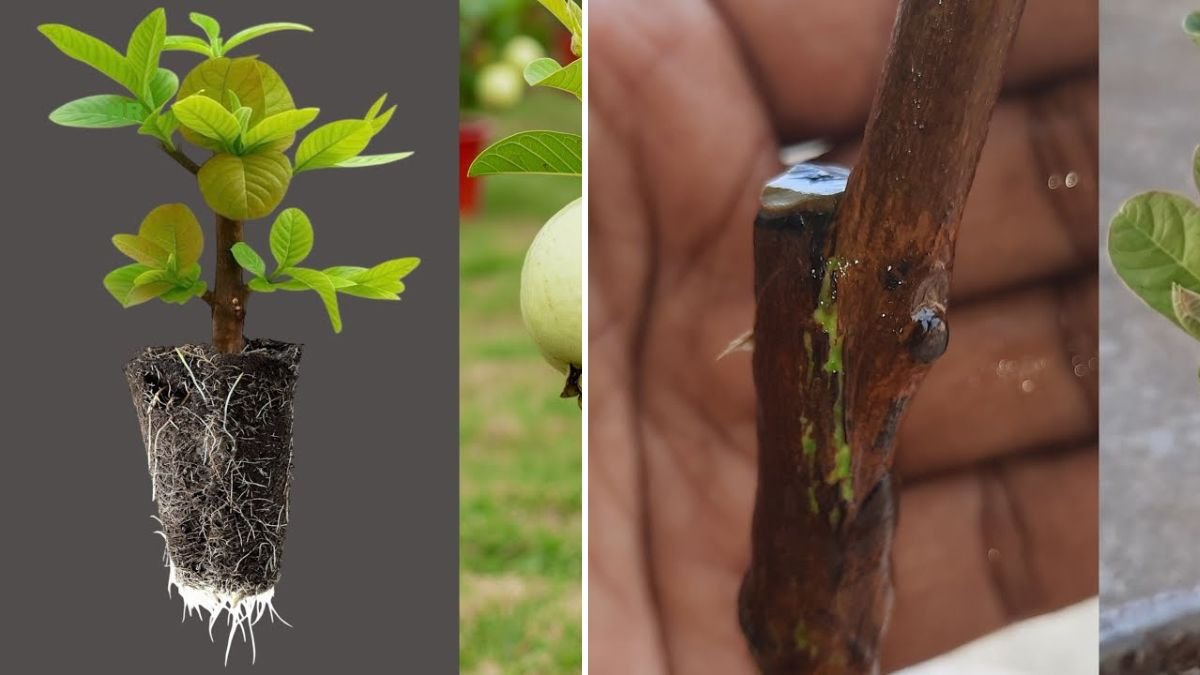
Guava trees are loved across the world for their sweet aroma, delicious flavor, and impressive nutritional benefits. Whether you enjoy them fresh, juiced, or as part of a healthy snack, guava is a fruit that no home garden should be without. But growing excellent-quality guava isn’t just about planting seeds—grafting is the secret technique that ensures faster fruiting, improved disease resistance, and consistent fruit size and taste.
In this comprehensive 1200-word guide, you’ll learn what guava grafting is, why it’s the preferred method among expert gardeners, different grafting techniques, step-by-step instructions, and essential tips to guarantee success. Let’s explore how you can transform your garden by mastering Guava Tree Grafting.
What Is Guava Tree Grafting?
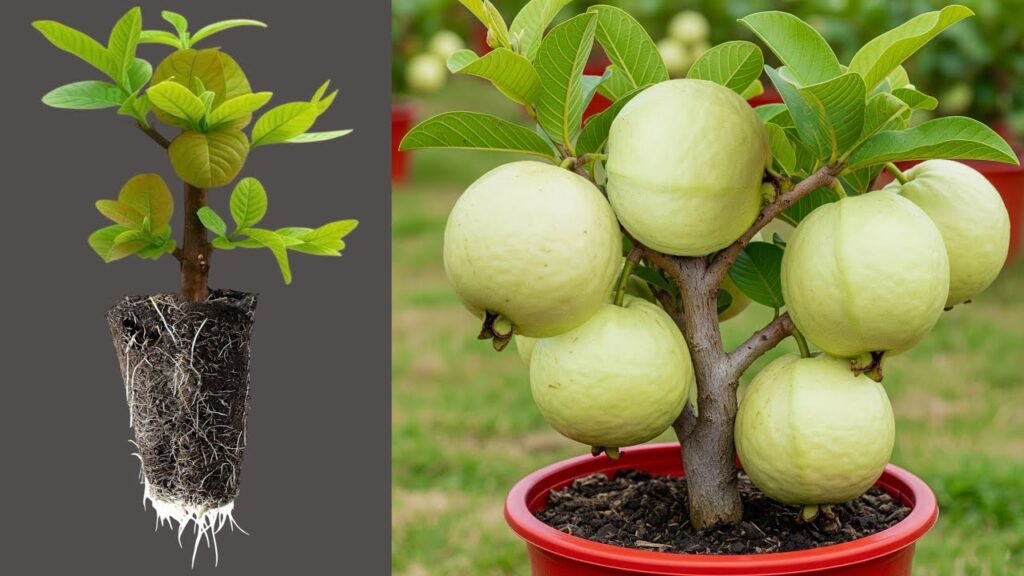
Grafting is a horticultural technique where two plants are joined together to grow as one. It involves:
- Rootstock — the lower part that provides the roots
- Scion — a branch taken from the variety you want to grow
When these two parts successfully merge, the new plant inherits the rootstock’s strength and the scion’s fruit quality. This allows gardeners to grow guava trees that are:
- Fast-growing
- High-yielding
- Disease-resistant
- Consistent in fruit quality
Grafting is far superior to growing guava from seeds, which often produces unpredictable results.
Why Graft Guava Trees Instead of Using Seeds?
✔ 1. Faster Fruiting
Seed-grown guava trees may take 5–8 years to fruit.
A grafted guava tree can bear fruit in 2–3 years, sometimes even earlier.
✔ 2. Cloned Fruit Quality
Seeds may not produce fruit identical to the parent plant.
Grafted trees ALWAYS produce the same quality and variety of guava—sweet, large, and juicy.
✔ 3. Better Disease Resistance
Rootstocks can be selected for pest and disease resistance, making the plant stronger and long-lasting.
✔ 4. Compact and Manageable Growth
Grafted trees stay smaller and more manageable—perfect for home gardens and pots.
✔ 5. High Success Rate
Grafting guava has one of the highest success rates among fruit trees. Once you learn the technique, you can multiply your favorite guava variety easily.
Best Time for Guava Grafting
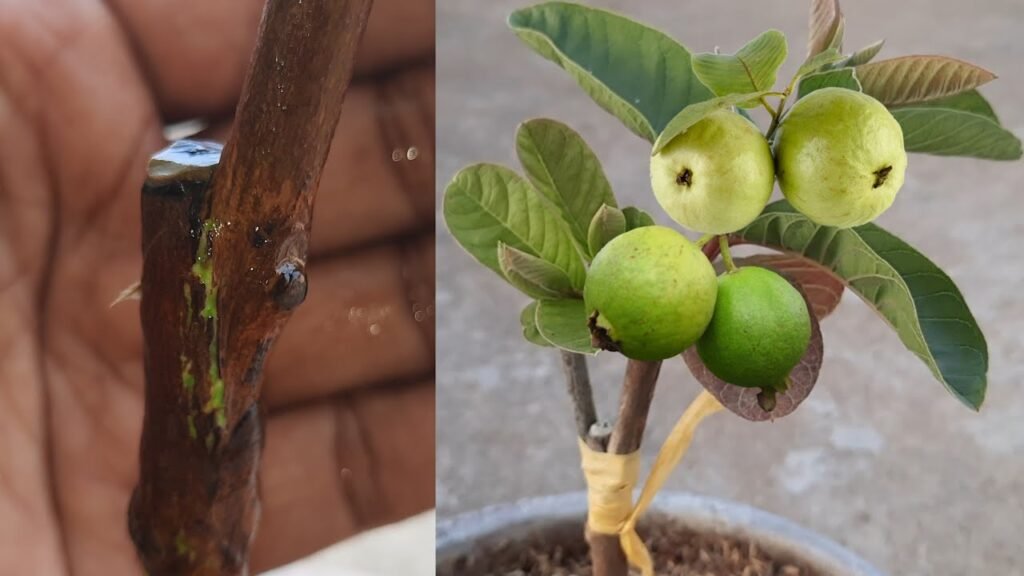
The ideal time is:
Late winter to early spring (before growth starts)
OR
Monsoon season (when the plant is actively growing)
During these periods, sap flow is strong, and healing is fast — which helps the graft union join securely.
Essential Tools and Materials You Need
- Sharp grafting knife or blade
- Pruning shears
- Rooting hormone (optional)
- Grafting tape or polythene strips
- Sanitizer or rubbing alcohol
- Healthy rootstock plant
- Healthy scion (desired guava variety)
Make sure all tools are sterilized before use to prevent infections.
Types of Grafting Methods for Guava Trees
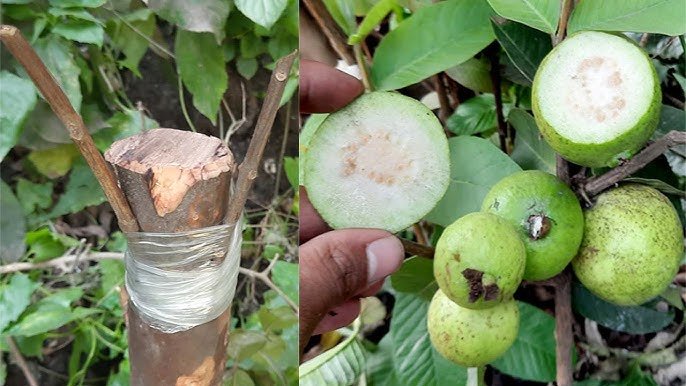
There are several grafting techniques, but these three are the most successful for guava trees:
⭐ 1. Cleft Grafting (Best for beginners)
Simple, highly effective, and works even on thicker rootstocks.
⭐ 2. Veneer Grafting
Great for rootstocks with strong bark; gives clean results.
⭐ 3. Approach Grafting
Very high success rate because both plants remain attached to their roots until healed.
Let’s understand each in detail.
1. Cleft Grafting – The Easiest Method
Cleft grafting is ideal for beginners and works exceptionally well for guava.
Step-by-Step Process
Step 1: Prepare the Rootstock
Choose a rootstock that is:
- Young but firm
- 1–2 cm thick
- Healthy and pest-free
Cut the top off cleanly at a height of 6–10 inches.
Step 2: Make a Vertical Split
Using a grafting knife, make a 1–2 inch deep vertical slit in the center of the rootstock.
This split will hold the scion.
Step 3: Prepare the Scion
Choose a mature branch from the desired guava variety.
Make a V-shaped wedge at the bottom of the scion.
The wedge should fit snugly into the split.
Step 4: Insert the Scion
Place the scion into the cleft carefully.
Make sure the cambium layers (inner green layer) of both plants align.
This alignment is the key to successful grafting.
Step 5: Wrap Securely
Use grafting tape to wrap the union tightly.
Ensure:
- No gaps remain
- Moisture is sealed
- The scion stays firmly in place
Step 6: Aftercare
Place the grafted plant in a shady area until new growth appears.
Water moderately and keep protected from strong wind and sun.
In 3–6 weeks, the graft should begin to heal and sprout.
2. Veneer Grafting – Cleaner & Neater
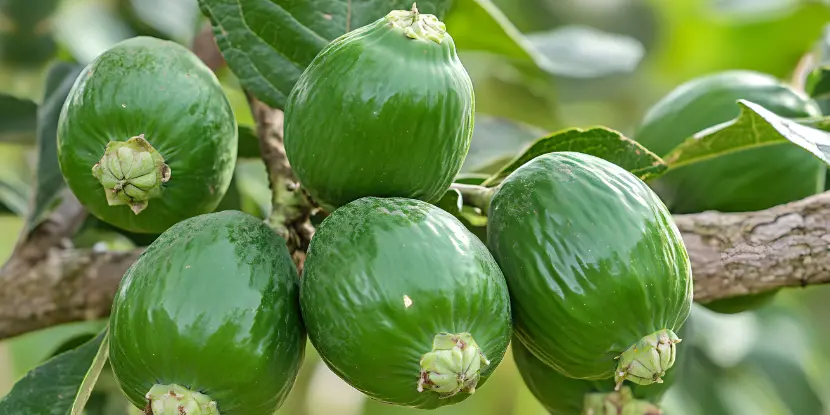
This method works well when rootstock bark is smooth and young.
Procedure
- Make a shallow downward cut on the rootstock.
- Remove a thin slice of wood to create a flat surface.
- Prepare a scion with a matching slanted cut.
- Align both surfaces tightly.
- Wrap with grafting tape to secure.
This method creates a large contact area, increasing success.
3. Approach Grafting – Almost Guaranteed Success
This method involves both plants staying rooted until the graft union is complete.
How to Do It
- Bring the potted scion plant close to the rootstock plant.
- Make a matching cut on both stems.
- Join the exposed areas and tie firmly.
- Wrap with tape and cover with a plastic sheet.
- Once the graft heals, cut the scion free from its old plant.
This method is excellent for beginners and ensures nearly 100% success.
Caring for Your Grafted Guava Plant
Once your graft begins to heal, proper care is essential to ensure long-term growth and fruiting.
1. Sunlight
- Keep in partial shade until the union is strong.
- After 3–4 weeks, gradually move to full sunlight.
2. Watering
- Water deeply but avoid waterlogging.
- Keep soil moist—not soggy.
3. Fertilizing
Start feeding after 4–6 weeks using:
- Organic compost
- Vermicompost
- NPK 6-6-6 (one small dose monthly)
Avoid heavy fertilizing immediately after grafting.
4. Pruning
Remove:
- Suckers growing below the graft
- Weak or dead branches
This ensures the grafted scion receives all the nutrients.
Common Mistakes to Avoid
Misalignment of cambium layers
This is the most common reason grafts fail.
Using thick or very young scions
The scion should be semi-hard and mature.
Loose wrapping
Air gaps cause drying and infection.
Exposing young grafts to harsh sunlight
They need shade until healed.
Overwatering
Too much moisture causes rot.
When Will Your Grafted Guava Tree Produce Fruit?
Grafted guava trees are fast-growing and usually produce fruit in:
2–3 years
(sometimes even earlier under ideal conditions)
Compared to seed-grown guava, this is much faster and more predictable.
Final Thoughts
Grafting guava trees is one of the most effective ways to grow superior-quality guava plants quickly. Whether you’re a home gardener, a hobbyist, or someone wanting to expand their orchard, mastering guava grafting will give you: