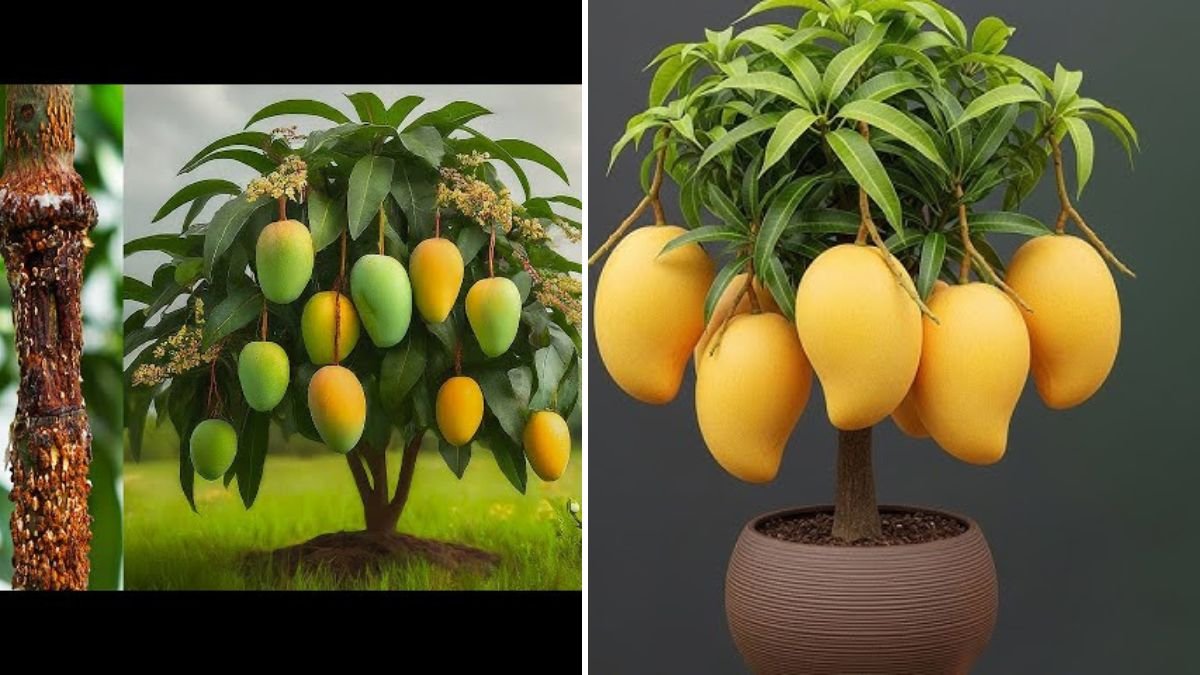
Mango—the king of fruits—is one of the most loved trees in tropical and subtropical regions. Everyone dreams of having a mango tree in their garden: one that gives sweet, juicy fruits year after year. But growing a mango tree from seeds takes too long, and the results are unpredictable. The good news? There is a proven, high-success technique that helps you grow mango trees faster, stronger, and true-to-type. That method is air layering.
Air layering (also called marcottage) is a simple plant propagation technique that encourages roots to grow on a branch while it’s still attached to the parent tree. Once roots form, you cut the branch and plant it as a new mango tree. This method is ideal for growing fruiting mango trees quickly without waiting years.
In this article, you will learn exactly how to air layer a mango tree, step-by-step, along with tools you need, common mistakes, aftercare, and how soon you can expect fruits.
What Is Air Layering and Why Is It So Effective for Mango Trees?
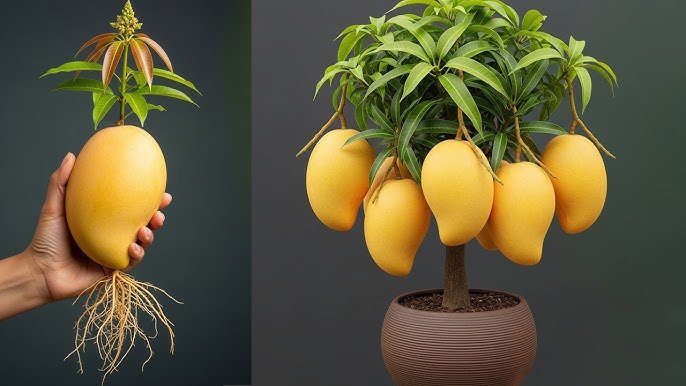
Air layering is a vegetative propagation method where a branch is encouraged to grow its own roots without being detached from the main plant. Because the branch remains nourished by the parent tree, it develops roots faster and more successfully.
Why Air Layering Works So Well for Mango Trees
- You get true-to-type fruits identical to the parent tree
- Root development is stronger and faster
- New plant begins fruiting in 2–3 years, unlike seed-grown trees that take 8–10 years
- Higher success rate compared to cuttings
- Works even for older trees
Air-layered mango plants are perfect for home gardeners who want quick results without complicated grafting techniques.
Best Time to Air Layer Mango Trees
Timing is crucial. Choose a season when the plant is actively growing.
Best Seasons for Air Layering
- Late spring (April–June)
- Monsoon season (July–September)
During these periods, humidity is high, and the tree is in full growth mode—ideal conditions for quick root formation.
Tools & Materials You Will Need
You don’t need anything fancy. Gather these simple materials:
- A sharp knife or grafting blade
- Rooting hormone powder or gel
- Moist cocopeat or sphagnum moss
- Plastic wrap or cling film
- Twine, rope, or zip ties
- Aluminium foil (optional, for shade)
- Clean water
- Gloves (optional)
Now let’s get into the actual technique.
🪴 Step-by-Step Guide: How to Air Layer a Mango Tree

Follow these steps carefully, and you can achieve a 90–95% success rate.
Step 1: Choose the Perfect Branch
This is the foundation of your success.
The branch should be:
- 1–2 cm thick
- Semi-hardwood (not too young, not too old)
- From a healthy, pest-free area of the tree
- At least 1 year old
- Growing in full sunlight
Branches that are too young rot easily. Older branches are slow to root.
Step 2: Make the Girdling Cut
This is the most important step in air layering.
How to do it:
- Select a smooth section of the branch
- Remove a 1-inch ring of bark all around
- Scrape the green layer (cambium) slightly to prevent healing back
- Avoid cutting too deep into the wood
You should see a light, creamy inner wood surface.
This prevents nutrients from flowing downward, encouraging roots to grow at the cut site.
Step 3: Apply Rooting Hormone
Although optional, rooting hormone speeds up the process significantly.
- Dip your finger or a brush into rooting powder
- Lightly dust the exposed area
This increases root formation by 30–50%.
Step 4: Pack the Medium Around the Cut
Moisture is the key to successful air layering.
Best Rooting Media:
- Moist sphagnum moss
- Cocopeat
- A mix of moss + cocopeat
Avoid soil—it dries quickly and lowers success.
How to wrap:
- Take a handful of damp moss
- Place it around the exposed cut
- Ensure the moss is moist but NOT dripping wet
Too much water causes rotting.
Step 5: Seal it Completely
Use plastic wrap to seal the moss tightly.
Steps:
- Cover the moss-filled area with plastic
- Secure both ends with twine or zip ties
- Wrap aluminium foil over the plastic (optional)
Aluminium foil protects the area from sunlight, keeping it cool and moist.
Step 6: Wait Patiently (Root Formation Time)
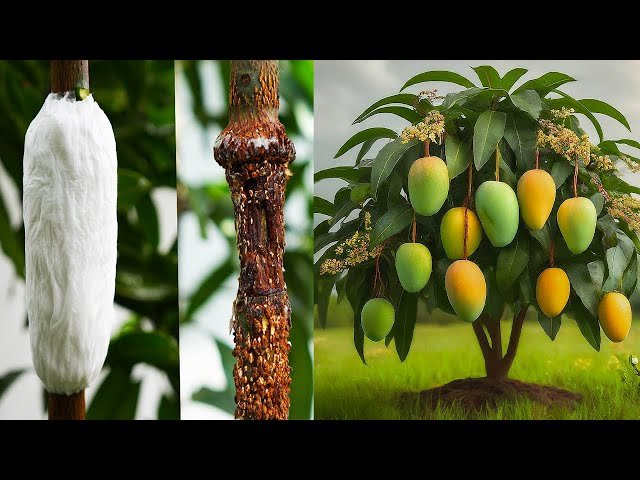
Air layering takes time, but mango trees root surprisingly well.
Root Formation Timeline:
- Warm season: 28–40 days
- Cooler season: 45–60 days
You’ll know it’s working when:
- Moss ball becomes firm
- White roots start appearing through the plastic
- The branch becomes heavier
Once you see strong roots, it’s time to harvest your new mango plant.
Step 7: Cutting and Planting the New Mango Tree
When roots are established:
- Cut the branch 1 inch below the root zone
- Carefully remove the plastic without breaking roots
- Plant it in a mixture of:
- 50% garden soil
- 30% compost
- 20% sand
Keep the plant in partial shade for 2–3 weeks until new shoots appear.
Caring for Your Newly Air-Layered Mango Plant
Once the new plant is in soil, it needs gentle care.
Watering
- Keep soil moist, not waterlogged
- Water deeply 2–3 times per week
Sunlight
- Keep in partial shade for 20 days
- After that, move gradually to full sunlight
Fertilizing
Feed light doses of organic fertilizers:
- Vermicompost
- Cow dung compost
- Banana peel fertilizer
- Seaweed extract spray
Feed once every 30 days.
Mulching
Add a 2-inch layer of dry leaves or straw around the base to conserve moisture.
Common Mistakes to Avoid

Many gardeners fail simply because of small errors. Avoid these:
- Using dry moss
- Overwatering the moss (causes rotting)
- Using a very young branch
- Performing air layering in winter
- Exposing the wrapped area to direct sunlight
- Not scraping the cambium layer properly
- Removing the air layer too early
Following the correct method ensures 90%+ success.
When Will Your Air-Layered Mango Tree Fruit?
This is the best part.
Air-layered mango trees bear fruit much faster than seed-grown ones:
Fruit timeline:
- Air layered plant: 2–3 years
- Seed-grown mango: 7–10 years
- Grafted mango: 2–4 years
Your new mango tree will produce fruits similar to the parent tree in taste, size, and quantity.
Why Every Gardener Should Try Air Layering Mango Trees

Air layering is perfect for home gardeners because:
- It requires no special skills
- Works on old, established mango trees
- Gives strong, healthy, productive plants
- Produces fruits quickly
- Costs nothing
- Easy to teach children
- Lets you multiply your favorite mango variety
Imagine having multiple mango trees at home—all producing delicious fruits—without buying a single plant!
Final Thoughts
Air layering is one of the simplest and most effective ways to propagate mango trees. With just a knife, moss, and plastic wrap, you can create new mango plants that grow faster, bear fruit earlier, and have the exact same qualities as the original tree.
Whether you are a beginner or an experienced gardener, air layering is a technique you’ll want to master. The joy of growing your own mango tree—from a single branch—cannot be compared to anything else in gardening.