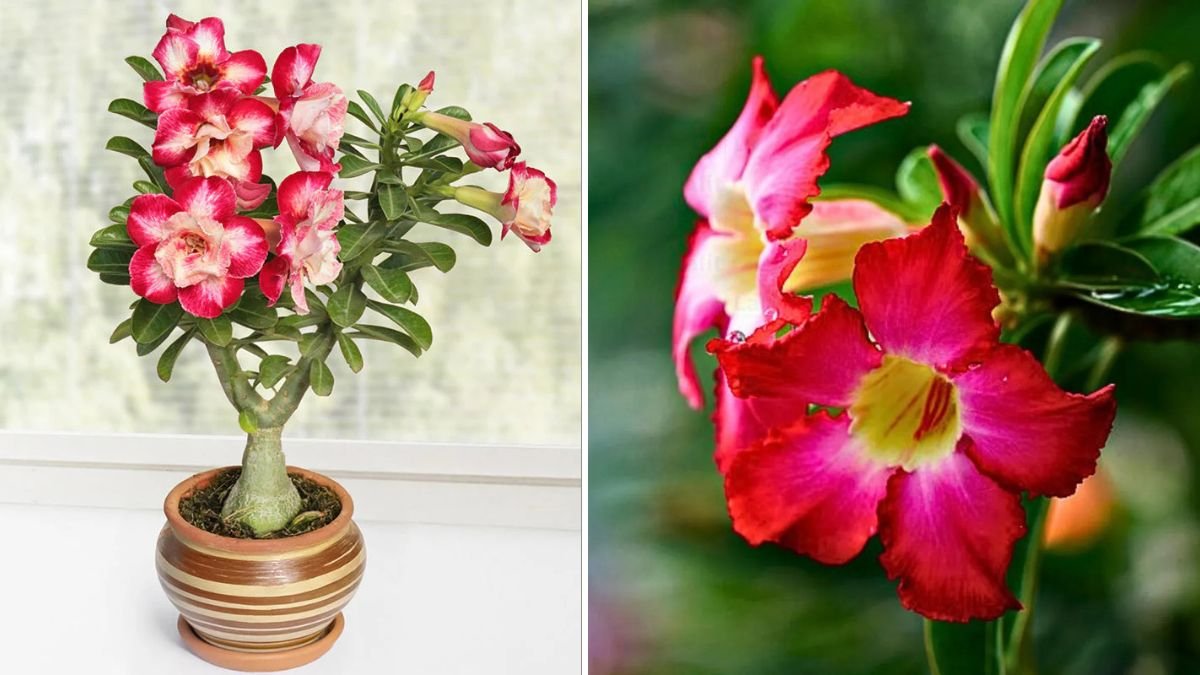
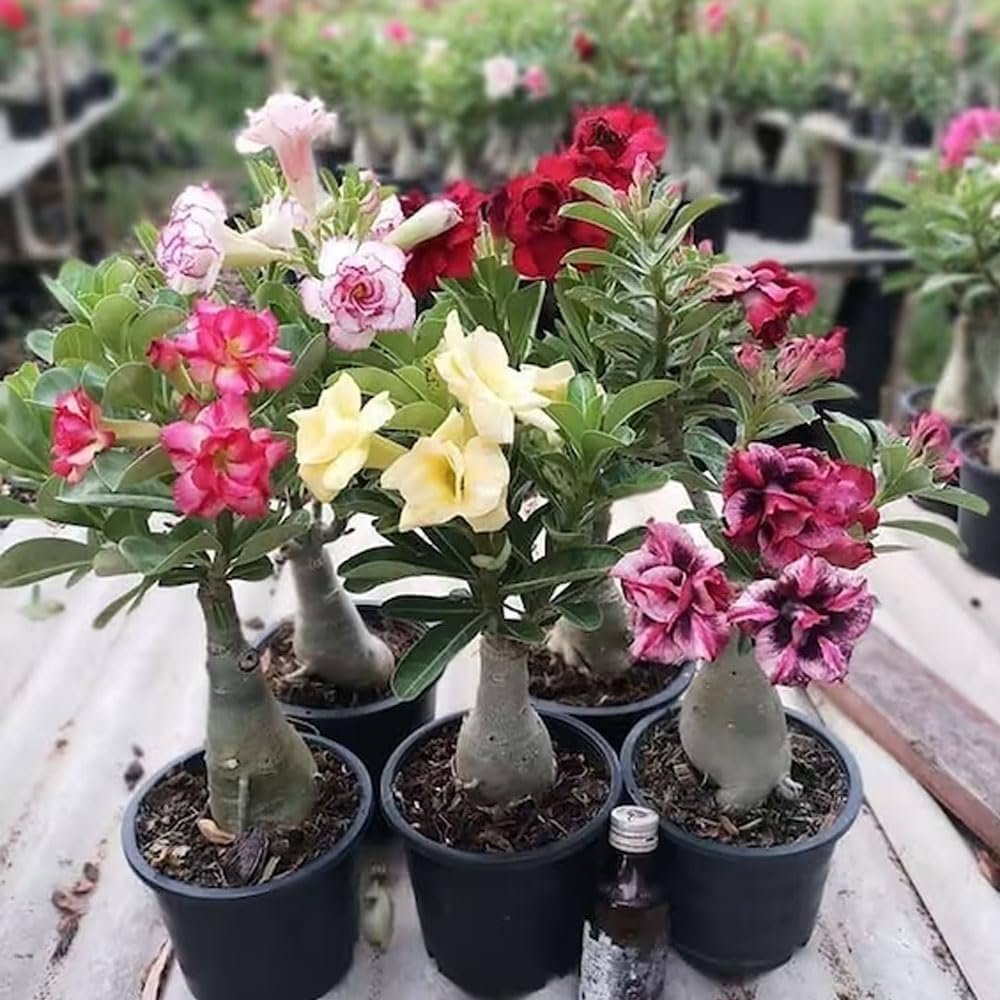
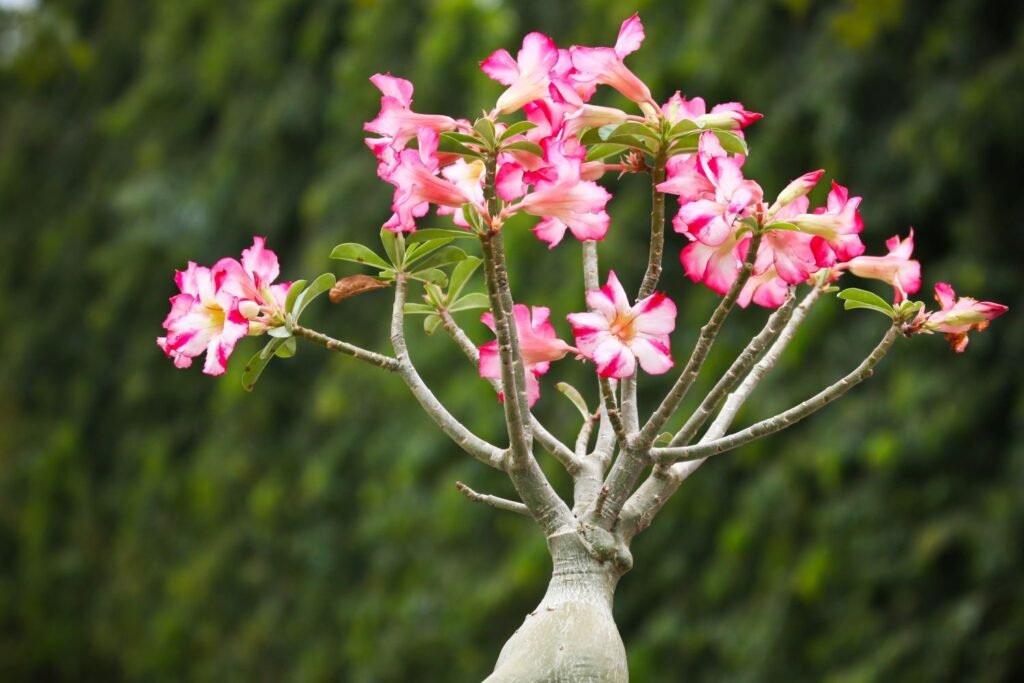
Adenium, popularly known as the Desert Rose, is one of the most breathtaking ornamental plants you can grow at home. With its swollen caudex, sculptural branches, and vibrant trumpet-shaped flowers, the adenium is an eye-catching masterpiece in any garden. Many gardeners believe adeniums are difficult to grow — but the truth is, they are surprisingly easy once you understand their natural desert-like requirements.
This complete 1200-word guide will teach you how to grow adenium from seedlings or cuttings, how to shape a thick caudex, how to encourage heavy flowering, and how to protect your plant from rot and pests. Whether you are a beginner or a collector, this guide will help you grow a healthy, stunning adenium at home.
Let’s begin!
What Makes Adenium Special?
Adenium is a desert plant native to hot regions of Africa and the Middle East. That’s why it loves:
- Bright sunlight
- Warm temperatures
- Minimal water
- Fast-draining soil
Its swollen trunk (caudex) stores water and gives the plant its unique bonsai-like appearance. Because of this, gardeners all over the world grow adeniums as miniature bonsai, flowering showpieces, and patio ornamentals.
Step 1: Choose the Right Variety
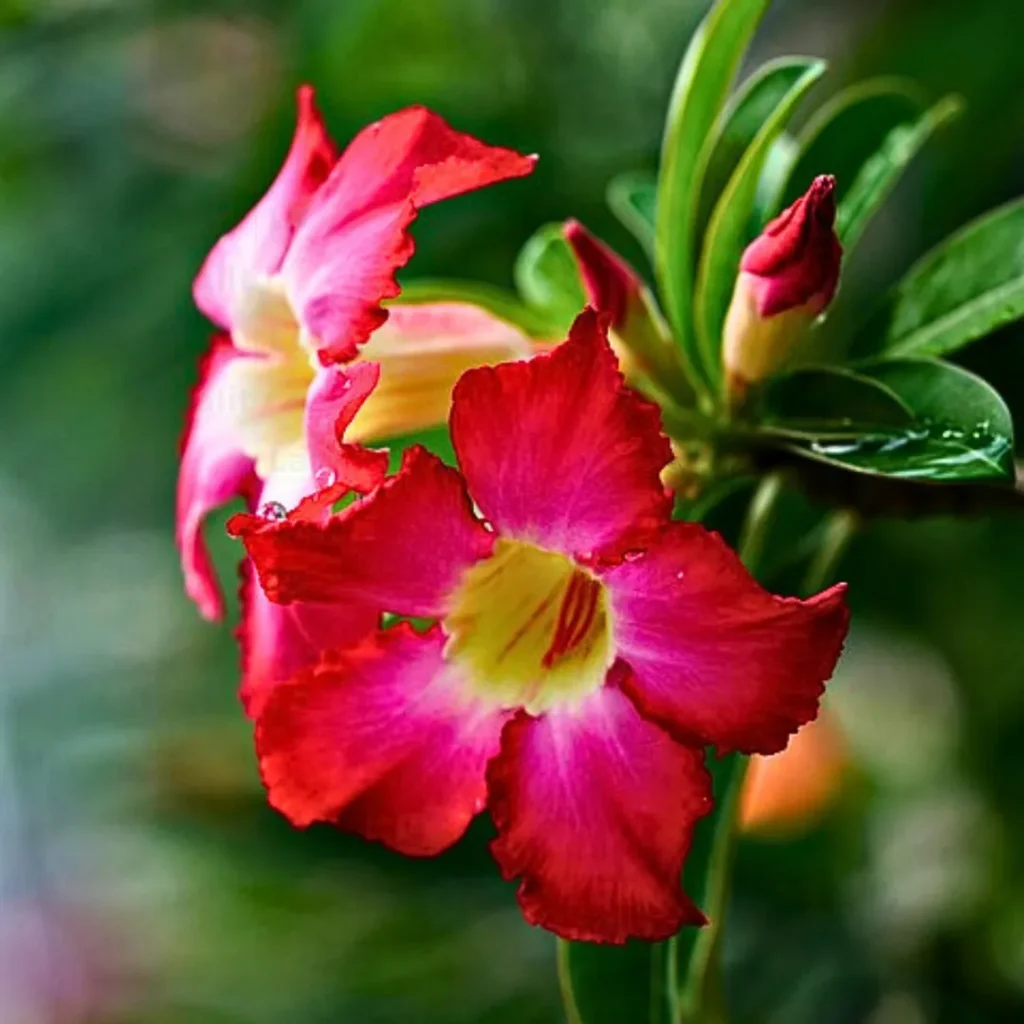
If you’re learning how to grow adenium, choosing the right variety is the first step.
Popular Adenium Types:
- Adenium obesum – Most common, easy to grow
- Adenium Arabicum – Thick trunk, perfect for bonsai shaping
- Adenium somalense – Tall, slim trunk, stunning flowers
- Grafted adeniums – Produce double, triple, or multicolor blooms
For beginners, Adenium obesum or Arabicum varieties are best.
Step 2: Perfect Setup — Pot, Soil & Placement
Adeniums grow beautifully in pots because the roots prefer confined spaces.
1. Choose the Right Pot
Use:
- 8–12 inch wide pot for young plants
- Shallow, wide bonsai pots as the plant matures
- Pots with lots of drainage holes
Terracotta, ceramic, or thick plastic pots work best.
2. Create the Perfect Soil Mix
Adeniums hate holding water — their roots rot easily. Use a fast-draining, porous mix.
Ideal Adenium Soil Mix:
- 40% coarse sand / perlite
- 30% garden soil
- 20% cocopeat
- 10% compost + neem cake
Your soil should feel light, airy, and gritty — not sticky or compact.
If water stays in the pot longer than 5 seconds, the soil is too heavy.
3. Place in Bright Sunlight
Adenium needs 5–7 hours of direct sun for strong growth and prolific flowering.
- Balcony with morning sunlight is ideal
- Terrace growers will see the best results
- Indoor growth is NOT recommended
Insufficient light = thin branches, no flowers, weak caudex.
Step 3: Watering the Right Way
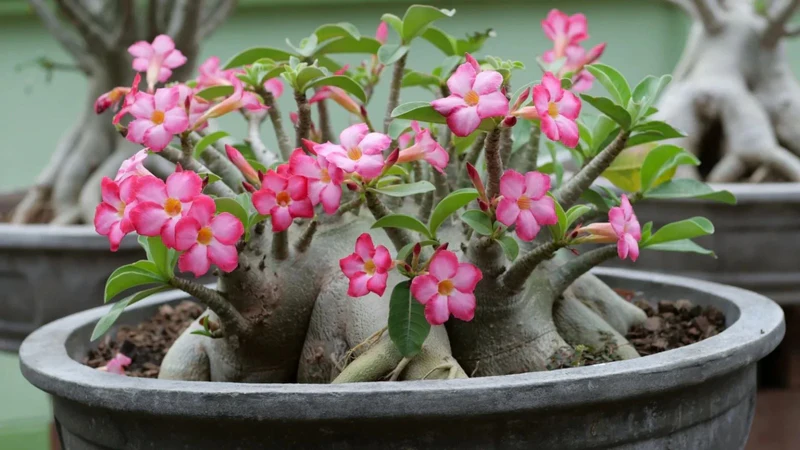
Watering is the most important — and most misunderstood — part of growing adenium.
Follow This Rule:
Water only when the soil is completely dry.
Overwatering is the #1 cause of adenium death.
Summer (Active Growth):
- Water once every 5–7 days
- Check soil dryness before watering
Winter (Dormant Season):
- Water once every 12–20 days
- Keep soil nearly dry
- Avoid watering during extreme cold
Monsoon (Very Sensitive Season):
- Water lightly every 10–15 days
- Keep plant under shade to protect from excess rain
- Never allow soil to remain wet
Important: Adeniums prefer drought over excess moisture.
Step 4: Fertilizing for Bigger Blooms & Strong Caudex
Adeniums are not heavy feeders, but they love occasional nutrition.
Recommended Fertilizers:
- Bone meal (for root and caudex growth)
- Seaweed extract (for overall health)
- Low-nitrogen, high-phosphorus bloom booster
Feeding Schedule:
- Feed every 30–40 days in summer
- Avoid fertilizing in winter (dormant stage)
Too much nitrogen creates long branches but no flowers.
Step 5: Pruning, Shaping & Caudex Development
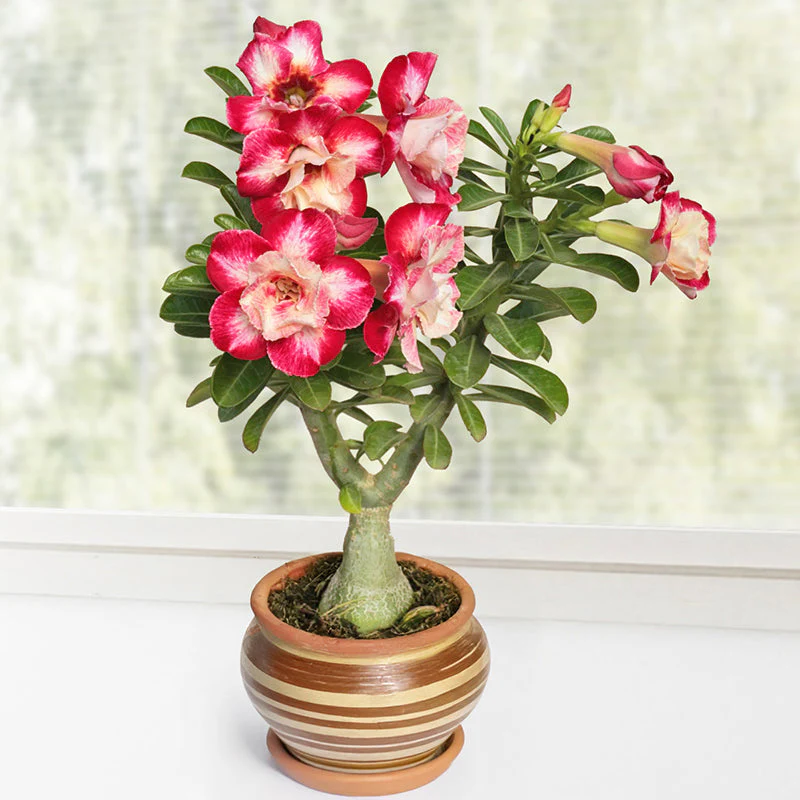
Adenium beauty comes from its shape — especially the caudex and branches.
Pruning Tips:
- Prune during spring or early summer
- Cut weak or thin branches
- Remove crossing or crowded branches
- Leave 3–5 main branches for bonsai look
Pruning encourages more branches, more flowers, and a thicker caudex.
Caudex Enlargement Tips:
- Use shallow pots
- Expose top part of caudex gradually
- Reduce watering slightly
- Repot every year to lift the caudex higher
A wide, fat caudex is the signature of a healthy adenium.
Step 6: Encouraging Heavy Flowering
If your adenium isn’t flowering, follow these expert tips:
Provide maximum sunlight
Flowers require strong light.
Use bloom booster with phosphorus
Helps form buds quickly.
Stop nitrogen-rich fertilizers
They cause leafy growth, not blooms.
Prune at the right time
New shoots will produce flowers.
Maintain dry cycles
Adenium blooms better under mild stress.
Right pot size
Too large a pot delays flowering.
After pruning, adenium usually blooms within 6–9 weeks.
Step 7: Protecting Adenium From Pests & Diseases
Common Problems:
- Mealybugs
- Aphids
- Fungal rot
- Root rot from overwatering
Natural Solutions:
- Neem oil spray once every 12–15 days
- Keep plant in sunny, airy location
- Remove mealybugs with cotton dipped in alcohol
- Avoid overhead watering
If caudex becomes soft or mushy, it is a sign of root rot. Act quickly:
- Trim damaged roots
- Apply fungicide
- Repot in dry soil
Growing Adenium From Seeds
Growing adenium from seeds is fun and produces plants with thicker caudex.
Seed-Growing Steps:
- Soak seeds for 3–4 hours
- Use a seed tray with fast-draining soil
- Sow seeds on the surface & lightly cover
- Keep warm (25–30°C)
- Mist lightly — don’t flood
- Seeds sprout in 5–7 days
Seed-grown adeniums develop beautiful natural shapes.
Growing Adenium From Cuttings
Cuttings grow faster but may not develop thick caudex like seed plants.
Steps:
- Cut a healthy branch
- Allow it to dry for 3–5 days
- Dip in rooting powder
- Plant in sandy mix
- Water very lightly
- Keep in bright shade until rooted
In 4–6 weeks, new growth will appear.
Seasonal Care Guide
Spring
- Best for pruning
- Repotting
- Fertilizing
- New growth begins
Summer
- Fastest growth
- Lots of flowers
- Regular watering
- Monthly feeding
Monsoon
- Keep under shade
- Minimum watering
- Prevent fungal rot
Winter
- Growth slows down
- Reduce watering
- Do NOT fertilize
- Protect from cold winds
Common Mistakes to Avoid
- Overwatering
- Using heavy soil
- Keeping plant in shade
- Using large pots
- Fertilizing in winter
- Allowing rainwater to accumulate
Avoid these mistakes to keep your adenium healthy and beautiful.
Final Thoughts
Growing adenium is an art — a combination of sunlight, patience, shaping, and minimal watering. Once you understand its desert nature, this plant becomes one of the easiest and most rewarding ornamentals to maintain.
A well-grown adenium rewards you with:
- Colorful, vibrant flowers
- A unique bonsai-style look
- A dramatic, thick caudex
- Year-round beauty
- Minimal maintenance
If you’ve ever wanted a plant that feels like living art, adenium is the perfect choice.
Start today, follow these tips, and watch your Desert Rose flourish into a stunning showpiece!