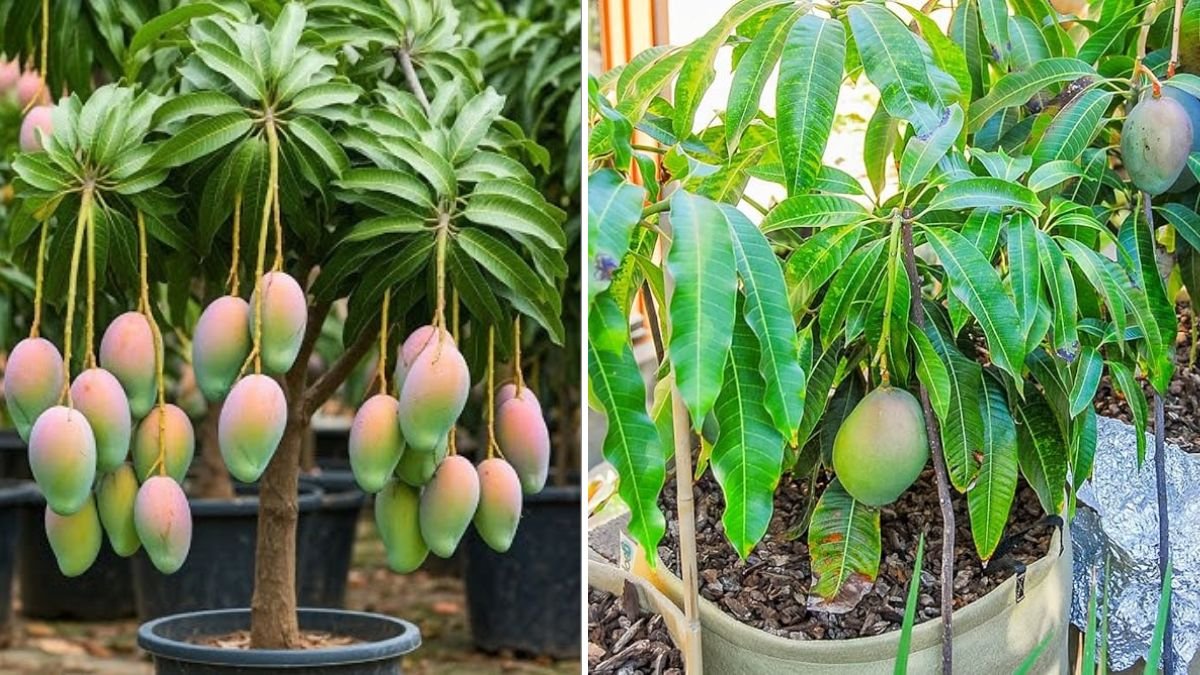
Growing a mango tree at home is one of the most rewarding gardening experiences. Whether you dream of enjoying sweet, juicy mangoes from your own backyard or simply love the beauty of a lush tropical tree, the journey becomes much easier—and much faster—when you use the right methods. Mango trees are naturally vigorous growers, but with a few smart, science-backed techniques, you can dramatically speed up their growth, boost root development, and encourage earlier fruiting.
In this detailed guide, you’ll discover proven strategies used by expert gardeners to grow mango trees faster, healthier, and stronger. From soil preparation to fertilizer hacks, pruning tips, and seedling care, here’s everything you need to know!
Why Mango Trees Grow Slowly (and How to Fix It)
Many home gardeners struggle with slow-growing mango trees. The major reasons include:
- Poor soil drainage
- Overwatering
- Lack of essential micronutrients
- Incorrect planting depth
- Insufficient sunlight
- Unpruned or weak branches
Fortunately, each of these issues has a simple solution. Mango trees respond very quickly when given the correct growing environment and care.
Step 1: Choose the Right Location—Sunlight Is Everything
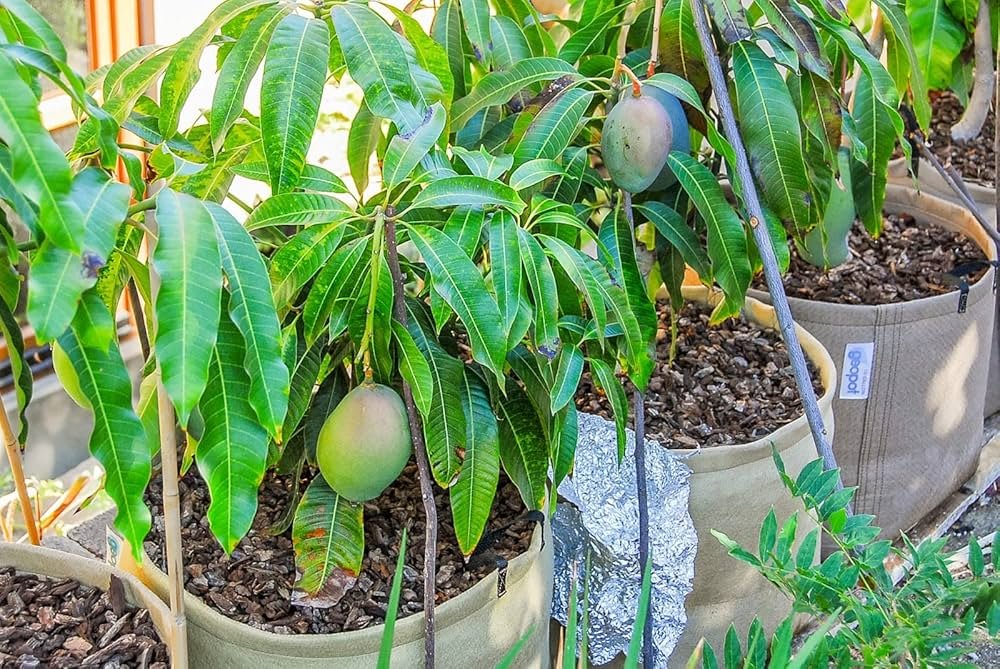
Mango trees are tropical sun-lovers. To grow faster:
Place your mango tree in a spot that gets minimum 6–8 hours of direct sunlight
Sunlight boosts:
- Photosynthesis
- Branch development
- Flowering and fruit set
If your plant is in a pot, move it regularly to the sunniest area—especially during winter months.
Step 2: Use Super-Draining, Nutrient-Rich Soil for Fast Growth
Mango roots hate soggy conditions. They prefer loose, airy soil that allows deep root expansion.
Best Soil Mix for Faster Growth
Prepare this mix before planting:
- 40% garden soil
- 30% river sand or perlite (boosts drainage)
- 20% compost or cow dung manure
- 10% cocopeat (improves moisture retention & aeration)
Add-ons for Extra Boost
- A handful of neem cake powder to prevent root rot
- 1 tablespoon bone meal for phosphorus (root development)
Healthy roots = faster canopy growth + quicker fruiting.
Step 3: Use the Proven Planting Technique
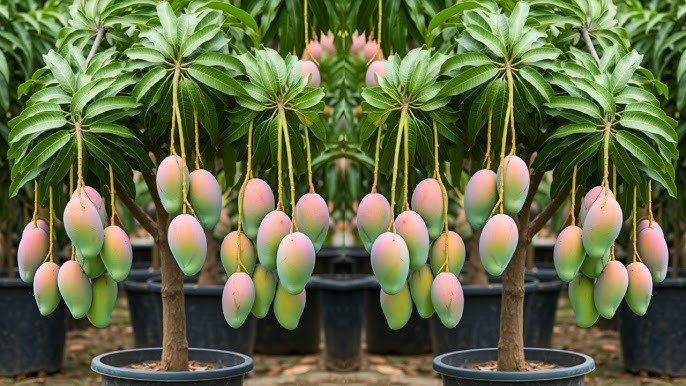
Whether you’re planting a grafted mango or a seed-grown sapling, planting depth matters.
Keep the graft union 6–8 cm above soil
If buried, the graft can rot or weaken the plant.
Loosen the planting hole
A 60 cm deep and 60 cm wide hole allows roots to spread freely.
Add organic matter
This gives long-lasting nutrition while improving soil structure.
Step 4: Smart Watering for Fast Growth
Watering can make or break mango growth.
Follow this formula:
- Water deeply only 1–2 times per week
- Allow topsoil to dry before watering again
- Always avoid waterlogged soil
Why this works:
Mango roots grow faster when they receive oxygen. Overwatering suffocates them, causing stunted growth.
During summer:
Increase watering frequency slightly but avoid daily watering.
During winter:
Reduce watering by half to prevent fungal issues.
Step 5: Give Your Mango Tree the Right Fertilizers
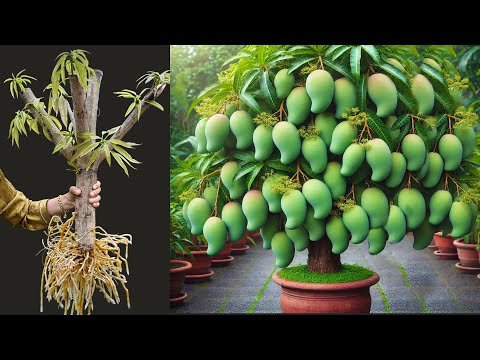
Fertilizers are the secret behind fast-growing mango trees.
Best Fertilizer Schedule for Faster Growth
Every 30 Days Apply:
- Compost or cow dung: 1–2 kg for young trees
- Mustard cake fertilizer (liquid): boosts nitrogen
- Banana peel fertilizer: rich in potassium
- Wood ash: natural source of potassium & micronutrients
Every 90 Days Apply:
- Bone meal or rock phosphate: improves root growth
- Seaweed extract: promotes leaf & branch growth
Micronutrient Spray (every 20 days):
- Zinc
- Magnesium
- Iron
A combination of macro + micro nutrients accelerates leaf production and strengthens the trunk quickly.
Step 6: Prune Your Mango Tree for Faster Branching
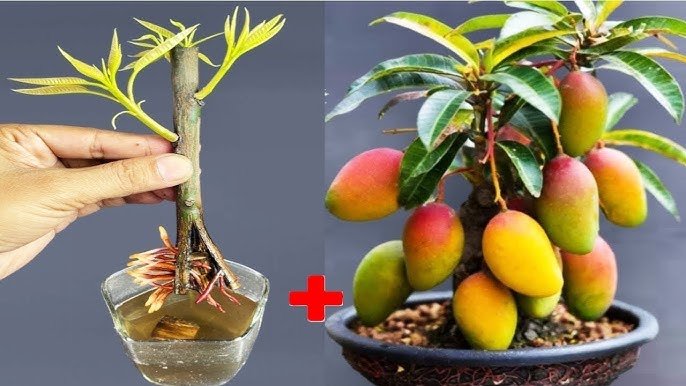
Pruning is one of the most powerful tricks to speed up growth.
Cut 2–3 inches from the top once the plant reaches 2–3 feet
This encourages:
- Side branching
- Bushier growth
- Faster canopy formation
Remove:
- Weak shoots
- Crossing branches
- Dried leaves
A strong, well-shaped structure helps the tree bear fruits earlier and resist storms.
Step 7: Protect Your Mango Tree from Pests Naturally
Pests slow growth dramatically. Mango trees often face:
- Aphids
- Mealybugs
- Leafhoppers
- Scale insects
Natural Anti-Pest Spray (Every 12–15 Days):
- 1 tablespoon neem oil
- 1 teaspoon liquid soap
- 1 liter water
Spray during early morning or late evening.
Step 8: Mulching for Faster Moisture Control
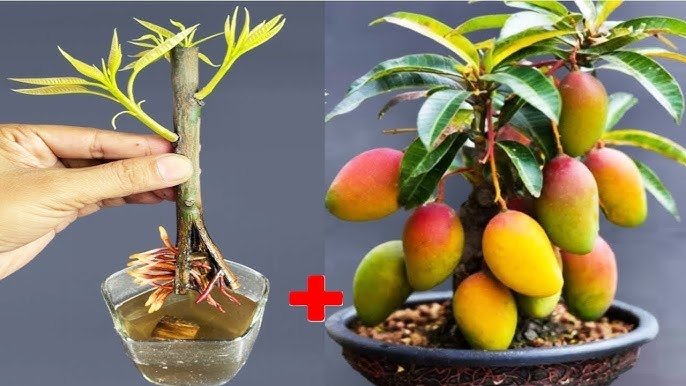
Mulching can speed up mango growth by protecting roots.
Use:
- Dry leaves
- Sugarcane bagasse
- Coco husk
- Rice straw
Benefits:
- Keeps moisture in balance
- Adds organic matter
- Protects from heat
- Prevents weeds
Maintain a 2–3 inch mulch layer around the base, but avoid touching the stem.
Step 9: Choose Grafted Mango Plants for Faster Fruiting
If you want fruits quickly, grafted mango plants are the best choice.
Grafted plants fruit in: 2–4 years
Seed-grown plants fruit in: 5–8 years or more
Grafted mangoes also maintain the exact traits of the mother tree—taste, size, and sweetness.
With These Proven Techniques, Your Mango Tree Will Thrive Faster!
Growing a mango tree faster is a mix of:
- Good sunlight
- Proper soil
- Smart watering
- Timely pruning
- Balanced fertilization
- Root care
- Pest management
If you follow these proven steps, your mango tree will grow stronger, taller, and healthier in record time. Whether in a garden or container, these methods guarantee rapid development, lush foliage, and early fruiting.