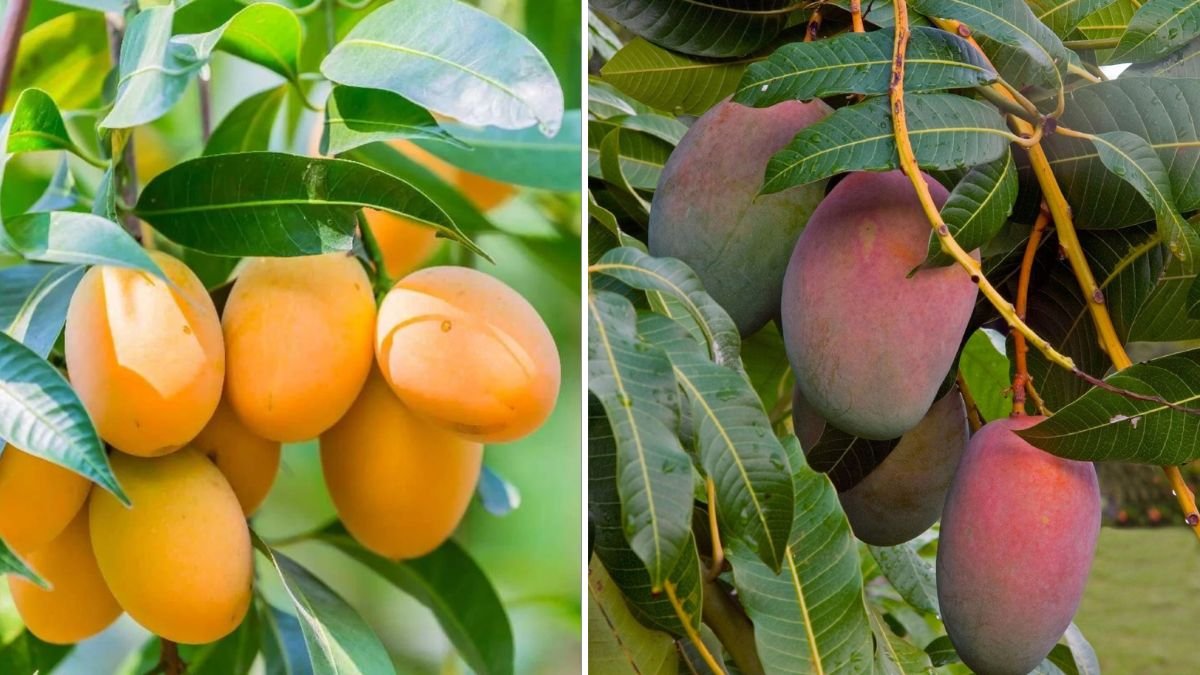
Mango—the “King of Fruits”—is one of the most beloved tropical fruits in the world. Its rich aroma, sweet flavor, and juicy flesh make it irresistible. But what many home gardeners don’t realize is that growing your own mango tree is easier than you think, especially when you use the right propagation techniques.
Whether you want to grow mango trees from seeds, cuttings, or air-layering, this complete guide will show you the best methods, step-by-step instructions, and expert tips to ensure fast growth and long-term success.
Let’s explore the best mango tree propagation tips every gardener should know!
Understanding Mango Propagation
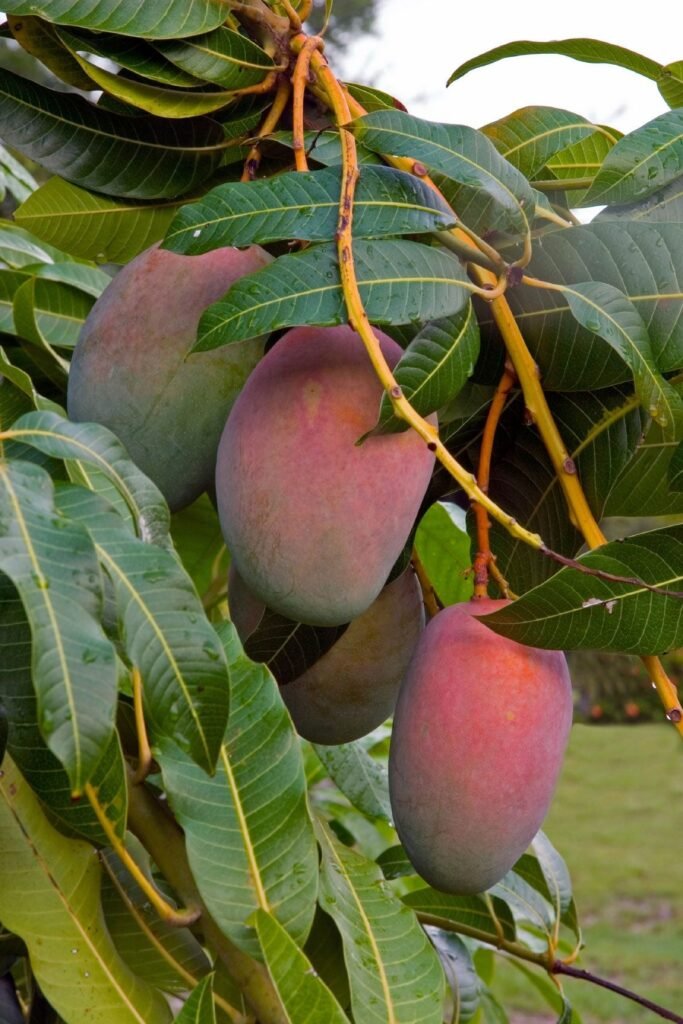
There are three main ways to propagate mango trees:
1. Seeds
Best for creating new varieties and strong root systems.
2. Cuttings
Used to produce genetically identical plants.
3. Air Layering (Marcotting)
Fastest way to get a tree that fruits early.
Each method has its own benefits, and choosing the right one depends on your goals. Seeds grow strong trees, but they may not produce fruits identical to the parent. Cuttings and air layering, on the other hand, create true-to-type mango trees with faster fruiting.
Method 1: Growing Mango Trees from Seeds
Growing mango from seed is the easiest and most beginner-friendly method. But with the right tricks, you can make the process even faster.
Step 1: Choose the Right Mango Seed
The best seed comes from:
- A fully ripe mango
- A polyembryonic variety (found in India, Southeast Asia)
Why polyembryonic seeds are best:
They produce multiple shoots, and at least one of them is true-to-parent, giving fruits identical to the original mango.
Avoid:
- Rotten seeds
- Dried seeds
- Damaged kernels
Step 2: Prepare the Seed
- Clean the seed husk.
- Use a knife to carefully open the outer shell.
- Remove the inner seed (kernel).
- Check for healthy, green tissue inside.
Step 3: Sprout the Seed
You can sprout the seed using:
Paper Towel Method
- Wrap the kernel in a damp tissue.
- Place it in an airtight container.
- Keep it warm (25–30°C).
- Sprouting occurs in 7–14 days.
Direct Planting Method
- Bury the seed half an inch deep.
- Keep soil moist but not wet.
- Seed sprouts in 2–3 weeks.
Step 4: Best Soil Mix for Mango Seedlings
Use a light, airy mix:
- 40% garden soil
- 30% compost
- 20% sand
- 10% coco peat
Good drainage is very important.
Step 5: Sunlight & Watering
- Keep the seedling in bright indirect sun for the first 2 weeks.
- Then move to full sunlight gradually.
- Water when the top 1 inch of soil dries.
Growth timeline:
- 1 month: 20–25 cm tall
- 6 months: 50–80 cm
- 1 year: ready for transplant
Seed-grown mango trees fruit in 4–6 years, depending on variety.
Method 2: Propagating Mango Trees from Cuttings
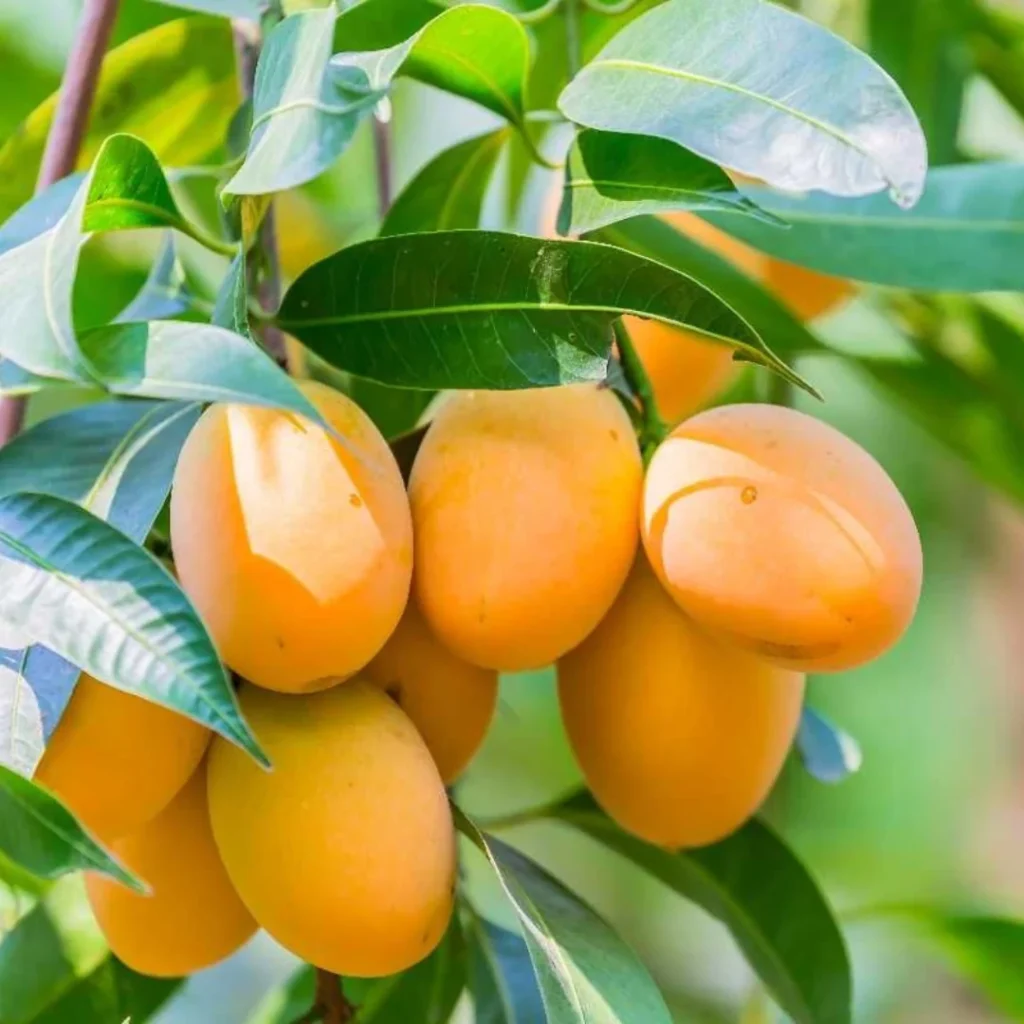
Mango cuttings require more care but can produce true-to-type plants.
Best Time to Take Cuttings
- Late spring
- Early summer
- When branches are semi-hardwood (not soft, not fully woody)
How to Take Mango Cuttings
- Choose a branch 6–8 mm thick.
- Cut 6–7 inch sections with 3–4 nodes.
- Remove leaves, leaving only 1 or 2.
- Dip the bottom end in rooting hormone.
Rooting Medium
Use a fast-draining mix:
- 70% coco peat or sand
- 30% compost or garden soil
Planting the Cuttings
- Insert the cutting 2 inches deep.
- Keep in a shaded, warm area.
- Cover with a plastic bag for humidity.
Rooting Time:
4–7 weeks
After Rooting
- Move to partial sunlight.
- Water lightly, never overwater.
- Transplant after 2–3 months.
Advantage of Cuttings:
✔ True-to-parent fruit
✔ Early fruiting
✔ Compact-sized trees perfect for containers
Method 3: Air Layering (Marcotting) – The FASTEST Way
If you want a mango tree that fruits early, air layering is the best method. Farmers and commercial growers use it frequently.
Best Time for Air Layering
- Rainy season
- Late summer
- Humid months
How to Air Layer Mango
Step-by-step:
- Choose a healthy branch (pencil thickness or slightly bigger).
- Remove a ring of bark 1 inch wide.
- Apply rooting hormone to the exposed wood.
- Wrap moist coco peat or sphagnum moss around the wound.
- Cover with plastic wrap and tie tightly.
- Keep it moist.
Rooting Time:
30–60 days depending on temperature.
When Roots Appear
- Cut the branch below the new roots.
- Plant it in a pot for 1–2 months.
- After it establishes, move it into the ground.
Benefits of Air Layering:
✔ True-to-type plants
✔ Stronger initial root system
✔ Fruits in 2–3 years
✔ 90–100% success rate
Best Growing Conditions for Faster Mango Growth
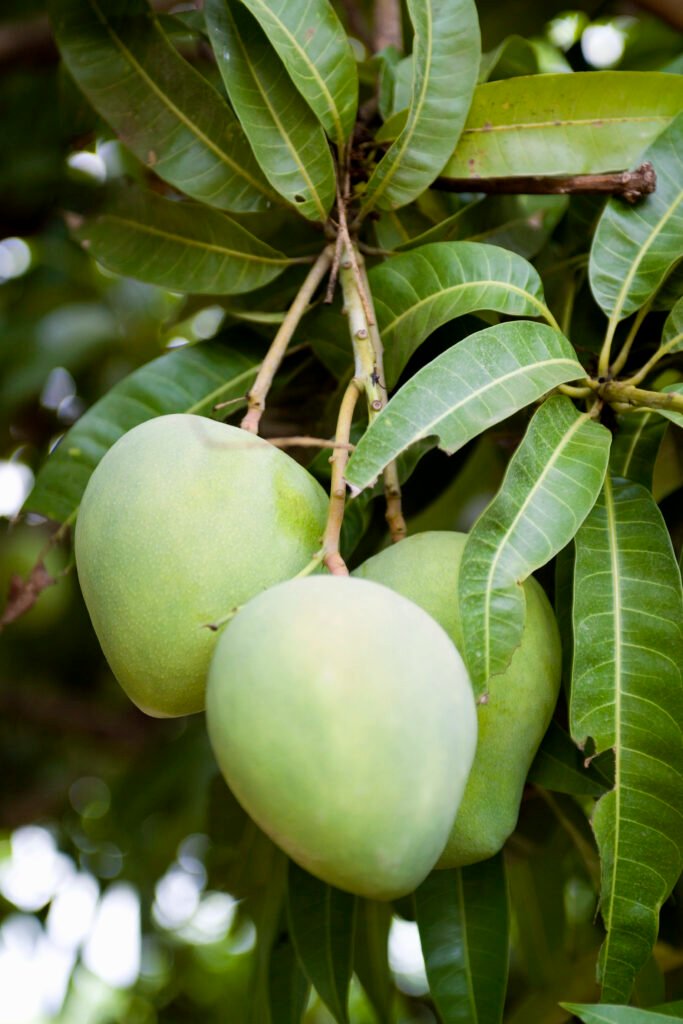
To speed up growth, follow these essential tips:
1. Full Sunlight
Mango trees need 6–8 hours of direct sun daily for strong growth.
2. Good Drainage
They do not tolerate waterlogged soil.
3. Water Deeply but Not Frequently
- Young plants: water 2–3 times a week
- Mature plants: water once a week
- During flowering: reduce water (promotes blooming)
4. Use Organic Fertilizers
Feed every 30–45 days:
- Cow dung compost
- Vermicompost
- Banana peel fertilizer (potassium)
- Wood ash (flowering booster)
- Fish amino acid (fast growth)
- Seaweed solution
Avoid too much nitrogen—this causes tall, leafy trees with fewer fruits.
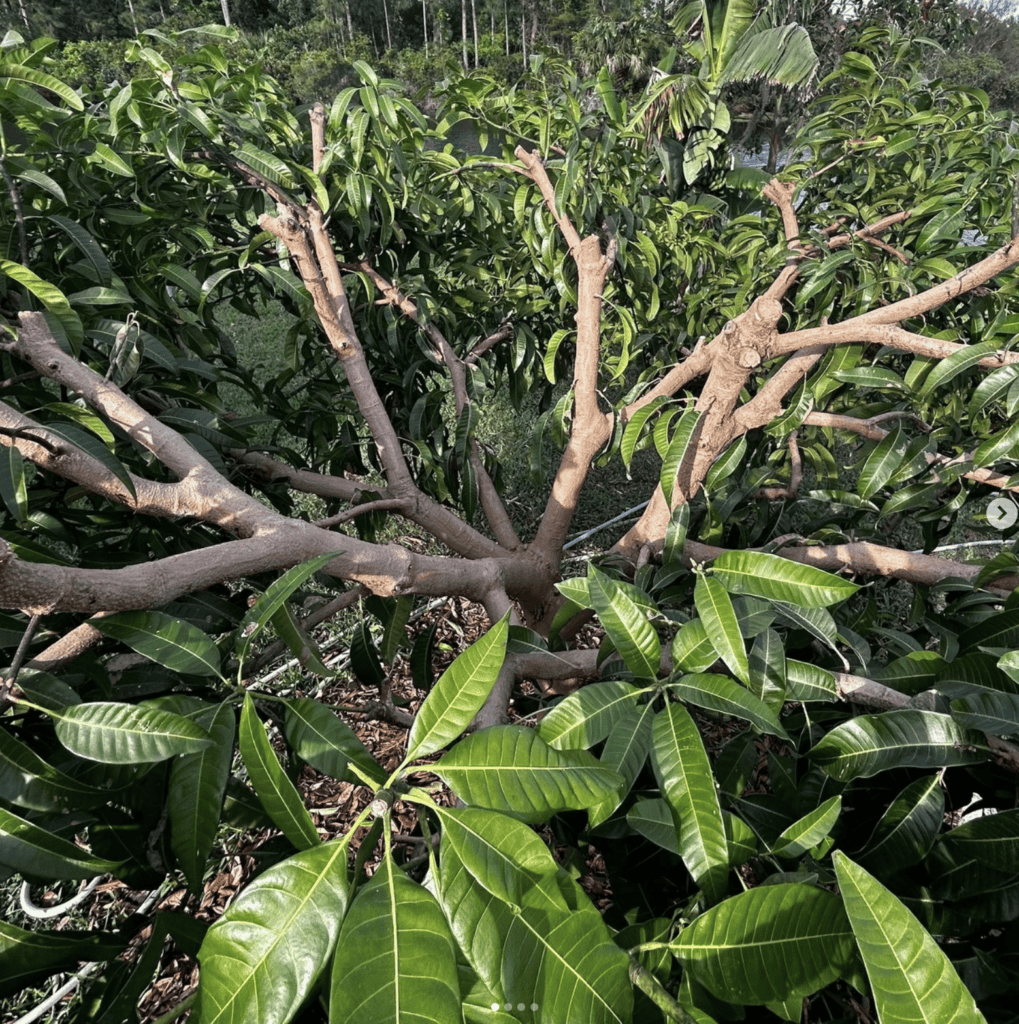
Pruning Tips for Healthy, Productive Mango Trees
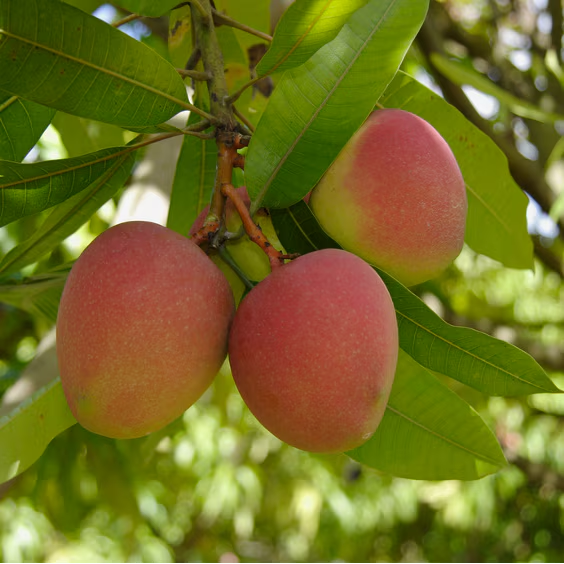
Pruning improves airflow, sunlight penetration, and fruit production.
When to Prune
- After harvest
- Before new flowering season
How to Prune
- Remove dead or weak branches.
- Cut the growing tip to encourage branching.
- Maintain an open center shape.
Benefits:
✔ More flowering
✔ Better fruit set
✔ Stronger branches
Pests & Diseases – Natural Prevention
Common mango pests:
- Mealybugs
- Aphids
- Scale insects
- Mango hoppers
Natural solutions:
- Neem oil spray every 15 days
- Soap water spray for mealybugs
- Yellow sticky traps
- Garlic + chili spray
Avoid chemical pesticides—they damage pollinators and affect fruit quality.
How to Make Your Mango Tree Fruit Faster
Use a propagation method that is not seed-based
Cuttings and air-layering fruit much faster.
Feed potassium-rich fertilizers
Promotes flowering and fruit development.
Reduce watering during flowering
Triggers more blooms.
Provide full sunlight
Sunlight is the key driver for mango flowering.
Light pruning
Encourages new flowering shoots.
If these steps are followed, your mango tree can start fruiting in 2–3 years.
Final Thoughts: Mango Propagation Is Easier Than You Think
Whether you are a beginner or an experienced gardener, you can grow mango trees successfully with the right propagation techniques. Seeds offer strong trees, cuttings provide true-to-type plants, and air layering gives you the fastest fruiting.
With proper sunlight, good soil, natural feeding, and the propagation tips shared above, you can enjoy home-grown mangoes right in your garden, balcony, or terrace.