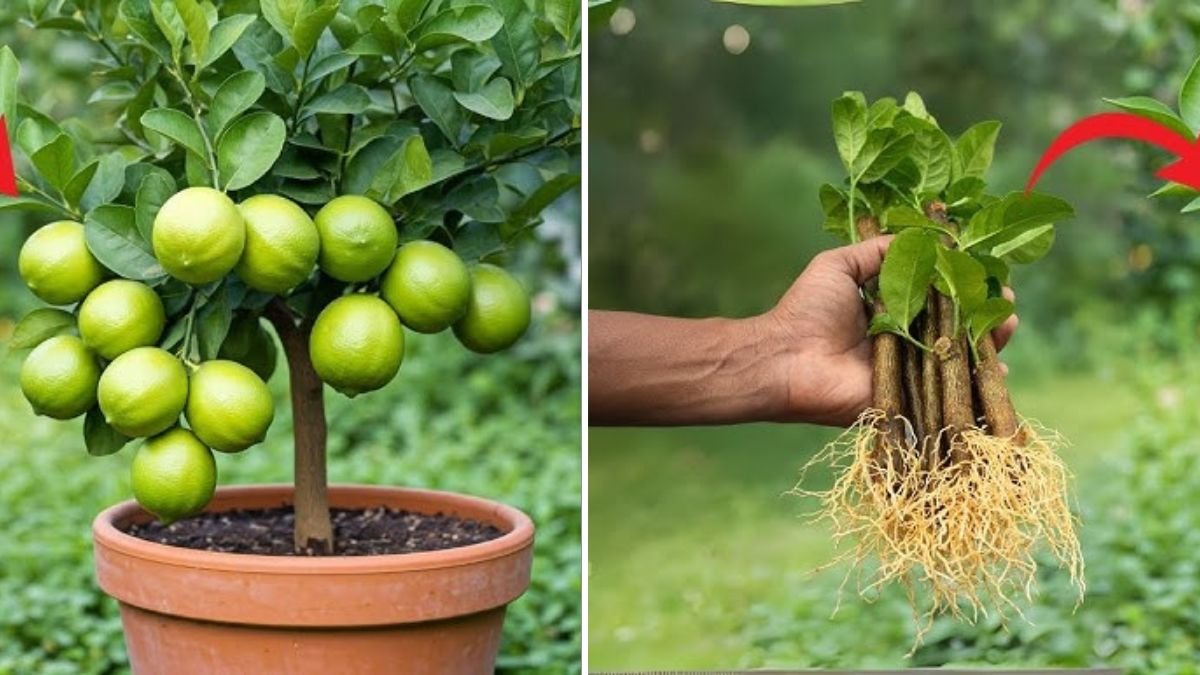
Lemon trees are among the most beloved fruit plants for home gardeners. They grow well in pots, in small backyards, and even on balconies. But many gardeners struggle with one common problem—propagation. Traditional methods sometimes fail, cuttings don’t root, seeds take too long, and grafting can be tricky for beginners.
The good news?
A new, highly effective technique has emerged—one that dramatically increases success rate, speeds up rooting, and ensures healthier lemon saplings. This method blends traditional knowledge with modern gardening science, making lemon propagation easier than ever.
In this comprehensive guide, you’ll discover the new technique to propagate lemon trees, step-by-step, along with expert-level tips to accelerate growth, strengthen roots, and help your new lemon tree produce fruits faster.
Why This New Technique Works Better Than Old Methods
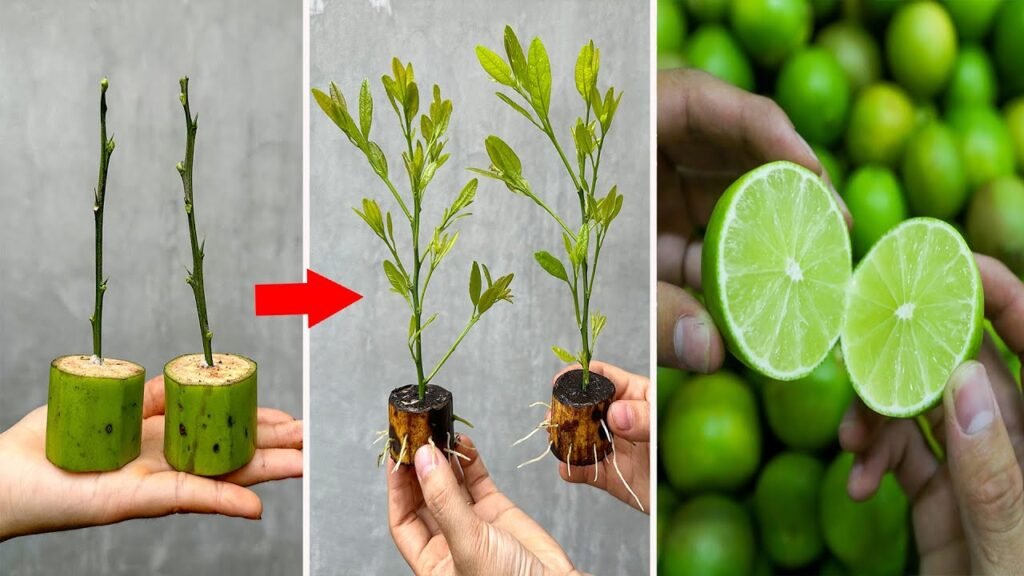
Most gardeners use one of these common propagation methods:
- From seeds
- From cuttings
- From air-layering
- From grafting
While these methods work, each has challenges:
- Seeds take a long time to fruit and don’t grow true to type.
- Cuttings often rot before rooting.
- Air-layering requires time and precision.
- Grafting demands skill and experience.
But the new method solves many of these issues at once. It increases rooting speed, reduces fungal problems, improves oxygen supply, and stimulates stronger root formation.
The New Technique: “Pre-Rooting Capsule Method”
This technique is a blend of air-layering and cutting propagation, but far easier and much more reliable.
Instead of directly planting cuttings in soil, this method uses a root capsule—a small, moisture-retaining, nutrient-rich ball that is attached to the stem while it’s still on the mother plant.
Within 3–4 weeks, strong roots develop inside the capsule.
After that, the new sapling is removed and planted normally.
This gives you:
90–95% success rate
Faster root development
Stronger seedlings
No transplant shock
Higher disease resistance
Let’s break it down step-by-step.
Step-by-Step Guide to the Pre-Rooting Capsule Method
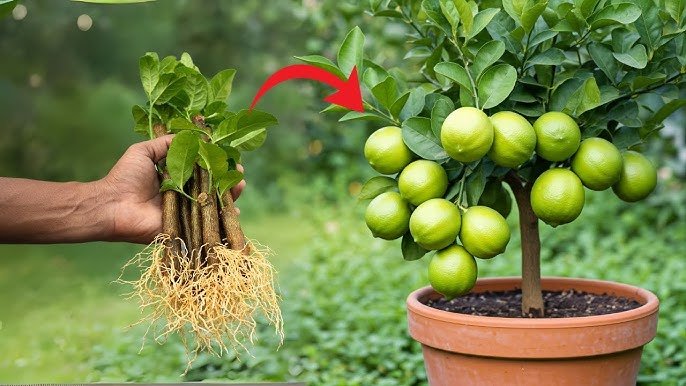
Step 1: Choose the Right Branch
Pick a healthy lemon tree branch that is:
- Green and semi-hardwood
- About the thickness of a pencil
- Free from pests and diseases
- 1 year old or less
Avoid old or very woody branches—they root slowly.
Step 2: Make a Clean Diagonal Cut (New Technique Secret!)
Instead of peeling off bark or cutting a full ring like in traditional air-layering:
Make a 35–40 degree diagonal cut ONLY halfway through the branch.
This partial cut encourages rooting while keeping the stem connected to the mother plant for nutrition.
Gently insert a small piece of toothpick or matchstick in the cut to keep it slightly open.
This stimulates healing hormones (auxins), which trigger root formation.
Step 3: Prepare the Root Capsule
Instead of using just cocopeat or just moss, this method uses a special mixture:
Root Capsule Mix:
- 50% Cocopeat
- 30% Vermicompost
- 15% Perlite (or coarse sand)
- 5% Neem cake powder
This mixture is:
- Moisture-retentive
- Airy
- Anti-fungal
- Nutrient-rich
Shape the mixture into a small ball around the cut.
Step 4: Wrap the Capsule
Use a sheet of cling wrap or polythene.
Place the ball around the cut.
Wrap it tightly.
Seal both ends with thread or tape.
The capsule should not dry out.
Check once a week.
What Happens Inside the Capsule? (The Science Behind It)
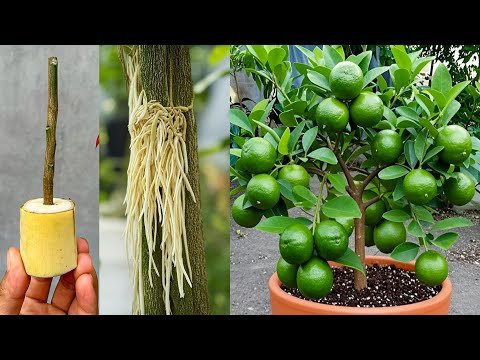
Inside the capsule, something amazing happens:
- The cut triggers the plant to create healing hormones.
- These hormones gather at the wounded area.
- The enclosed moisture environment prevents drying.
- Oxygen flow encourages root formation.
- Nutrients from the capsule feed new roots.
Within just 3–4 weeks, you’ll see white, strong roots filling the bag.
This is much faster than normal air-layering (6–10 weeks).
Step 5: Remove the New Sapling
Once the roots fill the capsule:
- Carefully cut the branch below the capsule.
- Remove the plastic gently.
- Transfer the rooted ball directly into a pot.
Do NOT break the soil ball—this prevents shock.
Step 6: Planting the Pre-rooted Lemon Sapling
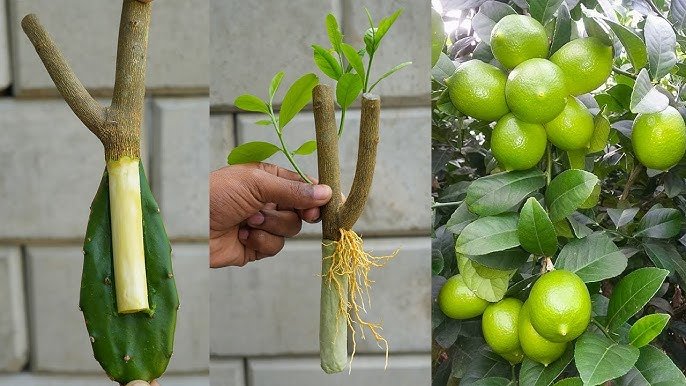
Use a pot (8–12 inches) with a well-draining mix:
Best Soil Mix:
- 40% garden soil
- 30% compost
- 20% cocopeat
- 10% sand
Plant the rooted ball gently.
Water lightly.
Place in bright shade for 10 days before moving to full sun.
Why This New Technique is So Effective
Faster Rooting
The partial cut creates the perfect balance of nutrition supply and root stimulation.
Stronger Plants
Since the roots develop while connected to the mother plant, the sapling becomes naturally robust.
No Rotting
The airy capsule mix prevents fungal infections—major cause of cutting failure.
Earlier Fruit Production
Plants propagated using this method often fruit 1–2 years earlier than seed-grown or traditionally propagated trees.
Works Even in Rainy or Hot Climates
Unlike soil cuttings, capsules can be controlled and protected easily.
Care Tips After Planting Your New Lemon Tree
To make your young plant grow faster:
Give Morning Sunlight
Lemon needs 4–6 hours of morning sun.
Use Organic Fertilizers
Feed monthly with:
- Vermicompost
- Banana peel tea
- Seaweed liquid
Keep the Soil Slightly Moist
Avoid overwatering—they hate soggy soil.
Pinch Early Buds
Removing early flowers forces the plant to grow stronger.
Natural Pest Control Tips
Lemon trees are sensitive to pests like:
- Aphids
- Leaf miners
- Mealybugs
Use safe, organic treatments:
- Neem oil spray
- Soap water
- Garlic-chili spray
Apply weekly in early morning.
Advantages of Propagating Lemon at Home
Growing your own lemon tree is not just simple—it’s rewarding!
- Fresh organic lemons anytime
- Lemon leaves for tea
- Beautiful fragrant flowers
- Zero-chemical produce
- Great for balconies and terraces
Plus, this new propagation technique makes it easier for anyone—beginner or expert.
Conclusion: The Future of Lemon Tree Propagation Is Here!
The Pre-Rooting Capsule Method is truly a game-changer.
It combines the best parts of air-layering and cutting propagation, while eliminating their weaknesses.
You get:
- Faster results
- Higher success rate
- Stronger saplings
- Earlier fruiting
- Minimal skill required
Whether you’re a hobby gardener or a serious plant lover, this method will transform the way you grow lemon trees.