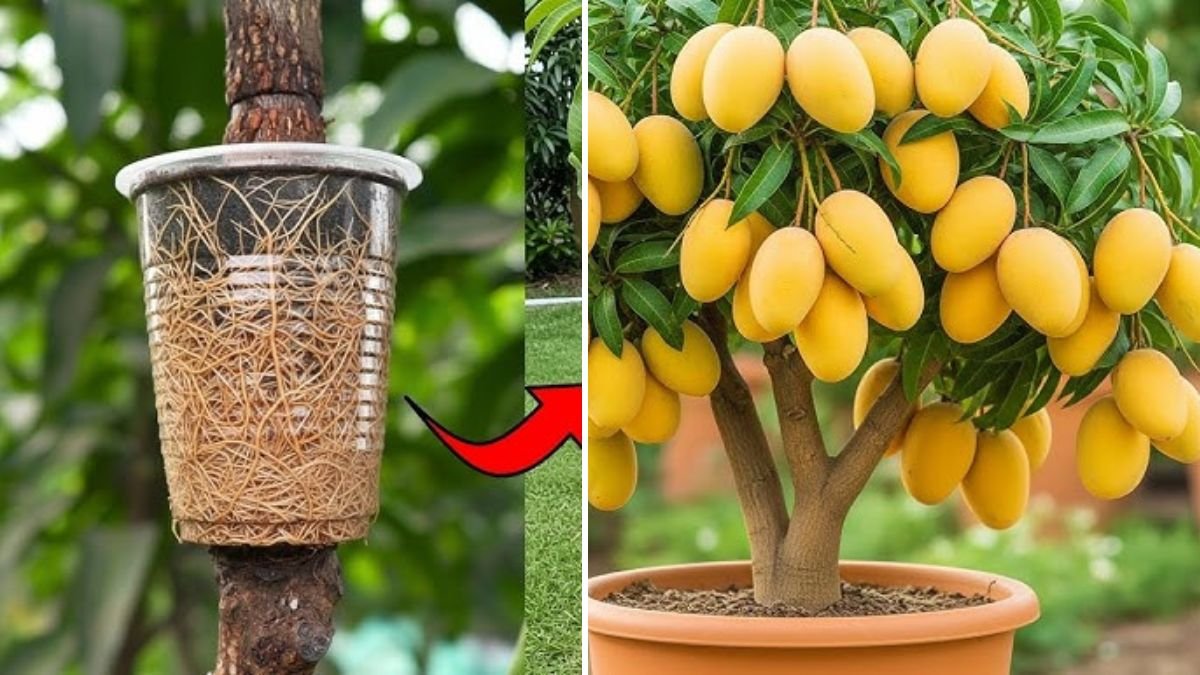
Mango is the king of fruits—sweet, fragrant, juicy, and loved by everyone. But while mango trees are naturally strong and adaptable, many home gardeners struggle to grow sweet, juicy mangoes or face issues like slow growth, poor flowering, or small fruits.
The good news? Growing high-quality mangoes is easier than you think—when you follow the right methods.
In this 1200-word guide, you’ll learn genius hacks, professional tips, and simple home tricks to grow thick, juicy, sweet mangoes—whether in your backyard, front yard, or even in a container.
Let’s begin your journey to growing the sweetest mangoes ever!
Why Mango Trees Need Special Care for Juiciness
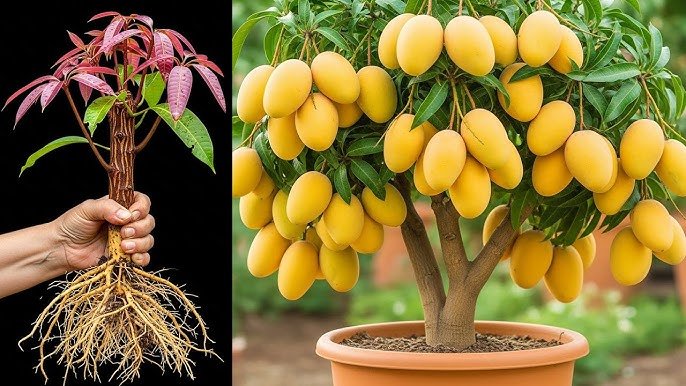
Mango trees grow vigorously, but producing sweet and juicy fruits requires:
Strong roots
Balanced nutrition
Correct pruning
Stress-controlled flowering
Proper pollination
Small mistakes—like too much nitrogen or too little sunlight—can reduce sweetness and moisture inside the fruit.
The hacks below help you boost each stage for maximum juice, flavor, and size.
Hack #1: Choose the Right Mango Variety for Juicy Fruits
All mangoes are delicious, but some varieties naturally produce extra juicy fruits.
Best Juicy Varieties to Grow at Home
- Alphonso (Hapus) – Extremely sweet, aromatic, juicy
- Dasheri – Soft, melting texture
- Langra – Very juicy, slightly tangy
- Banganapalli – Firm but juicy
- Mallika – Home-gardener favorite; high yield and sweet pulp
- Ratnagiri local varieties – Juicy with great aroma
Pick a grafted plant for early fruiting (within 2–3 years).
Hack #2: Plant in the Right Soil Mix for Maximum Root Strength
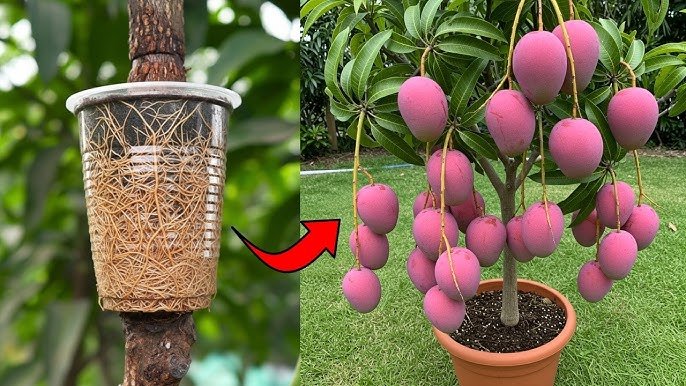
Juicy fruits come from a healthy root system.
Mangoes love loose, well-drained soil. Avoid heavy clay soils.
Perfect Mango Soil Recipe
- 40% garden soil
- 30% compost or cow dung
- 20% coarse sand
- 10% cocopeat
Optional Additives for Extra Sweetness
- 1 cup neem cake (strong roots)
- 1 tbsp bone meal (flower booster)
- 1 cup rice husk (excellent drainage)
Loose, airy soil = fast roots = big, juicy fruits.
Hack #3: Give Your Mango Tree Full Sunlight—Non-Negotiable!
Mango trees LOVE the sun.
The more sunlight they receive, the more sugars the fruit develops.
Minimum Requirement: 6–8 hours of direct sunlight
Best: Full day sun = maximum sweetness and juice
Sunlight increases:
- Sugar content
- Fruit size
- Aroma
- Flower production
A mango grown in shade will always produce bland or small fruits.
Hack #4: Water Smartly—The Secret to Juicy Mangoes
Watering mango trees correctly makes a huge difference in fruit juiciness.
Deep watering is key
Water thoroughly until the soil is fully moist—but do not overwater.
Watering Frequency
- Young plant: every 2–3 days
- Mature tree: once every 7–10 days
- Flowering period: reduce watering to trigger blooms
- Fruit development: increase watering to boost juice content
Genius Tip
Stop watering for 2–3 weeks before flowering season.
This stress triggers heavy flowering and better fruit setting.
Hack #5: Use Mango-Specific Fertilizers at the Right Time
Mangoes are heavy feeders, especially during growth and fruiting.
Here is the perfect yearly fertilizer schedule:
Stage 1: Growth Phase (March–July)
Use nitrogen-rich fertilizers:
- 2 kg cow dung
- 1 kg vermicompost
- 1 handful neem cake
- OR NPK 19-19-19 (small dose)
Purpose:
Boost leaf, branch, and root growth.
Stage 2: Flowering Phase (December–February)
Use phosphorus + potassium:
- Bone meal
- Wood ash
- Banana peel fertilizer
- Rock phosphate
- OR NPK 0-52-34
Purpose:
More flowers + healthier bud formation.
Stage 3: Fruit Development (March–May)
Use potassium-rich fertilizers:
- Banana peel tea
- Seaweed extract
- Wood ash
- Potash fertilizer
Purpose:
Increases fruit size, sweetness, and juice.
Hack #6: Pruning Smartly Makes Mango Trees Produce More Fruits
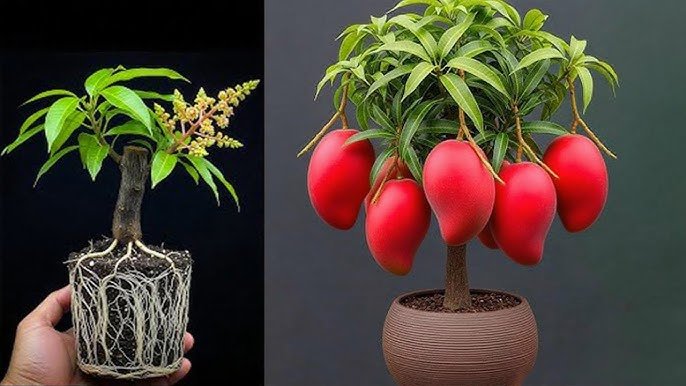
Correct pruning helps your tree:
grow wider
produce more branches
develop more fruiting points
When to Prune
- After harvest
- Before new growth starts (pre-monsoon)
What to Remove
- Dry branches
- Crossing branches
- Weak shoots
- Diseased stems
- Vertical non-fruiting shoots
Tip
Always allow sunlight to reach the center of the tree.
Hack #7: Sweetness Booster — The “Banana Peel Mix”
A magical natural hack to boost juiciness:
Banana Peel Fertilizer
Blend:
- 3 banana peels
- 1 tbsp jaggery
- 1 liter water
Ferment 3–5 days → dilute 1:4 → use monthly.
Rich in potassium = sweeter, juicier mangoes.
Hack #8: Promote More Flowers with Stress Technique
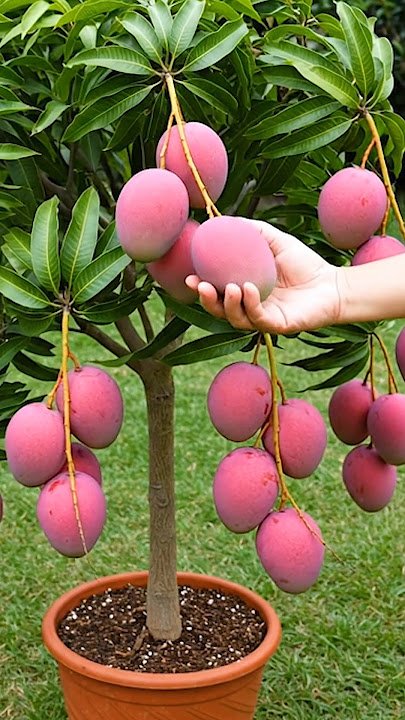
Mango trees naturally flower when slightly stressed.
Try these methods:
Technique 1: Water restriction
Stop watering for 2 weeks before flowering.
Technique 2: Root pruning
Dig around the tree (1 foot away) to cut some small roots.
This signals the plant to reproduce → heavy blooming.
Hack #9: Increase Juiciness With Better Pollination
More pollination = better fruit setting = fuller juicy fruits.
How to improve pollination
- Plant fragrant flowers nearby
- Keep a shallow water dish for bees
- Avoid pesticides during flowering
- Shake branches lightly in early morning (hand pollination boost)
Pollinated mangoes have more pulp and sweetness.
Hack #10: Control Pests Early for Bigger Fruits
Common mango pests:
- Mealybugs
- Aphids
- Fruit flies
- Scale insects
- Hopper bugs
Natural Pesticide Spray
Mix:
- 2 tsp neem oil
- 1 tsp liquid soap
- 1 liter water
Spray every 12–15 days except during flowering.
Healthy leaves → better photosynthesis → juicier mangoes.
Hack #11: Best Container Size for Mango in Pots
You can grow juicy mangoes in pots!
For fast growth
Use 18–24 inch pot initially.
Shift to 30–40 liters after one year.
Best mango varieties for pots:
- Amrapali
- Mallika
- Nam Doc Mai (Thai)
- Dwarf Kesar
- Irwin Mango
Use a heavy pot to support roots and fruit load.
Hack #12: Mulching Makes Mango Roots Grow Faster
Mulching helps with:
retaining soil moisture
keeping soil cool
reducing weed growth
improving fruit qualit
Use:
- Dry leaves
- Sugarcane mulch
- Rice husk
- Coconut husk chips
Place 2–3 inches of mulch around the base—but keep away from the trunk.
When Will You Get Juicy Mangoes?
Depends on plant type:
| Plant Type | Flowering | Fruit Time |
|---|---|---|
| Grafted | 1–2 years | 2–3 years |
| Seed-grown | 4–6 years | 5–8 years |
| Dwarf mango | 1 year | 1–2 years |
Grafted mango is always the fastest.
Final Thoughts: Grow Your Sweetest Mangoes Ever
Growing juicy mangoes is not difficult—it’s a beautiful combination of:
correct sunlight
perfect watering
smart fertilizing
good pruning
pollination support
careful pest control
With these 12 genius hacks, your mango tree will produce:
juicier fruits
sweeter pulp
bigger size
faster growth
healthier harvests
Whether you’re growing mango in a pot, balcony, terrace, or garden, this guide will help you enjoy homegrown juicy mangoes that taste better than store-bought ones!