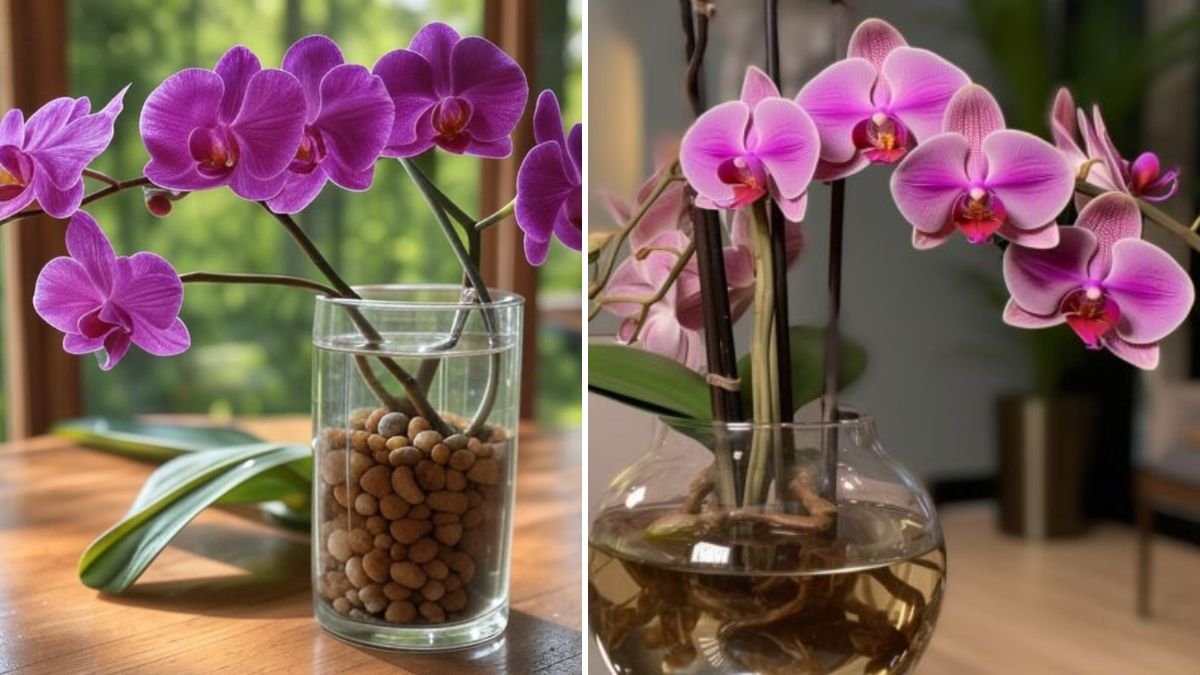
Orchids have always captured the hearts of plant lovers with their elegant flowers, exotic appearance, and long-lasting blooms. Most people believe that orchids need special soil mixes to thrive, but the truth is quite surprising — many orchids grow even better without soil. In their natural habitat, orchids are epiphytes: they cling onto tree trunks, branches, and rocks, absorbing moisture and nutrients from the air and rain.
Growing orchids without soil is not only possible but can actually recreate a more natural, healthier environment for the plant. Whether you’re a beginner or an experienced gardener, this method is easier than you might expect. In this comprehensive guide, we will explore how to grow orchids without soil, the best care routine, and long-term maintenance tips that will keep your orchids blooming beautifully year after year.
Why Grow Orchids Without Soil?
Most orchids, especially Phalaenopsis, Vanda, Cattleya, and Dendrobium, are naturally air-loving plants. Soil often retains too much moisture and suffocates their roots, leading to rot.
Growing orchids without soil offers several benefits:
1. Better Oxygen Flow to the Roots
Orchid roots need air. When exposed to open environments, they grow stronger and stay greener.
2. Lower Chance of Root Rot
Since there’s no soil to hold excessive water, fungal infections and rot are greatly minimized.
3. Natural Growth Style
Epiphytic orchids naturally cling to surfaces. Growing them in a soilless environment mimics their original habitat.
4. Easier Maintenance
No repotting due to soil breakdown, no pests hiding in the potting mix — just simple, clean care.
5. Stunning Decorative Display
Orchids grown in glass jars, mounted on wood, or suspended in the air create beautiful indoor plant décor.
Methods to Grow Orchids Without Soil
You can grow orchids without soil using several techniques. Here are the most effective ones:
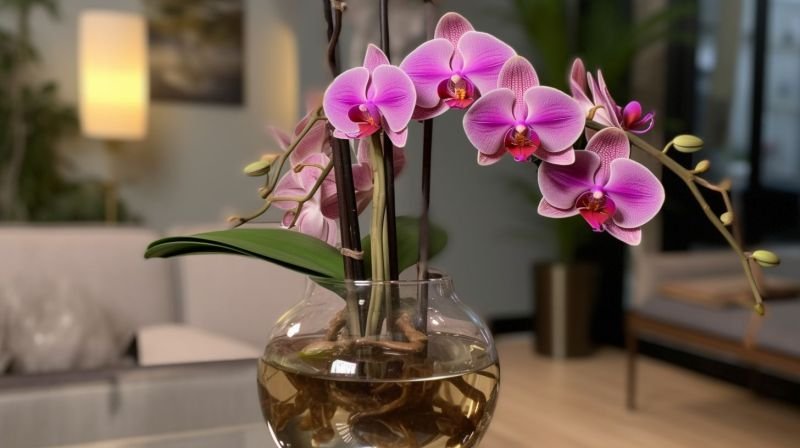
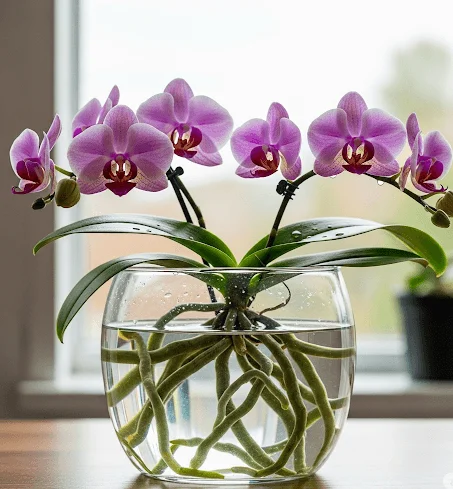
1. Water Culture Method
Water culture is becoming increasingly popular among orchid enthusiasts. It uses water only, with no substrate.
How it Works:
The orchid roots alternate between soaking in water and staying exposed to air. This balance prevents rot and encourages strong root growth.
Steps:
- Remove the orchid from its pot and clean off all old medium.
- Trim any soggy or dead roots.
- Place the orchid in a glass vase or jar.
- Add clean water to cover only the bottom 1–2 cm of roots.
- Keep the top roots exposed for airflow.
- Change water every 5–7 days.
Two Types of Water Culture:
- Full Water Culture (FWC): Plant stays in water full-time.
- Semi Water Culture (SWC): 2 days in water, 5 days dry.
Best For:
- Phalaenopsis
- Vanda
- Dendrobium hybrids
2. Mounted Orchid Method

This is one of the most natural and artistic ways to grow orchids. The plant is attached to wood, cork bark, or tree branches, just like in the wild.
How to Mount an Orchid:
- Choose a mount: driftwood, cork bark, cedar, or hardwood.
- Place a small layer of sphagnum moss behind the orchid roots (optional).
- Attach the orchid with soft wire, twine, or fishing line.
- Mist the moss and roots 3–4 times a week.
Best For:
- Cattleya
- Dendrobium
- Vanda
- Oncidium
Tip:
Mounted orchids dry out quickly, so they need more frequent watering.
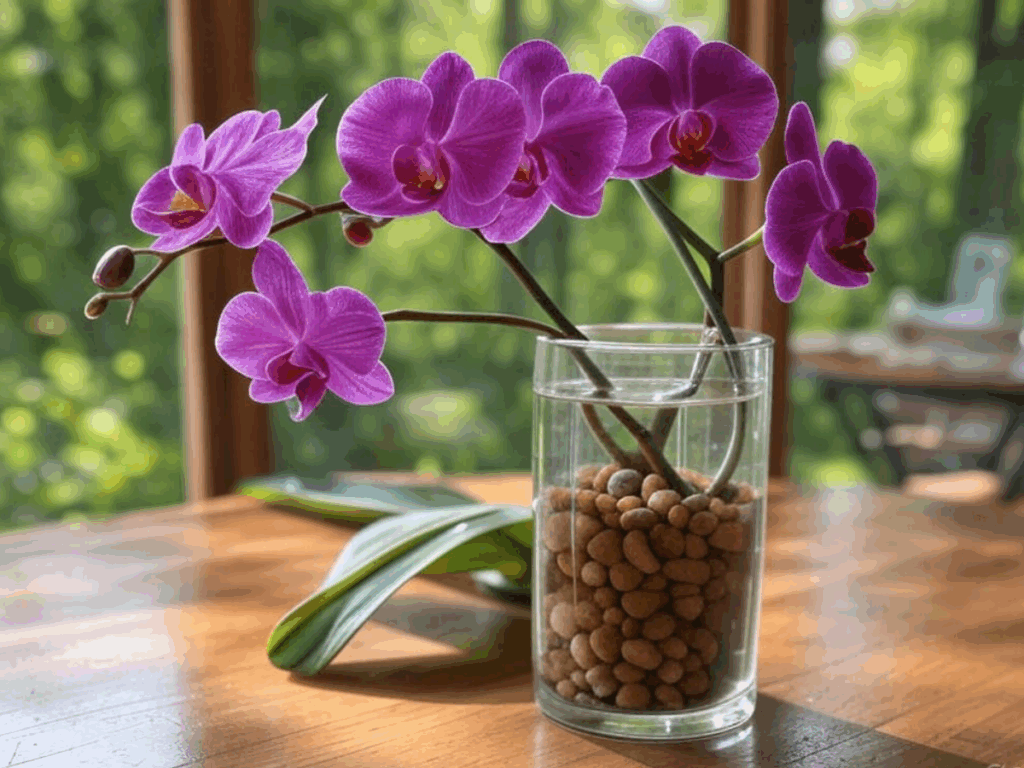
3. LECA / Clay Pebbles (Semi-Hydroponics)
LECA (Lightweight Expanded Clay Aggregate) is a reusable, clean, and airy medium — but it’s not soil.
How it Works:
Orchids sit in a pot with LECA and a water reservoir below, allowing roots to absorb moisture slowly through capillary action.
Steps:
- Use a pot with two holes near the bottom.
- Add rinsed LECA.
- Place the orchid inside.
- Fill reservoir with water up to the holes.
- Add water/nutrient solution every 7–10 days.
Best For:
- Beginners
- Phalaenopsis
- Cattleya
- Paphiopedilum
4. Air Plant Method (Bare Root)
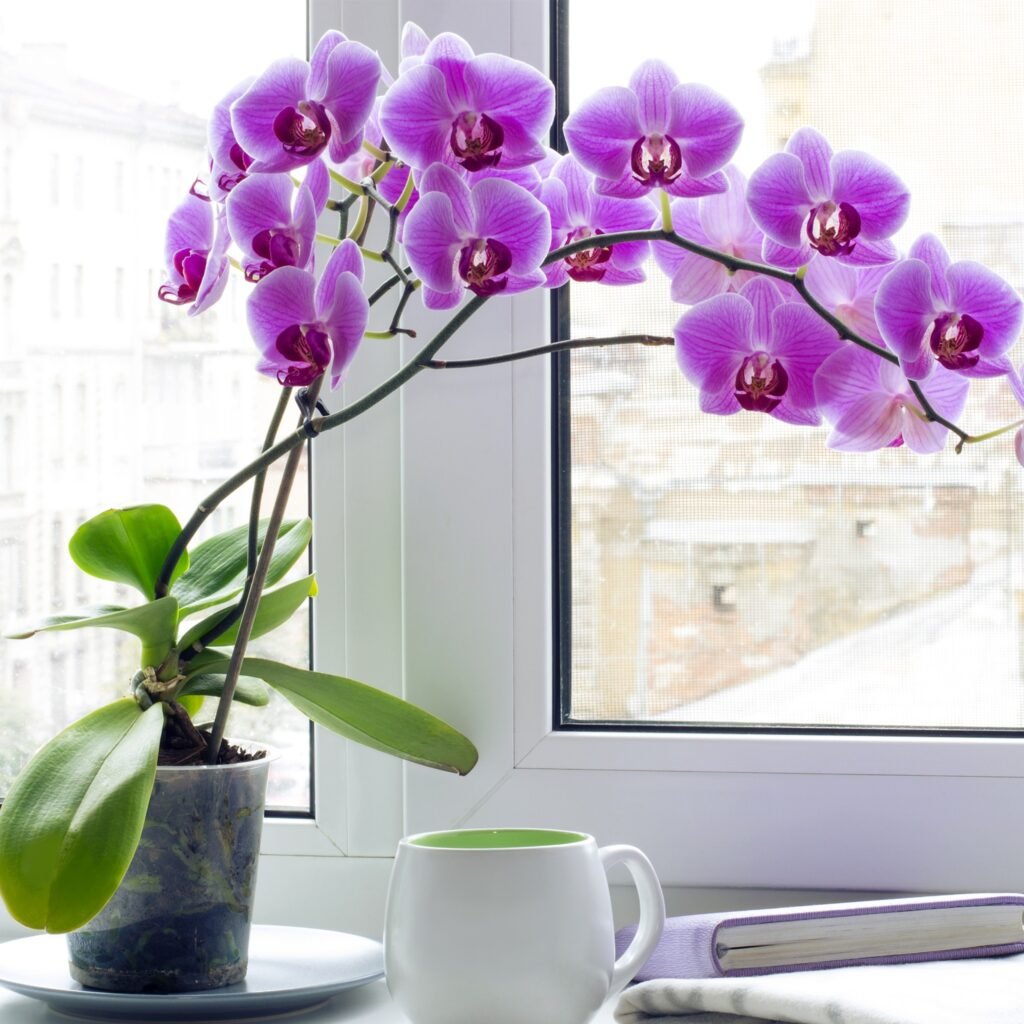
Some orchids thrive simply hanging in the air with no medium at all.
How to Do It:
- Suspend the orchid using a wire or hanger.
- Keep it in a humid area with bright light.
- Mist daily or soak roots 1–2 times a week.
Best For:
- Vanda orchids
- Aerides
- Rhynchostylis
- Ascocenda hybrids
Watering Orchids Without Soil
Watering is the most important aspect of soilless orchid care. Unlike potted plants, the exposed roots dry quickly.
General Watering Rules:
- Water when roots turn silvery or grey.
- Mist regularly in dry climates.
- Never leave roots soaking unless using water culture.
- Avoid using hard tap water — rainwater or filtered water is best.
Watering Frequency by Method:
| Method | Frequency |
|---|---|
| Water Culture | Weekly water changes |
| Mounted Orchids | 3–5 times/week |
| LECA Semi-Hydro | Every 7–10 days |
| Air Roots Hanging | Daily misting |
Light Requirements
Orchids grown without soil still need proper light. Most orchids love:
Bright, indirect sunlight
East- or north-facing windows
Artificial grow lights if indoors
Avoid direct afternoon sun — it burns their delicate leaves.
Temperature & Humidity
Ideal Temperature:
- Day: 22°C–30°C
- Night: 18°C–22°C
Humidity Requirements:
Orchids LOVE humidity:
- 50% minimum for Phalaenopsis
- 60–70% for Vanda and tropical species
Use humidifiers, pebble trays, or frequent misting to maintain proper moisture levels in the air.
Air Circulation
Airflow is essential to prevent fungus and pests.
- Keep a small fan running nearby.
- Ensure the room is well-ventilated.
- Avoid stagnant or overly damp spaces.
Feeding Orchids Without Soil
Without soil, orchids rely entirely on the water and environment for nutrients.
Use a balanced orchid fertilizer:
20-20-20 or 30-10-10 (for growth)
10-30-20 (for flowering)
Feed lightly (very important):
- Once every 2 weeks
- Dilute to 1/4 strength to avoid root burn
Too much fertilizer can damage exposed roots.
How to Keep Roots Healthy
Healthy orchid roots are:
- Bright green when wet
- Silvery when dry
- Firm and plump
Avoid:
- Brown mushy roots
- Constant standing water (unless water culture)
- Dusty, dry air
- Infestation of mites or fungus gnats
Promote:
- Mist roots daily
- Use good humidity
- Provide steady air circulation
Blooming Orchids Without Soil
Orchids bloom only when they’re comfortable. To encourage flowering:
1. Give Bright, Indirect Light
This is the #1 factor for blooming.
2. Keep Temperature Drops at Night
A 5–7°C drop at night stimulates flower spikes.
3. Fertilize Before Bloom Season
Switch to a bloom booster when spikes start forming.
4. Maintain Consistent Moisture
Drying out too much can abort buds.
With proper care, soil-less orchids bloom even more vigorously than potted ones.
Common Problems & Solutions
Problem: Root Rot
Solution: Increase airflow, reduce watering, trim dead roots.
Problem: Shriveling Leaves
Solution: Increase humidity and watering frequency.
Problem: Yellow Leave
Solution: Too much sun — move to indirect light.
Problem: No Blooms
Solution: Increase light; provide nighttime temperature drop.
Final Thoughts: Orchids Thrive Best the Natural Way
Growing orchids without soil isn’t just a trend — it’s actually closer to how orchids live in nature. Whether you mount them on wood, suspend them in air, or place them in water culture, this natural approach promotes healthier roots, improved growth, and more frequent blooming.