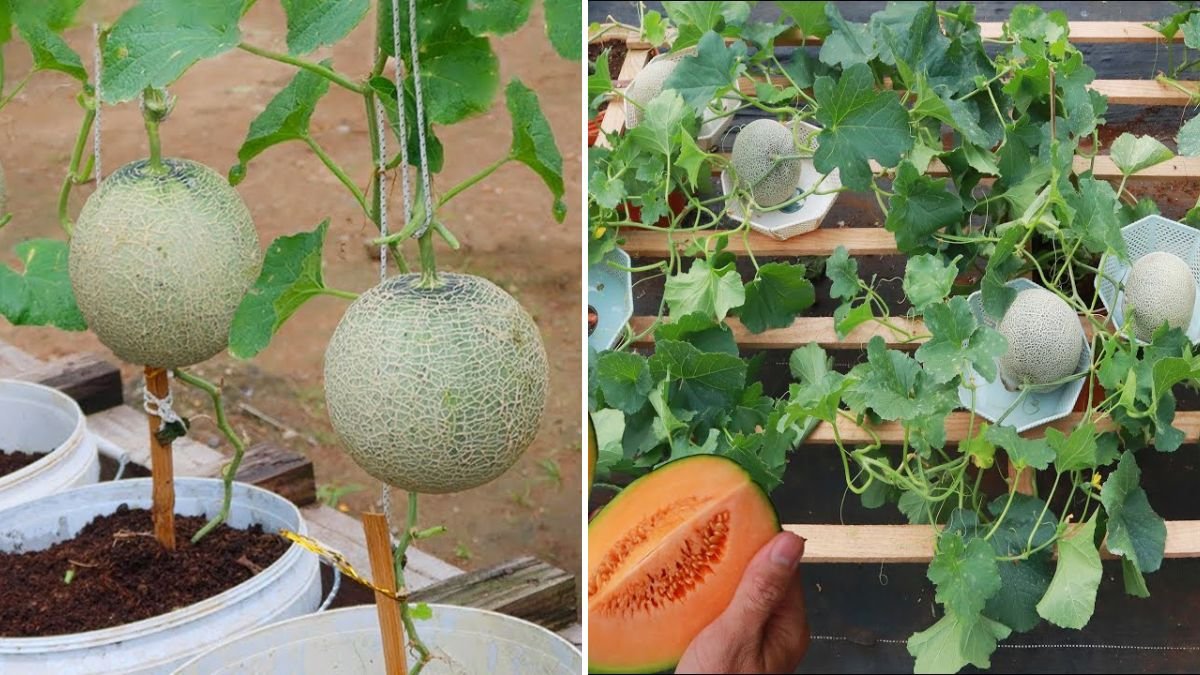
Growing cantaloupes—also known as muskmelons—might seem like something only large farms can do. Their sprawling vines, warm-weather needs, and heavy fruits often make beginners hesitate. But the truth is delightfully surprising: you can grow big, sweet, juicy cantaloupes right on your terrace with minimal effort.
In fact, many gardeners who’ve tried this simple terrace-growing method say the same thing:
“I never expected such a huge harvest!”
This guide will walk you through the full process, from seed to harvest, using practical techniques that anyone can apply. Whether you have a small balcony, a spacious rooftop, or a sunny veranda, you can grow cantaloupes successfully and enjoy yields that rival a traditional garden.
Let’s dive into this easy, exciting experiment that turns ordinary terrace spaces into fruit-producing mini farms.
🌱 Why Cantaloupes Grow So Well on Terraces
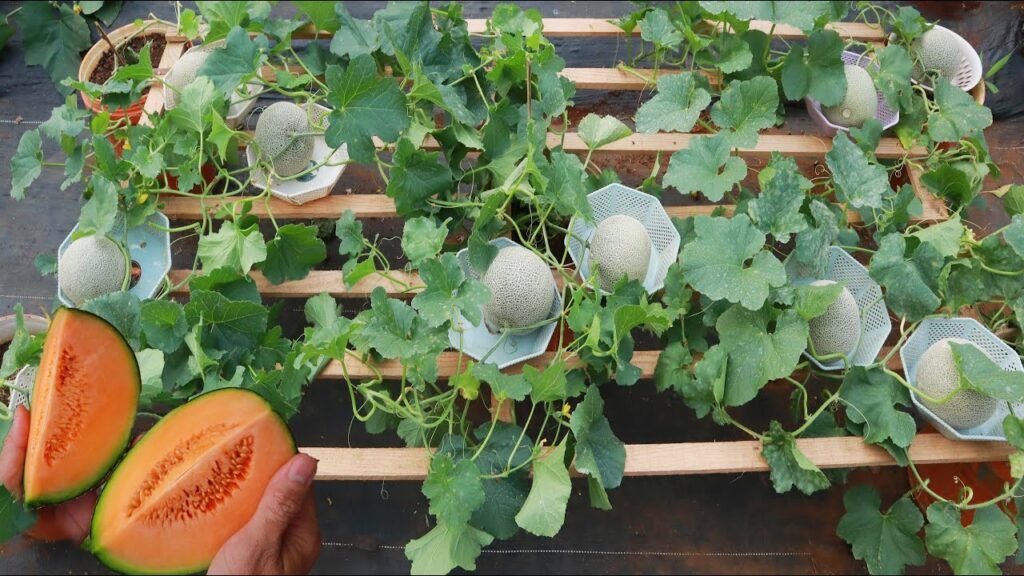
Terraces offer advantages that many people overlook:
- Full sunlight exposure, which melons love
- Warm rooftop temperatures, perfect for fruit sweetness
- Excellent ventilation, preventing fungal diseases
- Plenty of space for vines to run or climb
When given the right conditions, cantaloupes become extremely productive even in containers. The key is to create the ideal environment in pots and make use of the warmth and sun your terrace already provides.
🍈 Step 1: Selecting Seeds – The Beginning of an Abundant Harvest
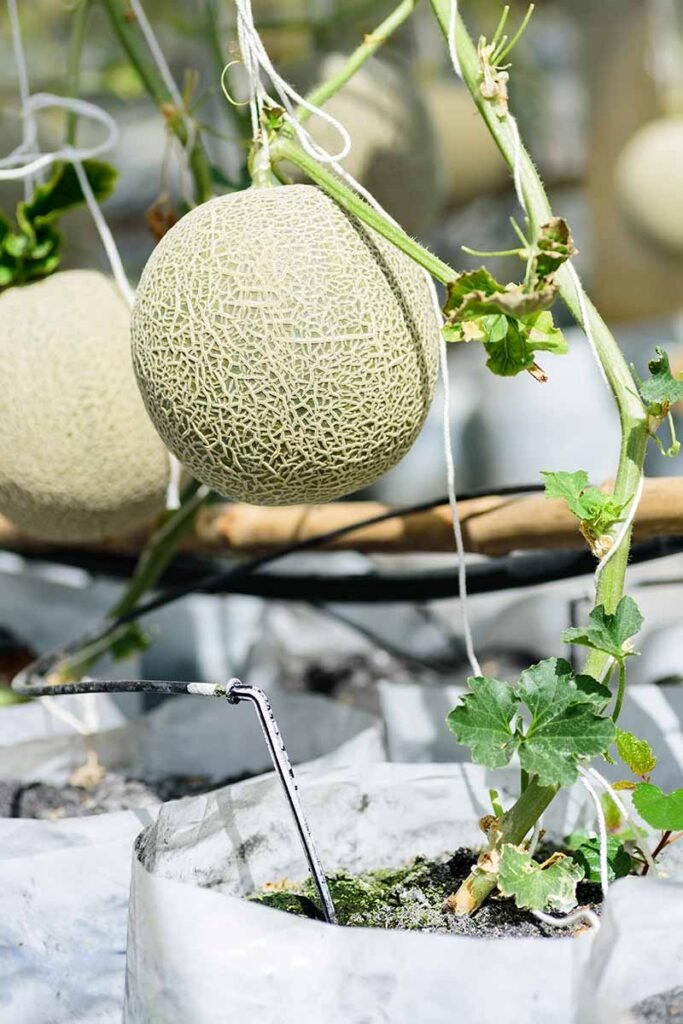
Good seeds are the foundation of a successful cantaloupe experiment. Choose varieties suited for home gardening, container growing, and faster yields.
Best varieties for terrace cultivation:
- Hale’s Best Jumbo
- Sugar Queen
- Sweet Granite
- Ambrosia Hybrid (super sweet)
- Golden Langkawi (Asian type)
Look for:
- Fresh seeds
- Disease-resistant varieties
- Seeds with high germination rates
Starting with quality seeds increases your chances of getting large, sweet fruits even on your first attempt.
🌱 Step 2: Quick and Reliable Seed Germination
A strong plant begins with a strong seedling. The easiest and most reliable germination method for cantaloupe is the paper towel technique.
How to do it:
- Moisten a paper towel—just damp, not dripping.
- Place seeds on half the towel and fold it.
- Slide it into a zip-lock bag.
- Keep it in a warm place (28–32°C).
- Seeds germinate in 2–4 days.
Once the tiny white roots appear, gently transfer them to small cups or seedling trays filled with light soil.
This step ensures you only plant healthy, viable seeds that will grow vigorously on your terrace.
🪴 Step 3: Preparing the Perfect Terrace-Friendly Soil Mix
Since cantaloupes have deep roots and high nutrient needs, soil mix is crucial—especially in containers.
Ideal Soil Mix Recipe
- **40% garden soil
- 30% compost or vermicompost
- 20% cocopeat (for moisture retention)
- 10% sand or rice husk (for aeration)
- 1 tbsp bone meal per pot
- 1 handful wood ash (rich in potassium)**
This blend ensures:
- Deep root development
- Enough water retention but no waterlogging
- Essential nutrients for flower and fruit growth
- Natural sweetness improvement
Good soil = big fruits.
🪴 Step 4: Choosing the Right Pot Size for Cantaloupe
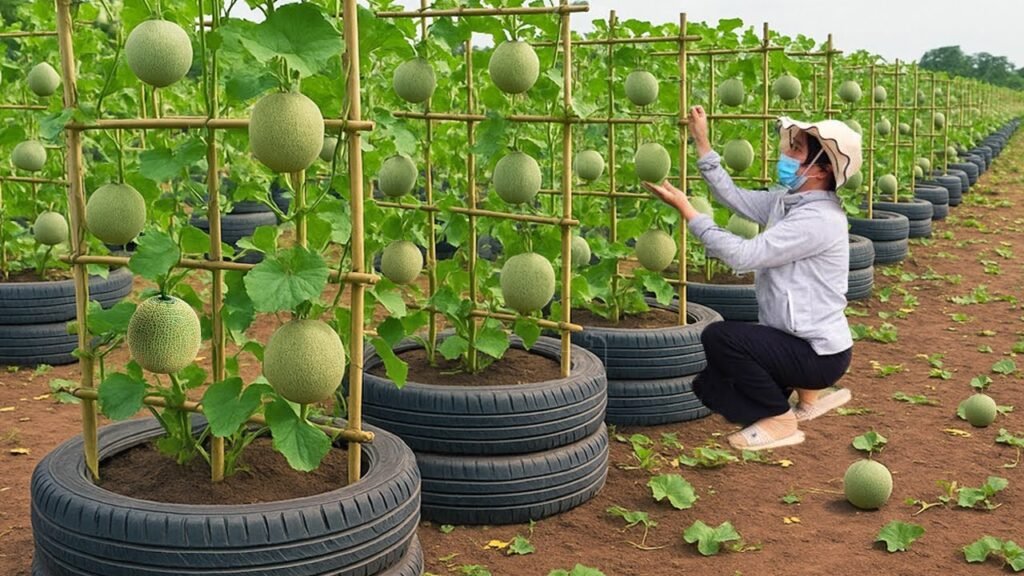
Cantaloupes thrive in large containers. Using the right pot size is one of the most important factors for high yields on a terrace.
Recommended container size:
- Minimum: 30 liters
- Ideal: 40–50 liters
- Drainage holes are essential
Bigger pots allow:
- Better root space
- Stronger vines
- More fruits
- Improved sweetness
Grow one plant per pot for best results.
☀️ Step 5: Location Matters — Give Them the Sun They Love
Place pots in an area that receives:
- At least 6–8 hours of direct sunlight
- Good air movement
- No long-lasting shade from nearby buildings
Sunlight is the secret behind the deep sweetness in terrace-grown melons.
💧 Step 6: Watering Strategy — The Trick to Sweeter Fruits
Cantaloupes do not like constant wet soil. Overwatering leads to bland fruits and weak plants.
Watering guidelines:
- Early growth: Water regularly to keep soil slightly moist.
- Flowering stage: Reduce watering slightly.
- Fruit development: Water only when the soil is dry.
- Last 7–10 days before harvest: Reduce watering drastically to enhance sweetness.
Letting the soil dry slightly between waterings increases sugar concentration in the fruit.
🌼 Step 7: Encourage Proper Pollination for More Fruits
Terraces may have fewer bees, so hand pollination can dramatically increase your yields.
How to hand-pollinate:
- Identify male flowers (thin stem) and female flowers (tiny fruit at the base).
- Pluck a male flower and remove its petals.
- Gently dab its pollen onto the center of the female flower.
- Repeat during early morning when flowers are fresh.
This simple step often doubles or even triples the fruit count.
🧗 Step 8: Training Vines Makes a Huge Difference
On terraces, vines can go wild. But managing them increases fruit size and plant health.
Two effective terrace methods:
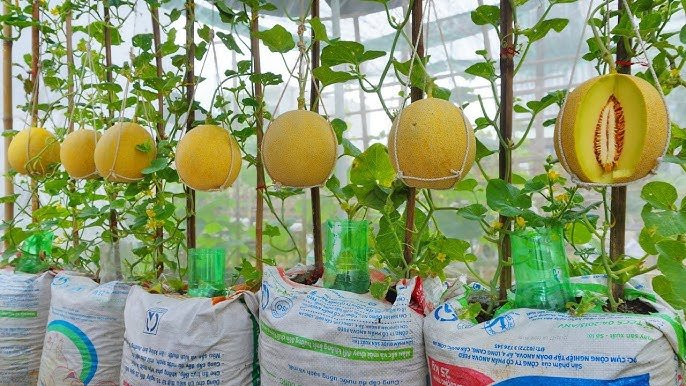
1. Trellis Method
- Train the main vine vertically.
- Use a sturdy trellis, net, or railing.
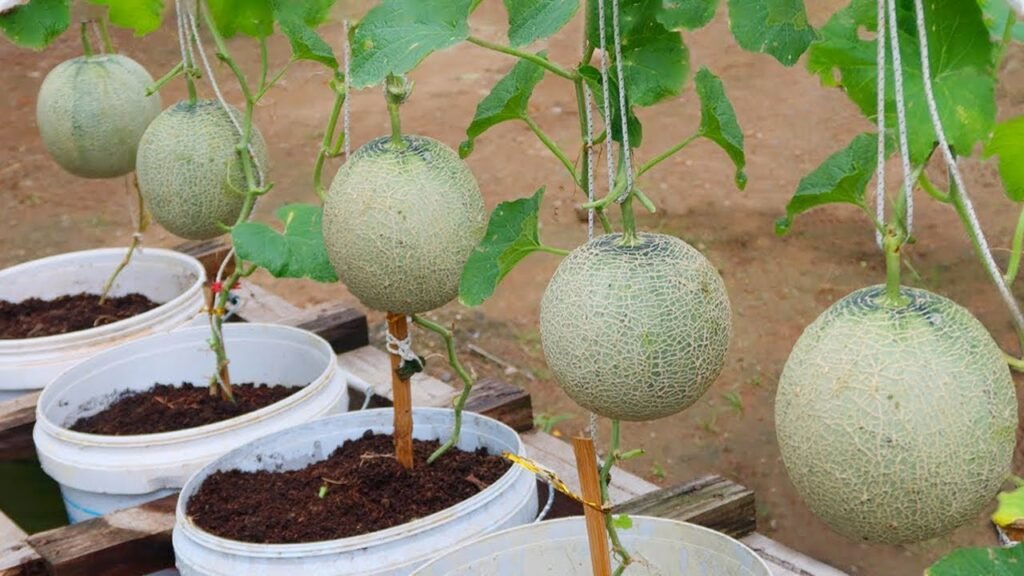
- Support developing fruits with net bags (like onion mesh bags).
2. Ground Spread Method
- Let vines run across the terrace floor.
- Place cardboard or coconut husk under fruits to prevent rot.
Both methods work, but trellising saves space and gives cleaner fruits.
🌿 Step 9: Feeding the Plants for Giant, Sweet Melons
Cantaloupes respond exceptionally well to organic feeding.
Feeding schedule:
- Every 15 days:
- Vermicompost tea or compost tea
- During flowering:
- Seaweed extract (boosts flowering)
- During fruit development:
- Banana peel fertilizer (high potassium)
- Wood ash sprinkle
- Mid-season:
- Fish emulsion or bone meal
These nutrients encourage:
- Strong vine growth
- More flowers
- Better fruit set
- Larger melons
- Enhanced sweetness
🛡️ Step 10: Pest Protection Without Chemicals
Terrace gardening naturally reduces pest pressure, but you may still encounter:
- Aphids
- Whiteflies
- Powdery mildew
- Fruit flies
Solutions:
- Spray neem oil every 10–15 days.
- Keep leaves dry during watering.
- Use yellow sticky traps.
- Avoid overcrowding of vines.
Thriving, healthy vines produce far more fruit.
🍈 Step 11: When and How to Harvest for Best Flavor
Cantaloupes must be harvested at the perfect moment for maximum sweetness.
Signs of ripeness:
- The netted pattern turns golden or beige
- Fruit emits a strong sweet smell
- The stem begins to crack or “slip”
- The fruit feels slightly soft where the stem attaches
A properly ripe cantaloupe from your terrace will taste much better than anything from the market.
🎉 The Unexpected Results: Big Yields in Small Spaces
What surprises most people about terrace-grown cantaloupes is:
- How large the fruits get
- How sweet and aromatic they taste
- How little space is actually needed
- How fun the entire process becomes
Even beginners often harvest:
- 4–8 fruits per plant
- Each weighing 1–2.5 kg
- With deep orange flesh and amazing sweetness
Your terrace becomes a mini melon farm—something truly delightful and rewarding.
🌟 Conclusion: Anyone Can Grow Cantaloupes on a Terrace
Growing cantaloupes on a terrace isn’t just possible. It’s easy, enjoyable, and incredibly productive. With the right soil mix, container, sunlight, and simple care, you too can experience the joy of harvesting big, sweet fruits from your own home.
This experiment often leads to one realization:
“Terrace gardening is full of surprises—and this cantaloupe harvest is my favorite one yet!”
If you want, I can also prepare:
✅ A shorter YouTube video script
✅ A 1500- or 2000-word expanded article
✅ Thumbnail titles and descriptions
✅ Step-by-step infographic captions