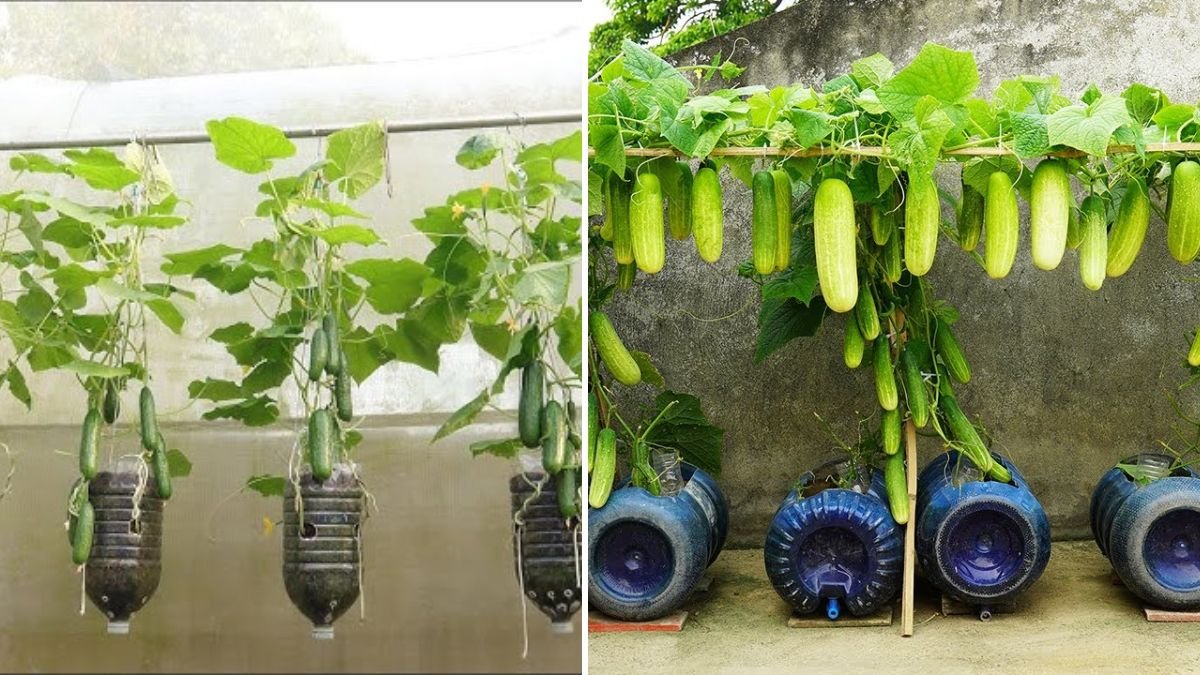
Cucumbers are one of the easiest and most refreshing vegetables you can grow—but did you know that you can grow a never-ending supply of them using nothing more than plastic bottles? Yes, those old 2-liter bottles you normally toss out can be transformed into a powerful, space-saving garden system perfect for cucumbers.
This sustainable method is revolutionizing small-space gardening. It’s affordable, eco-friendly, and shockingly productive. Once you try growing cucumbers this way, you’ll wonder why you didn’t start sooner.
Here’s a complete 1200-word guide that shows you exactly how to grow cucumbers in plastic bottles—no garden required!
🌟 Why Grow Cucumbers in Plastic Bottles?
Plastic bottles offer an incredibly efficient way to grow cucumbers, especially if you live in an apartment or have limited gardening space.
Here’s why this method works so well:
✔ Saves space — Perfect for balconies, rooftops, and windowsills
✔ Eco-friendly — Recycles waste into useful containers
✔ Cost-effective — No need for fancy pots or planters
✔ Improved drainage — Helps prevent root rot
✔ Easy mobility — Move bottle-plants toward sunlight whenever needed
✔ Ideal moisture control — Bottles dry faster, preventing overwatering
Cucumbers love warm, well-drained soil and plenty of sunlight—conditions that a plastic bottle setup can provide beautifully.
🥤 Choosing the Right Bottle
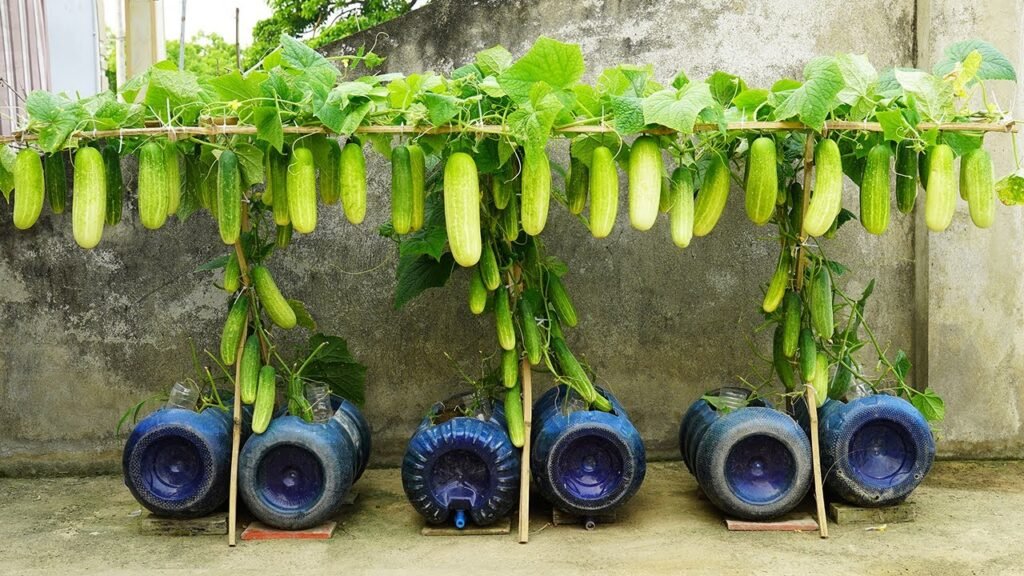
For cucumbers, you need slightly larger bottles than herbs or peppers.
Best choices:
- 2-liter beverage bottles
- 5-liter water jugs
- Wide plastic oil containers
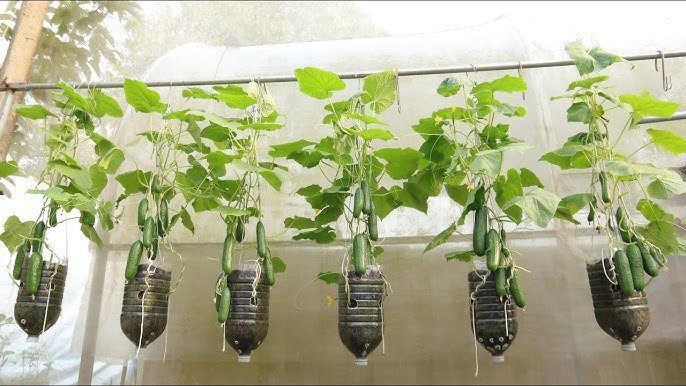
If using 2-liter bottles, one bottle = one plant.
Bottle Preparation:
- Wash thoroughly to remove residue.
- Cut off the top third for a wide planting opening.
- Poke several drainage holes at the bottom (6–10 holes).
- If desired, cut the bottle in half to create a self-watering system.
Self-watering bottles are excellent for hot climates where soil dries quickly.
🌱 The Perfect Soil Mix for Plastic Bottle Cucumbers
Cucumbers thrive in loose, fertile, well-draining soil.
Ideal soil mix:
- 40% garden soil
- 30% compost or vermicompost
- 20% cocopeat
- 10% sand or perlite
Mix thoroughly before filling the bottle.
Add natural boosters:
- a handful of crushed eggshells
- 1 tablespoon neem cake powder
- a pinch of Epsom salt (magnesium)
- banana peel powder (potassium for fruiting)
This combination gives you strong vines, abundant flowers, and healthy fruits.
🌤 Sunlight Requirements
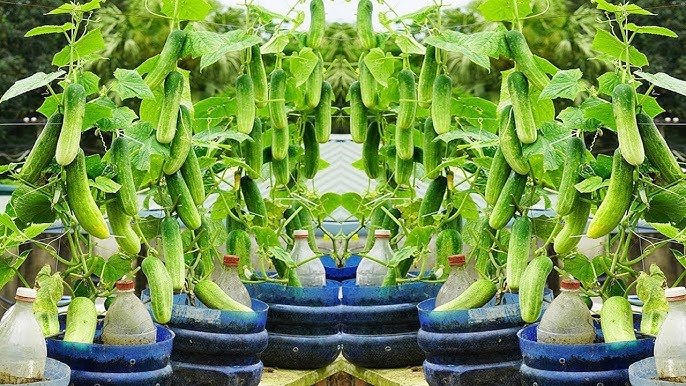
Cucumbers are warm-season vines that adore sunlight.
They need:
➡ 6–8 hours of direct sun daily
➡ Warm temperatures between 20–32°C (68–90°F)
Place your bottle plants:
- on balconies
- along railings
- near bright windows
- on rooftops
- in sunny corridors
The more light your plant gets, the faster it grows.
🌱 Growing Cucumbers From Seeds
Growing cucumbers in plastic bottles is easiest when started directly from seeds.
Steps:
- Fill the bottle with prepared soil.
- Make a 1-inch deep hole.
- Drop 2–3 seeds.
- Cover lightly and water.
- Seeds germinate in 4–7 days.
- Keep only the strongest seedling; remove the rest.
Tip:
Soak seeds in warm water for 4–6 hours to increase germination speed.
💧 Watering Tips for Bottle-Grown Cucumbers
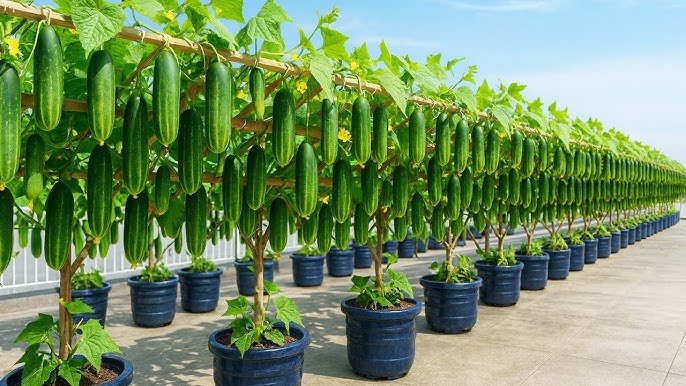
Cucumbers love moisture but hate waterlogging—bottles make it easy to control.
Watering guidelines:
- Keep the soil evenly moist.
- Water when the top 1 inch feels dry.
- Early morning watering is best.
- Avoid splashing water on leaves (prevents fungal issues).
In hot climates, you may need to water once or twice daily.
In cooler areas, watering every 2–3 days is enough.
🪴 Give Support—Cucumbers Are Climbers
Even when grown in bottles, cucumbers must climb. This encourages:
✔ Better air circulation
✔ Healthier vines
✔ Cleaner, straighter fruits
✔ Higher yield
✔ Space-saving growth
Support options:
- bamboo sticks
- nylon netting
- trellis
- balcony railing
- string hanging system
Train the vine gently by wrapping tendrils onto the support structure.
🌿 Feeding Your Cucumber Plants
Cucumbers are heavy feeders. If grown in a small bottle, nutrients run out fast, so you must supplement regularly.
Feed every 10–14 days with:
- compost tea
- banana peel liquid fertilizer
- diluted cow manure tea
- fish amino acid
- seaweed extract
- Epsom salt solution (once per month)
These natural fertilizers give:
- stronger vines
- more flowers
- fewer yellow leaves
- faster fruiting
🌼 Flowering & Fruit Setting
Cucumbers produce male and female flowers.
Female flowers:
Have a tiny baby cucumber behind the blossom.
Male flowers:
Grow on a thin stem.
If you want maximum fruiting:
- Ensure the plant gets full sunlight
- Keep soil moist, not soggy
- Add potassium-rich fertilizer
- Lightly shake the plant to help pollination
If bees are present, pollination will happen naturally.
🐛 Pest & Disease Control (Organic)
Though bottle-grown plants are cleaner, pests can still appear.
Common issues:
- aphids
- whiteflies
- spider mites
- powdery mildew
Natural solutions:
- Neem oil spray (once weekly)
- Garlic-chili spray
- Soap-water mix for soft-bodied bugs
- Turmeric solution to prevent fungal growth
Avoid chemical pesticides—they harm beneficial insects and reduce fruit quality.
🥒 Harvesting Your Cucumbers
Cucumbers grow quickly! You can start harvesting within 45–55 days after sowing, depending on the variety.
When to harvest:
- Fruits reach desired size
- Skin becomes firm and shiny
- Seeds inside are still soft
- Cucumbers feel crisp
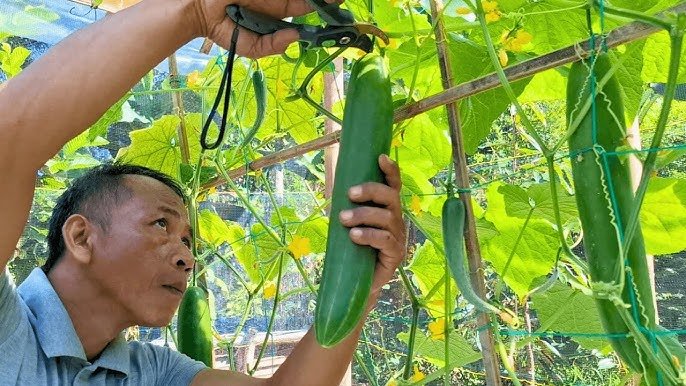
Use scissors to cut fruits—don’t pull them, or you may damage the vine.
Tip:
Harvest regularly to encourage new fruit growth.
🌟 Why This Bottle-Growing Method Is So Effective
Growing cucumbers in plastic bottles provides multiple advantages:
✔ Better root aeration
✔ Controlled soil moisture
✔ Fewer soil-borne diseases
✔ Easy to move during storms or heavy rain
✔ Perfect for balconies and small apartments
✔ Ideal for rookie gardeners
Plus, you contribute to reducing plastic waste while producing your own food—a win-win!
🌍 Final Thoughts: Grow More Using Less
The plastic bottle method is not just a gardening trick—it’s a sustainable lifestyle change.
You can grow cucumbers almost anywhere, anytime, with minimal tools and zero waste.
Whether you’re a beginner or an experienced gardener, this method will help you enjoy:
- fresh cucumbers
- higher yields
- healthier plants
- zero-waste gardening
- satisfaction of home-grown produce
Once you see your first cucumber hanging from your bottle-grown vine, you’ll realize—you never needed a big garden to grow your own food.