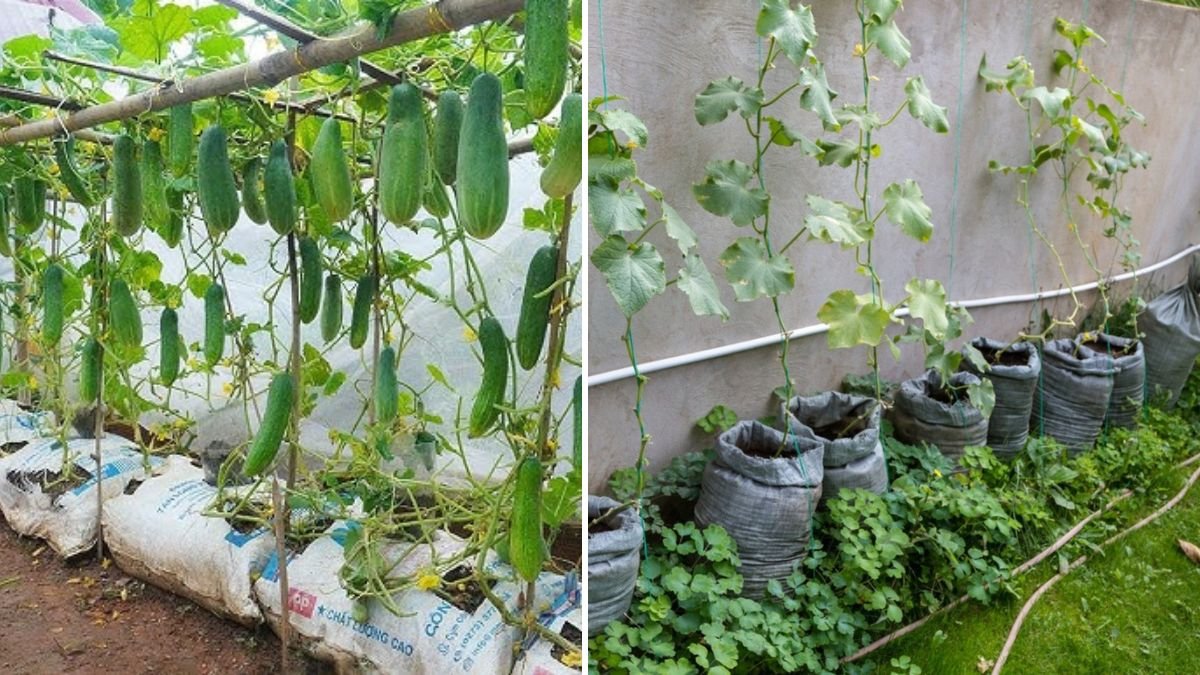
Growing cucumbers at home doesn’t require a big garden or expensive equipment. In fact, a simple soil bag can become a powerful mini-garden that produces a surprising amount of crisp, refreshing cucumbers! If you’ve ever dreamed of harvesting basket after basket of fresh cucumbers—right from your balcony, terrace, or small backyard—this easy method is perfect for you.
In this detailed guide, you’ll learn how to grow cucumbers to produce an abundant harvest using soil bags—from choosing varieties to plant care, vine support, fertilizing, and harvesting. Follow these steps, and you’ll enjoy a steady supply of fresh cucumbers all season long!
Why Grow Cucumbers in Soil Bags?
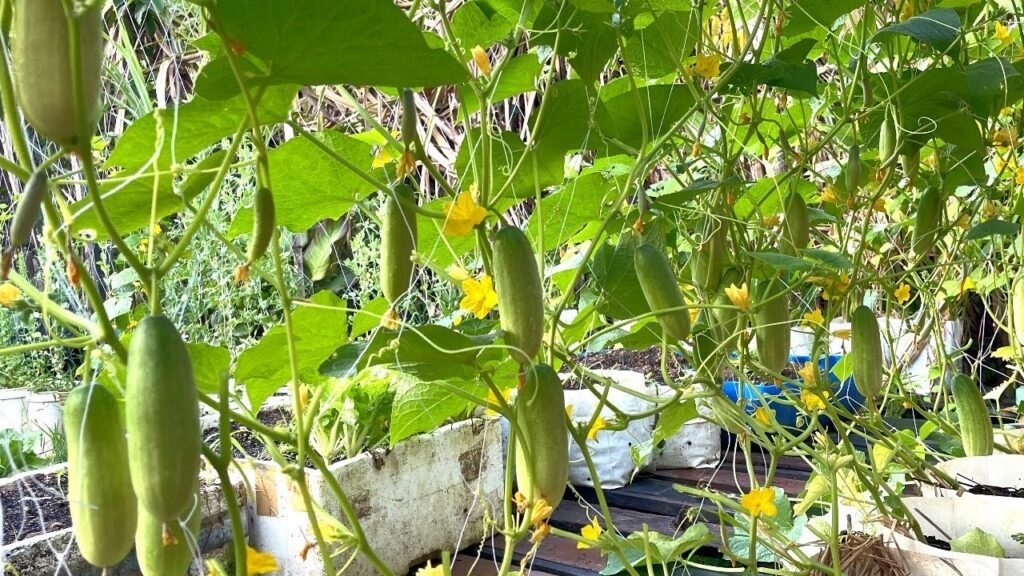
Soil bags (grow bags) are lightweight, inexpensive, and incredibly effective for growing cucumbers at home. Here’s why this method works so well:
More space for roots
Grow bags allow roots to spread naturally without becoming root-bound.
Better aeration
Fabric grow bags offer excellent airflow, preventing fungal diseases and overwatering issues.
Mobility
You can move the bags to catch sunlight as needed.
Easy drainage
Excess water drains out, reducing the risk of rot.
High productivity in small space
Vining cucumbers climb upward, producing more fruits without occupying floor space.
Choosing the Best Cucumber Variety for Bag Growing
Not all cucumbers are the same. For soil bag gardening, pick varieties that adapt well to container growth and produce heavily.
Ideal varieties include:
- Mini cucumbers
- Pickling cucumbers
- Bush-type cucumbers
- Japanese cucumbers
- Marketmore 76
- Poinsett 76
- Kirby cucumbers
- Beit Alpha cucumbers
Bush types grow compactly, while vining types climb beautifully with the help of trellises. Both work amazingly well in soil bags.
Materials You’ll Need
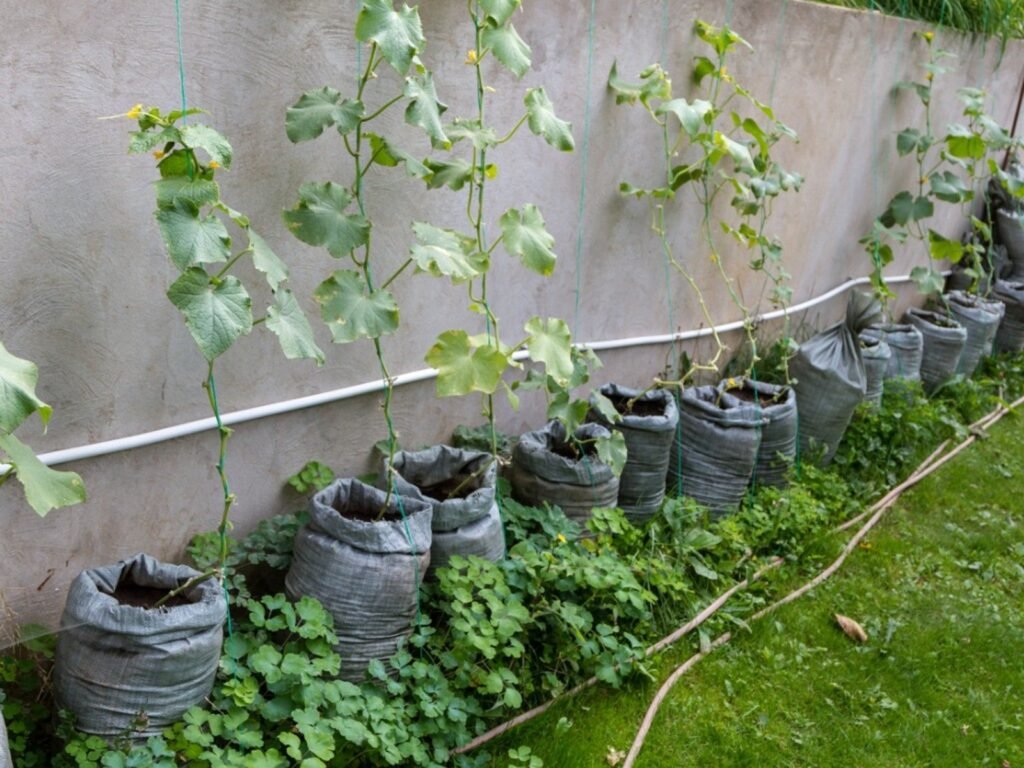
Growing cucumbers with this method requires only a few easily available items:
20–30 liter soil grow bags
Bigger bags = more fruit.
Potting soil mix
Use a mix of:
- Garden soil
- Cocopeat
- Compost
- Perlite (optional, for aeration)
Trellis or vertical support
Such as:
- Bamboo stakes
- Nylon net
- Metal frame
- DIY wooden trellis
Slow-release organic fertilizers
Examples:
- Compost
- Cow dung manure
- Vermicompost
- Mustard cake solution
- Banana peel fertilizer
Mulch
Dry leaves, straw, or coco husk to retain moisture.
Step-by-Step Guide: Growing Cucumbers in Soil Bags for Maximum Yield
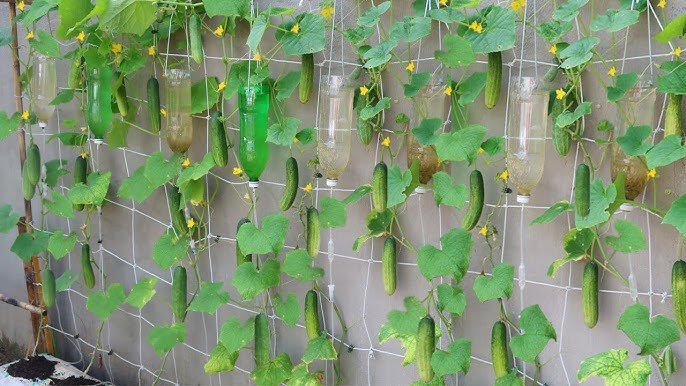
Let’s break down the easiest and most effective way to grow productive cucumber plants in soil bags.
Step 1: Preparing the Soil Bag
Choose a 20–30 liter grow bag to provide enough root space.
Fill it with:
- 40% nutrient-rich garden soil
- 30% compost or vermicompost
- 20% cocopeat
- 10% sand/perlite
Mix well, ensuring it’s light, airy, and fertile.
Cucumbers LOVE loose, well-drained soil.
Leave a few inches at the top for watering space.
Step 2: Sowing the Cucumber Seeds
Cucumber seeds germinate quickly and easily.
Option A: Direct sowing
- Make 2 small holes 1–2 cm deep.
- Drop 1 seed in each hole.
- Cover lightly with soil.
Option B: Transplanting seedlings
If using nursery seedlings, choose ones that are:
- 10–15 days old
- Healthy and pest-free
- Planted early morning or evening
Avoid disturbing the roots during transplant.
Step 3: Providing Vertical Support
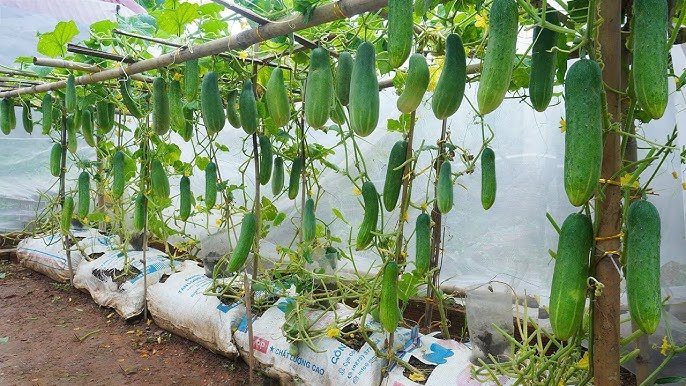
Cucumbers are natural climbers. To maximize fruiting:
- Install a trellis or climbing net right after planting.
- Guide the plant upward as it grows.
- Tie gently with soft twine or clips.
Vertical growth improves:
- Airflow
- Sun exposure
- Fruit quality
- Disease resistance
It also keeps fruits straight, clean, and healthy.
Step 4: Watering the Right Way
Cucumbers are water-loving, but hate waterlogged soil.
Watering tips:
- Water daily in hot weather.
- Keep soil evenly moist—not soggy.
- Water at the base, not on the leaves.
- Mulch heavily to maintain moisture.
Consistent watering prevents:
- Bitter fruits
- Misshapen cucumbers
- Flower drop
Step 5: Fertilizing for Heavy Fruit Production
Cucumbers are heavy feeders. To ensure continuous fruiting:
Every 15 days:
- Add 2–3 handfuls of compost OR
- Water with liquid compost tea
During flowering & fruiting:
- Apply banana peel fertilizer
- Use seaweed extract (optional)
- Add mustard cake liquid once every 2 weeks
- Use Epsom salt (1 tsp per liter) once a month to prevent yellow leaves
Avoid over-fertilizing with nitrogen—it leads to leafy plants but no fruit.
Step 6: Pollination Boost (If Needed)
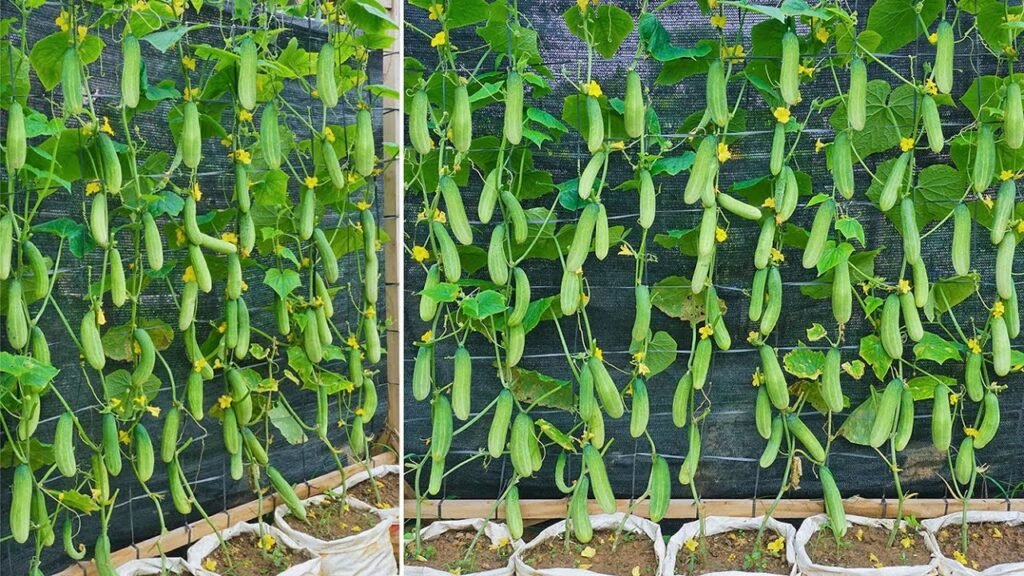
Cucumbers produce male and female flowers.
Female flowers have tiny cucumbers behind them.
If fruits are dropping:
- Tap the plant gently in the morning
- Use a small brush to transfer pollen
- Encourage bees and butterflies with flowering plants nearby
Hand pollination can significantly increase yield.
Step 7: Training and Pruning
For maximum productivity:
- Remove side shoots near the base
- Train the main vine upward
- Limit lateral vines to 1–2 strong branches
- Remove yellowing leaves
- Allow good airflow around the plant
Pruning reduces disease and increases flower production.
Step 8: Protecting from Pests and Diseases
Common cucumber pests include:
- Aphids
- Whiteflies
- Spider mites
- Cucumber beetles
Use organic solutions:
Neem oil spray
Effective for most pests.
Soap water
Removes aphids and mites.
Garlic–chili spray
Repels insects naturally.
Keep the plant dry at night
Prevents fungal infections.
Healthy plants = higher yield.
Harvesting Cucumbers for Best Taste and Yield
Cucumbers grow fast—sometimes doubling in size overnight!
Harvest when:
- Fruits are firm and uniformly green
- They reach 6–10 inches (depending on variety)
- Seeds are still soft
- Skin is smooth and glossy
Don’t let cucumbers overgrow—they become seedy and bitter.
The more you harvest, the more the plant produces.
Cucumber plants are generous when picked regularly!
Pro Tips for Super-Productive Cucumber Plants in Soil Bags
Here are extra secrets to maximize fruiting:
Use worm castings to improve soil fertility
Apply wood ash for potassium
Grow basil or marigold nearby to repel pests
Keep the bag in full sunlight (6–8 hours minimum)
Rotate the grow bag slightly every week for balanced growth
Use drip irrigation or a bottle drip system
Avoid wetting the foliage to prevent powdery mildew
Small habits = big harvests.
Final Thoughts: Growing Cucumbers at Home Is Easier Than You Think!
Growing cucumbers in soil bags is one of the easiest and most productive gardening methods. With just a bit of space, basic supplies, and simple care, you can enjoy:
- Healthier plants
- Faster growth
- Cleaner fruits
- Higher yield
- A beautiful green setup in your home
Whether you’re a beginner or a seasoned gardener, this method guarantees impressive results. Once your cucumber vines start climbing and blooming, you’ll see just how rewarding home gardening can be.