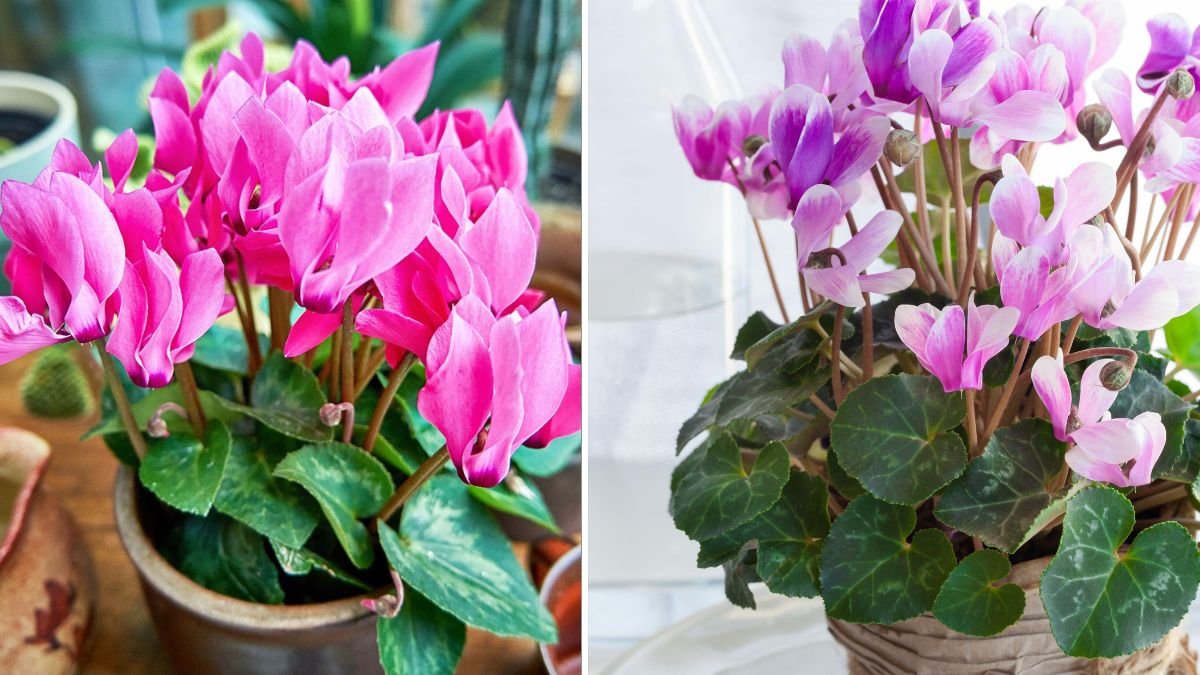
Cyclamen is one of the most enchanting plant genera in the world. Delicate, butterfly-like flowers, beautifully patterned leaves, and the ability to thrive in cool seasons make cyclamen a garden treasure. Whether you’ve admired the tiny blooms carpeting woodland floors or enjoyed the elegance of potted indoor cyclamen, these plants never fail to captivate.
In this comprehensive 1200-word guide, we explore everything about cyclamen—from its wild origins and natural habitats to home-growing techniques, indoor care, and the special charm of the native species Cyclamen purpurascens, also known as the “European Alpine Cyclamen”. Let’s dive into the world of these extraordinary plants!
A Journey Into the Wild World of Cyclamen
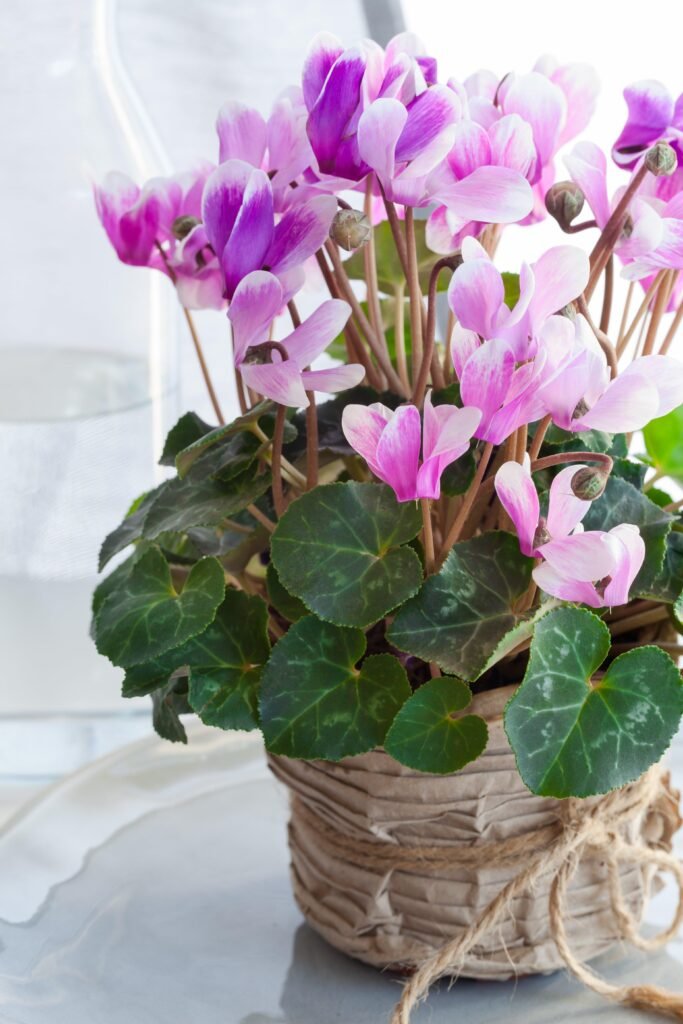
Cyclamen belongs to the Primulaceae family and includes more than 20 species native to Europe, the Mediterranean, and the Middle East. In the wild, they grow in:
- Shaded forest floors
- Rocky alpine slopes
- Moist woodland edges
- Leaf-litter-rich soil
Their natural habitats give clues to how they should be grown at home: cool, moist roots and bright, filtered light.
Wild Cyclamen Characteristics
- Seasonal Growth Cycles
Many wild cyclamen flower in autumn or winter, resting in summer. They bloom when other plants are dormant, making them stars of the cold season. - Tuber-Based Growth
Cyclamen grow from tubers that store nutrients and water. These tubers help the plant withstand drought and harsh climates. - Unique Seed Formation
Wild cyclamen seeds are coated in sweet elaiosomes, attracting ants, which distribute seeds naturally in forests. - Amazing Leaf Patterns
Even without flowers, wild species are beloved for their marbled or heart-shaped leaves.
Some popular wild cyclamen species include:
- Cyclamen hederifolium
- Cyclamen coum
- Cyclamen persicum (ancestor of most indoor cyclamen)
- Cyclamen purpurascens (our featured native beauty!)
Indoor Cyclamen: Beauty for Your Home
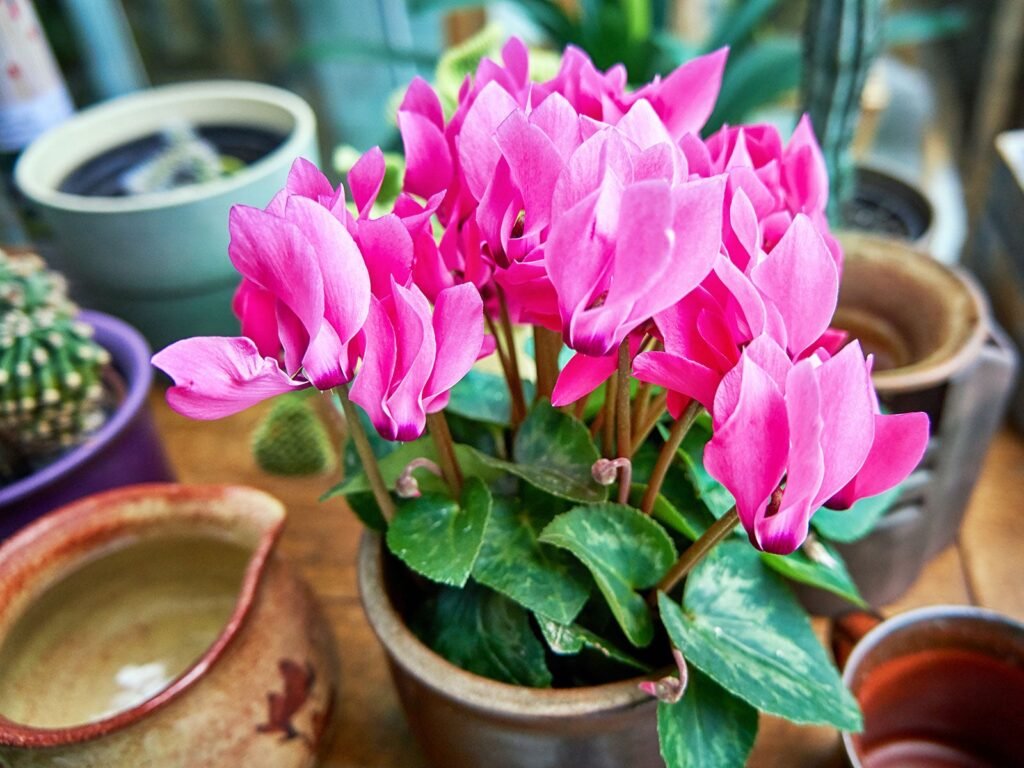
Indoor cyclamen available in nurseries are usually hybrids of Cyclamen persicum. These varieties have been bred for:
- Larger flowers
- More vibrant colors
- Longer blooming periods
They grace homes during autumn and winter with pink, red, white, purple, and bicolored blooms.
Why Indoor Cyclamen Are So Popular
Perfect for cool-season indoor decoration
Require minimal space
Long-lasting blooms (up to 10 weeks)
Attractive foliage year-round
Excellent gifts for festive seasons
But to keep indoor cyclamen thriving, you must respect their natural preferences.
How to Care for Indoor Cyclamen Like a Pro
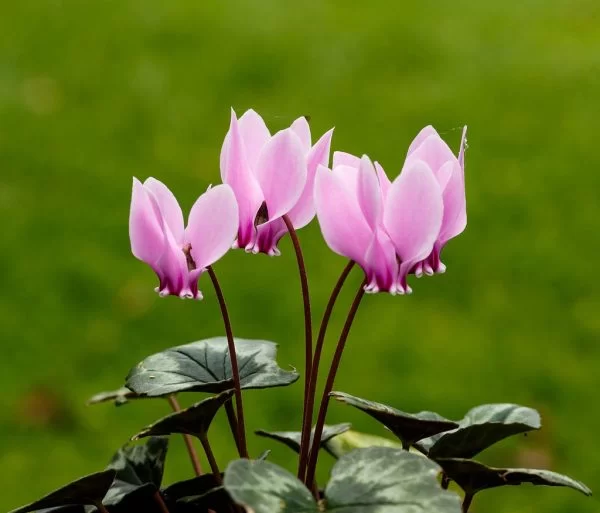
1. Light Requirements
Indoor cyclamen prefer:
- Bright, indirect light
- East- or north-facing windows
Avoid hot afternoon sun—it stresses the plant.
2. Temperature
Cyclamen thrive in cooler indoor conditions:
- 12–18°C is ideal
Warm rooms cause leaves to yellow and flowers to fade early.
3. Watering
This is where most people go wrong.
Golden rules:
- Water when the soil surface feels dry.
- Avoid soaking the crown/tuber.
- Bottom-watering is best—place the pot in a tray and let it drink.
- Drain excess water completely.
Overwatering leads to tuber rot—a common cause of plant death.
4. Humidity
Cyclamen like mild humidity but dislike wet leaves. Mist the air, not the plant.
5. Feeding
Use a diluted balanced fertilizer once every 2–3 weeks during active growth.
6. Post-Bloom Rest
After blooming:
- Leaves gradually yellow
- Plant enters dormancy
- Reduce watering
- Move to a cool, dark corner
After summer rest, the plant resprouts beautifully.
Cyclamen in the Garden: A Natural Carpet of Color
Many cyclamen species grow beautifully outdoors in temperate climates. If you want a magical woodland effect, choose hardy species like:
- Cyclamen hederifolium
- Cyclamen coum
- Cyclamen purpurascens
Outdoor Growing Tips
- Plant tubers in shaded or semi-shaded areas.
- Ideal soil: well-draining, rich in leaf mold.
- Plant tubers shallowly—an important detail!
- Keep the soil cool, moist, and mulched.
Outdoor cyclamen become naturalized over time, forming breathtaking carpets of blooms.
Spotlight on Cyclamen purpurascens: The Native Gem
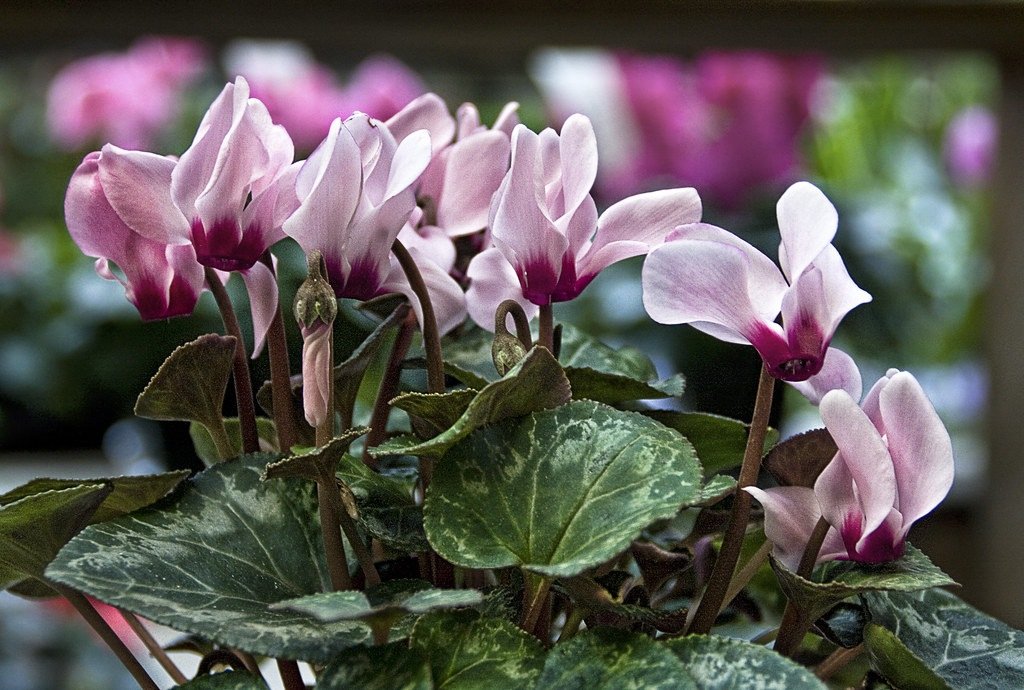
Among all species, Cyclamen purpurascens holds a special charm. Native to parts of Central, Southern, and Eastern Europe, this species is admired for several unique qualities.
Why Cyclamen purpurascens Stands Out
Fragrant Flowers
Unlike many cyclamen, C. purpurascens has sweetly scented blooms.
Summer Flowering
It flowers between June and September, unlike most other cyclamen that bloom in autumn or winter.
Evergreen Leaves
Its leaves often remain year-round, offering decorative beauty even outside blooming season.
Thick, Round Tubers
These store more energy, making the plant robust and long-lived.
Cold Hardy
This species tolerates freezing winters better than many others.
How to Grow Cyclamen purpurascens
Because it is native and naturally hardy, this species is one of the easiest to grow outdoors.
Ideal Conditions
- Shaded or dappled sunlight areas
- Moist, humus-rich soil
- Cool roots, warm leaves—a key cyclamen principle
- Plenty of leaf litter (its natural mulch)
Planting the Tubers
- Plant just below the soil surface, not deep.
- Space 15–20 cm apart.
- Water lightly after planting.
Watering and Feeding
- Keep soil evenly moist during growth.
- Reduce watering slightly after flowering.
- Feed monthly with mild organic fertilizer.
Winter Care
This species is hardy and does not need special winter protection. Snow even acts as insulation.
The Magic of Cyclamen Leaves
Cyclamen leaves are as attractive as the flowers. Many species, especially C. purpurascens, have:
- Heart shapes
- Silver marbling
- Intricate patterns
- Deep green textures
Their evergreen nature makes them a superb ground cover.
Propagation: Multiply Your Cyclamen Naturally
1. Seeds
Cyclamen grown from seed adapt incredibly well to local conditions.
- Sow in late summer or autumn.
- Use moist, shady, cool conditions.
- Seedlings appear in 30–60 days.
2. Natural Self-Seeding
Cyclamen spreads naturally in gardens. Ants help disperse seeds organically.
3. Tuber Division
Possible only when tubers develop offsets—usually in older plants.
Common Problems and Easy Solutions
Yellowing Leaves
Cause: heat, overwatering, dormancy
Solution: adjust watering, move to cool area
Soft Tubers
Cause: rot from excess moisture
Solution: ensure good drainage; water less
No Blooms
Cause: insufficient cold period or poor light
Solution: provide cool nights, brighter indirect light
Why Cyclamen Deserves a Place in Every Home and Garden
Cyclamen is more than a flowering plant—it is a living piece of art. Its unique combination of:
- graceful blooms
- heart-shaped patterned leaves
- long blooming seasons
- hardy tubers
- minimal care needs
…makes it ideal for beginners and collectors alike.
Whether you prefer indoor hybrid varieties or wild outdoor species, cyclamen brings magic wherever it grows.
Final Thoughts
Cyclamen—from wild species carpeting forest floors to potted indoor varieties brightening winter homes—offer endless beauty. And among them, the native Cyclamen purpurascens stands out as a fragrant, hardy, evergreen treasure.
With proper care, these plants reward you with elegance, charm, and seasonal color. Whether you live in an apartment or have a garden, there is a perfect cyclamen variety waiting to grow with you.
If you’d like, I can also create:
A short video script
A care guide infographic
A version tailored for beginners
A variety-wise comparison chart
Just tell me!
ChatGPT can make mistakes. Check important info. See Cookie Preferences.