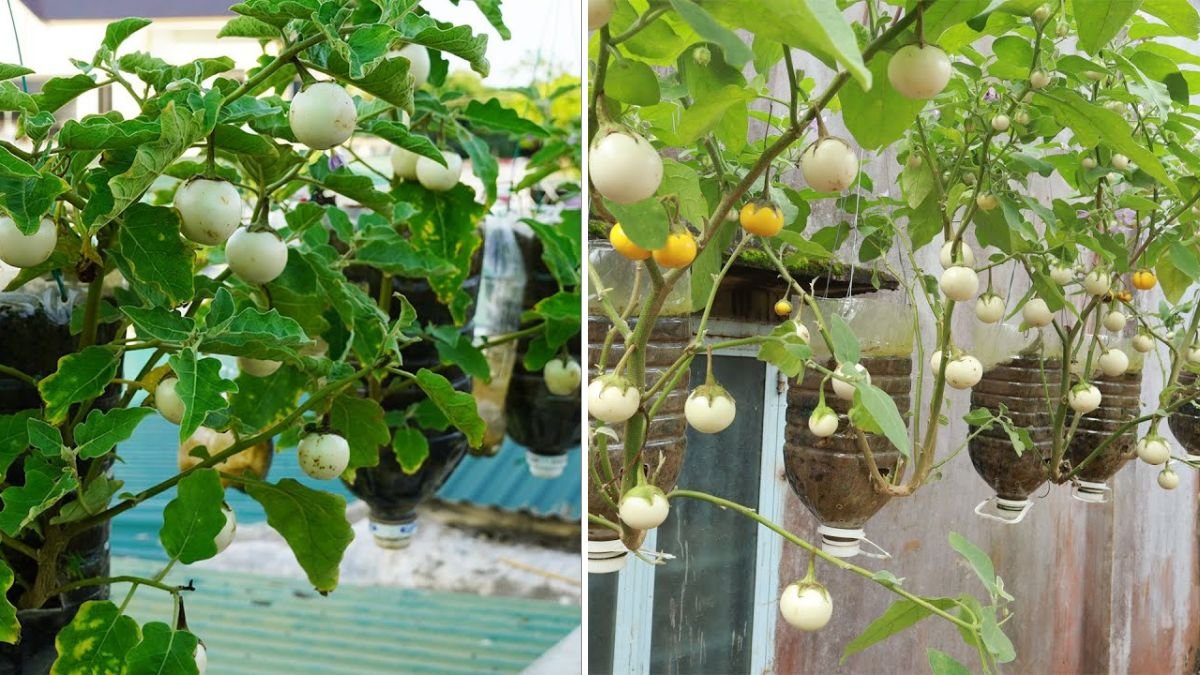
Who says you need a big backyard or a traditional garden to grow vegetables—especially large ones like eggplants? With the right method, you can grow beautiful, productive eggplants interspersed with other vegetables even in tiny spaces like balconies, terraces, small yards, or even along narrow walkways.
In fact, growing eggplants alongside other vegetables not only saves space, but also boosts plant health, reduces pests, and creates a mini-ecosystem where everything grows better and faster.
This 1200-word guide will show you step-by-step how to grow eggplants quickly and successfully without needing a garden—just creativity, smart planting, and a little care.
Why Grow Eggplant Interspersed With Other Vegetables?
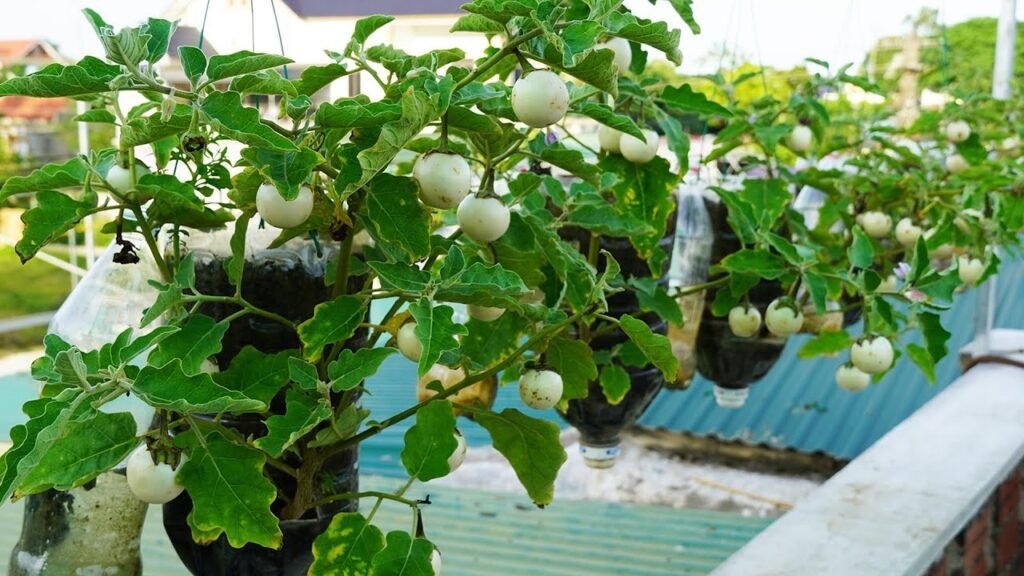
This method isn’t just space-saving—it’s strategic. When you combine eggplants with other vegetables:
Better Use of Small Spaces
You can grow more food per square foot when plants share the same containers or vertical space.
Pest Reduction
Certain vegetables act as natural pest repellents for eggplants.
Healthier Soil & Better Growth
Different plants use different nutrients, balancing the soil naturally.
Faster Eggplant Growth
Better environment = faster root development and earlier harvest.
Perfect for Urban Living
Even if you only have a balcony or concrete slab, you can grow a mini vegetable farm.
This interplanting method is ideal for beginners and urban gardeners.
The Best Vegetables to Combine With Eggplant
Eggplants love companions. The right vegetables not only help them grow faster, but also keep pests away.
Best Companions for Eggplants:
- Lettuce – grows quickly and shades the soil.
- Spinach – uses little space and keeps the soil cool.
- Green onions – repel aphids and spider mites.
- Coriander – attracts beneficial insects.
- Bush beans – fix nitrogen into the soil.
- Basil – improves flavor and deters pests.
- Chili peppers – thrive in similar conditions.
Avoid planting eggplants with fennel or potatoes, which compete for nutrients.
What You Need to Get Started
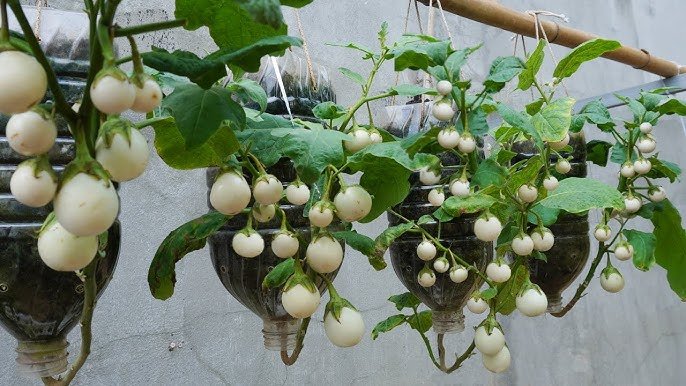
You don’t need a garden—just a few simple items:
- A large pot, grow bag, bucket, or recycled container
- Potting mix
- Compost or well-rotted manure
- Eggplant seedlings or seeds
- Seeds of companion vegetables
- Slow-release fertilizer (optional)
- Watering can
- Mulch (rice husk, straw, coco fiber)
Even a 12–15-inch container can grow an eggplant plus several small leafy vegetables around it.
Step 1: Prepare the Growing Container
Choose a container with:
- At least 15 inches depth
- Good drainage holes
- Wide surface area for companion planting
Fill the container with this mix:
- 50% potting soil
- 30% compost
- 20% sand or coco peat
This mix provides:
- Excellent drainage
- Fast root growth
- High nutrients for fruiting
Eggplants grow quickly in loose, fertile soil.
Step 2: Plant the Eggplant at the Center
Place your eggplant seedling (or sow seeds) right in the middle of the container.
Tips:
- Choose a healthy, strong seedling.
- If sowing seeds, plant 2–3 seeds and thin to the strongest plant.
- Firm the soil gently around the base.
This central position allows companion vegetables to grow around the perimeter without competition.
Step 3: Surround the Eggplant With Fast-Growing Vegetables
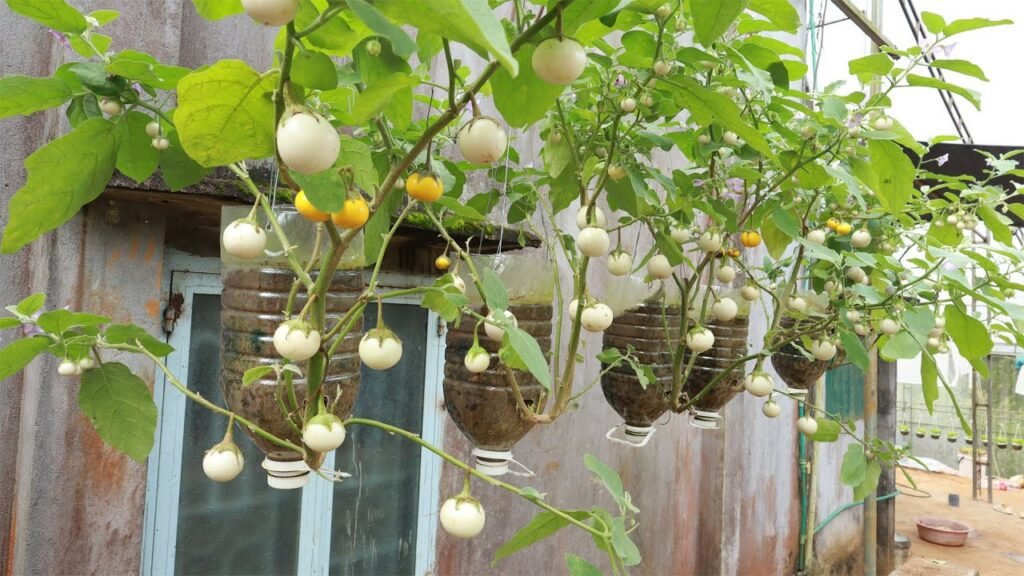
Now the magic begins.
Sprinkle seeds of:
- Lettuce
- Spinach
- Spring onion
- Coriander
- Basil
- Or a combination
around the edge of the container.
Why this works:
- These veggies mature faster than eggplants.
- They provide ground cover to retain moisture.
- They keep soil temperature stable.
- They fill space that would otherwise stay empty.
This ecosystem helps eggplants grow strong and tall.
Step 4: Watering the Right Way
Eggplants love consistent moisture.
How to water:
- Water deeply every 2–3 days.
- Avoid overhead watering to prevent fungal diseases.
- Keep the soil moist, not soggy.
Companion plants will also help reduce water evaporation.
Step 5: Provide Plenty of Sunlight
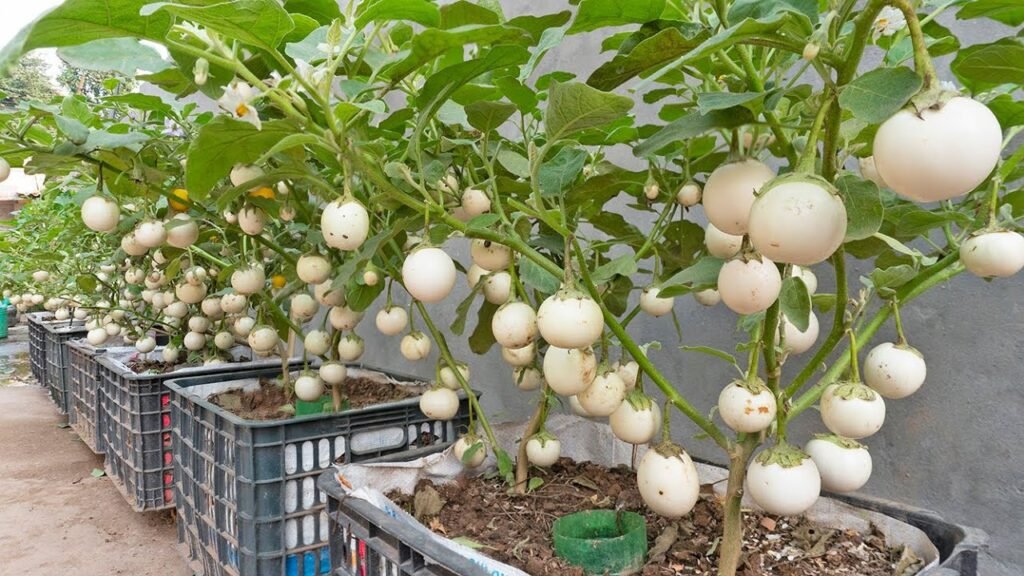
Eggplants require 6–8 hours of sunlight daily.
Good locations:
- South-facing balcony
- Terrace
- Rooftop
- Near a sunny window
Vegetables like lettuce and spinach benefit from partial shade generated by the eggplant leaves as they grow.
Step 6: Fertilizing for Fast Growth
Eggplants are heavy feeders. To grow quickly:
Feed your plants:
- Every 2 weeks with liquid fertilizer
- Or once a month with organic granules
Recommended options:
- Compost tea
- Seaweed extract
- Banana peel fertilizer
- Diluted cow dung/compost water
Your companion veggies also benefit, giving you a double harvest.
Step 7: Support Your Eggplant as It Grows
When the eggplant reaches 30–40 cm tall, it may need support.
Use:
- A wooden stick
- A bamboo pole
- A trellis
Tie loosely with soft cloth or thread.
This prevents the plant from leaning or breaking under fruit weight.
Step 8: Keep Pests Under Control Naturally
Common pests include:
- Aphids
- Whiteflies
- Leaf miners
- Caterpillars
Interspersed plants help reduce pest activity naturally.
You can also spray:
- Neem oil
- Soap water
- Garlic chili spray
every 10–15 days to keep the entire container healthy.
Step 9: Encourage Faster Flowering and Fruiting
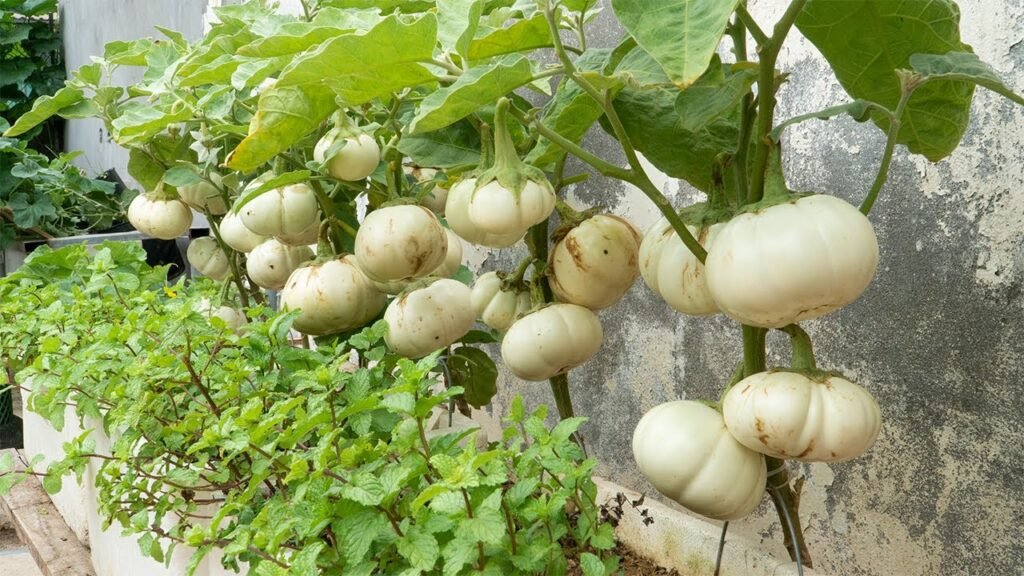
To help eggplants bloom quickly:
Prune lower leaves
Improves airflow and reduces disease.
Pinch early side shoots
Focuses energy on main stem growth.
Ensure full sunlight
Eggplants bloom earliest in bright locations.
Maintain moisture
Dry soil delays flowering.
The surrounding vegetables do not hinder eggplant growth—they enhance it!
Step 10: Harvest Your Vegetables in Stages
One container gives multiple harvests:
Companion vegetables
- Lettuce: 25–30 days
- Spinach: 20–25 days
- Coriander: 30–35 days
- Green onions: 40–50 days
Eggplants
- Start fruiting at 60–75 days
- Peak production at 90–120 days
You enjoy continuous harvesting from the same container.
Benefits of Interspersed Eggplant Growing
Maximum productivity in minimum space
One pot gives you 4–6 different vegetables.
Natural micro-ecosystem
Plants support each other’s growth.
Soil stays fertile longer
Different plants use different nutrients.
Reduced pest and disease pressure
Herbs like basil and coriander repel harmful insects.
Perfect for urban gardeners
A balcony can become a mini-farm.
Final Thoughts: The Smartest Way to Grow Eggplants Without a Garden
You don’t need land.
You don’t need expensive equipment.
You don’t even need gardening experience.
By interspersing eggplants with fast-growing vegetables, you create a productive, healthy, compact garden that produces food faster than traditional methods.