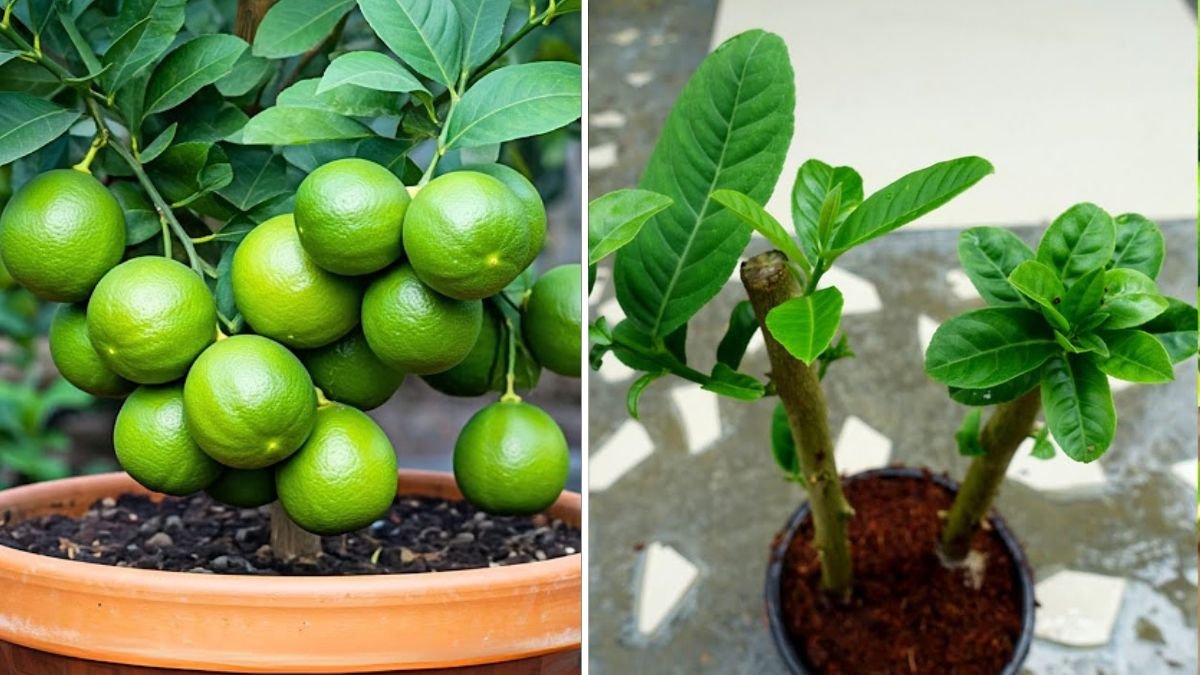
Lemon trees are among the most rewarding fruit plants to grow at home. Not only do they fill your garden with a refreshing citrus fragrance, but they also produce juicy lemons packed with flavor and health benefits. The best part? You don’t need to wait years for seeds to sprout—you can grow a new lemon tree easily from cuttings!
Propagating lemon trees from cuttings is one of the fastest, most reliable, and beginner-friendly ways to grow strong, fruit-bearing plants. If you’ve been dreaming of having your own lemon tree at home, this complete guide will show you exactly how to make it happen.
Let’s explore the easiest, step-by-step method to propagate lemon trees from cuttings.
Why Propagate Lemon Trees from Cuttings?

Growing lemon trees from seeds takes a long time and doesn’t always produce true-to-parent fruit. But propagation from cuttings offers amazing advantages:
Fast Growth
Cuttings root faster than seeds and become fruit-bearing much sooner.
Cloned Quality
Your new plant will be identical to the parent tree—same taste, size, and fruit quality.
Budget-Friendly
You only need a branch; no need to buy nursery plants.
High Success Rate
With the method below, even beginners can achieve 90–100% success.
Best Time to Take Lemon Cuttings
The ideal season for lemon tree propagation is:
Spring to Early Monsoon
This is when the plant is in active growth mode and rooting is fastest.
Avoid taking cuttings during winter, as low temperatures slow down root development.
Step 1: Choosing the Perfect Lemon Cutting
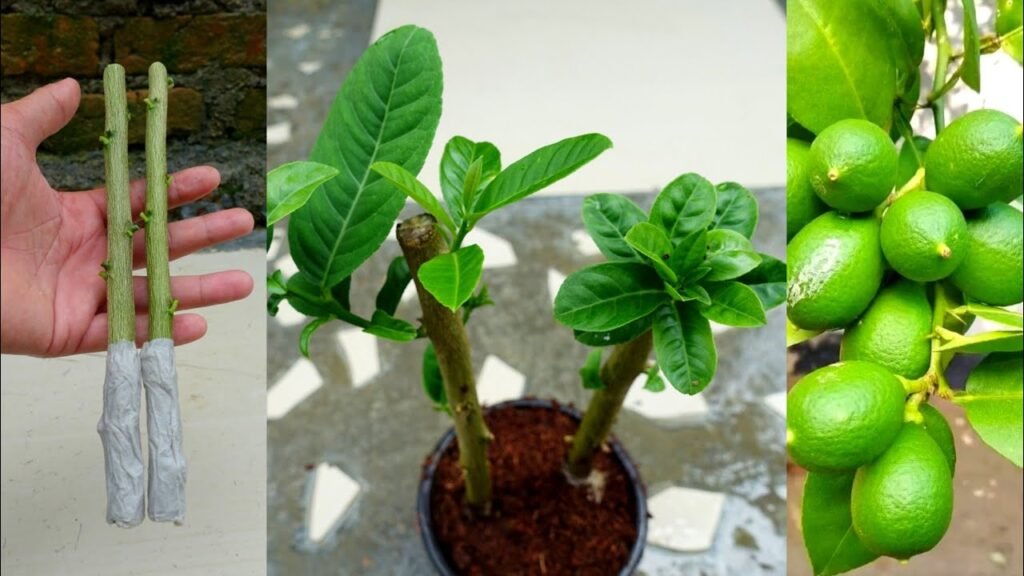
A healthy cutting means a healthy future plant. Follow these guidelines:
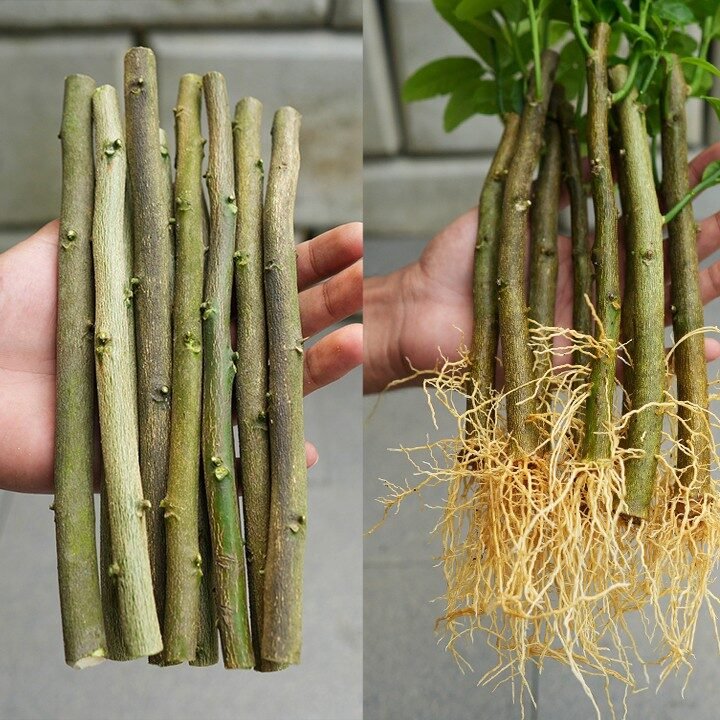
Choose semi-hardwood branches
Not too soft, not fully woody. Ideal for rooting.
Length: 6–8 inches
This gives enough room for multiple nodes.
Diameter: Pencil-thick
Thin stems dry out; overly thick stems root slower.
Look for 3–4 nodes
Roots emerge from these points.
Pick disease-free and pest-free branches
Avoid yellow, damaged, or weak stems.
If your cutting has flowers or fruits, remove them gently so the plant focuses on rooting.
Step 2: Preparing the Cutting for Rooting
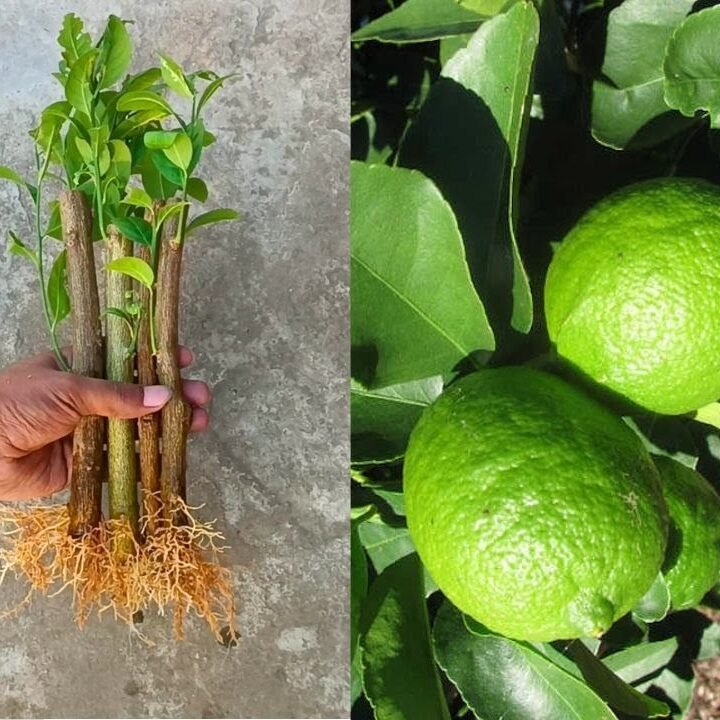
Once you’ve selected your stem, prepare it for maximum success:
Remove Lower Leaves
Strip leaves from the bottom 2 nodes to avoid rotting.
Trim Large Leaves
Cut upper leaves in half to reduce moisture loss.
Make a Clean Diagonal Cut
This increases surface area for rooting.
Optional: Use a Natural or Chemical Rooting Hormone
Dip the cut end into:
- Aloe vera gel
- Honey
- Cinnamon
- Turmeric
- Commercial rooting powder
These fight infection and boost root growth.
Step 3: Preparing the Ideal Soil Mix
Lemon cuttings love a light, airy, well-draining rooting medium.
Best Mix:
- 40% Cocopeat
- 30% Sand or Perlite
- 30% Garden Soil
This prevents waterlogging and encourages healthy root development.
Avoid:
Heavy clay soil
Sticky, wet soil
Garden bed soil for rooting (too dense)
Step 4: Planting the Lemon Cutting
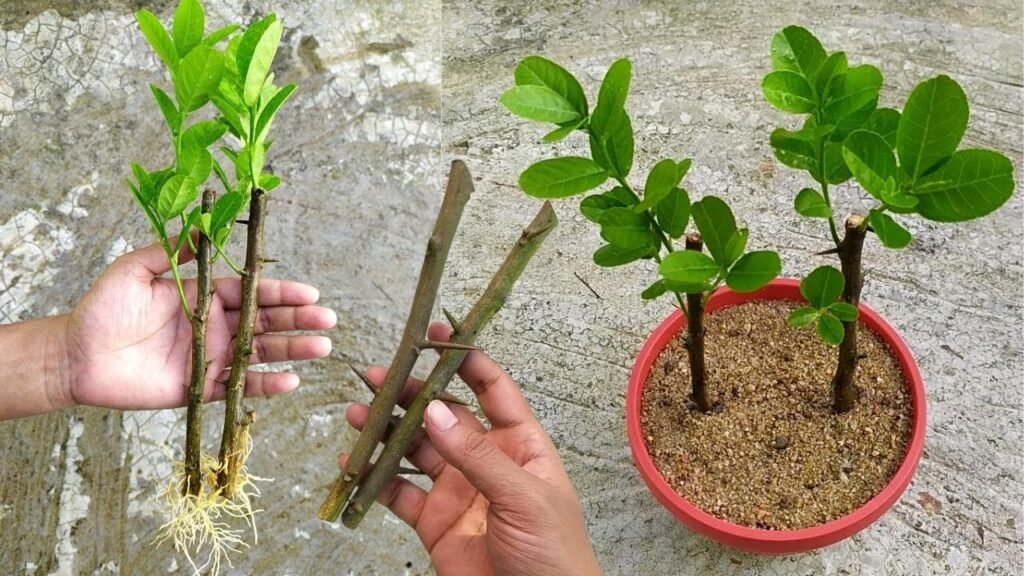
Now it’s time to plant your prepared cutting:
- Fill a pot (4–6 inch) with your soil mix.
- Make a hole using a stick or finger.
- Insert the cutting, ensuring 2 nodes are below the soil.
- Press the soil lightly to secure the stem.
- Water gently until the soil is moist—not soaked.
Your cutting is now planted and ready for the rooting phase!
Step 5: Create a Mini Greenhouse (For Maximum Success)
Humidity is the secret behind successful propagation.
You can create a mini greenhouse using:
- A plastic bottle
- A polythene sheet
- A transparent jar
- A grow tray with a lid
Why it works:
Keeps the cutting moist
Prevents leaf drying
Maintains warmth
Encourages fast root growth
Place the covered cutting in bright, indirect sunlight, never in direct sun.
Watering and Care During Rooting Phase
For the first 4–6 weeks:
Keep the soil slightly moist
Do not overwater—this causes stem rot.
Maintain humidity
Mist inside the plastic cover if needed.
Ensure warmth
Ideal temperature: 20°C–30°C.
Avoid direct sun
Harsh heat can scorch the cutting.
How Long Does It Take for Roots to Form?
With proper care:
Roots begin to form in 3–4 weeks
Strong rooting takes 6–8 weeks
Signs your cutting has rooted include:
- New leaves sprouting
- Stem becoming firm and green
- Resistance when pulling gently
These indicate success!
Step 6: Transplanting Your Rooted Lemon Cutting
Once your cutting has strong roots, it’s time to shift it to a bigger pot.
Use a nutrient-rich soil mix:
- 50% Garden soil
- 25% Compost
- 25% Sand or Cocopeat
Steps:
- Carefully remove the cutting from the pot.
- Avoid disturbing the roots too much.
- Plant into an 8–10 inch pot.
- Water lightly.
- Keep in shade for 5–7 days.
After this, gradually expose it to sunlight.
Caring for Your Growing Lemon Plant
Now that your plant is rooted, follow these care tips for healthy growth:
Sunlight
Lemon trees need 5–6 hours of sunlight daily.
Watering
Water 2–3 times a week or whenever the top soil feels dry.
Fertilizing
Feed your plant regularly:
- Compost every 30 days
- Banana peel fertilizer (flower booster)
- Epsom salt once a month
- Cow dung or vermicompost for strong growth
Pruning
Trim weak and crossing branches to encourage strong branching.
Fruit Development
Once mature, flowers appear in 6–12 months depending on conditions.
Common Problems & Solutions
Cutting turns yellow
Overwatering
Reduce watering and improve drainage.
Mold or fungus on soil
Too much moisture
Open plastic cover daily for ventilation.
Leaves drooping
Low humidity
Mist the plant and keep covered.
Cutting drying out
Excess heat
Move to indirect light.
When Will Your Lemon Tree Start Bearing Fruit?
A propagated cutting can bear fruits in:
1.5 to 3 years
(Much faster than trees grown from seeds!)
With good care, watering, and sunlight, you can enjoy homegrown lemons sooner than you think.
Final Thoughts: Grow Your Own Lemon Tree Easily at Home!
Propagating lemon trees from cuttings is one of the most satisfying gardening experiences. With just a healthy branch, proper soil, and a little patience, you can grow a beautiful lemon plant that will reward you with fragrance, greenery, and fresh lemons.
This method is beginner-friendly, affordable, and highly successful—perfect for anyone who wants to start their own home garden.